




Overview
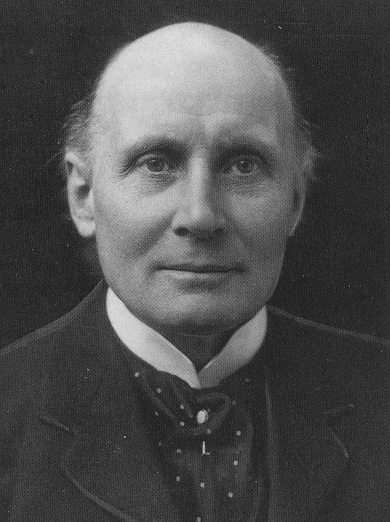
Alfred North Whitehead began his career coaxing the secrets of algebra and geometry from the silent symbols of Cambridge lecture halls, co-authoring with Bertrand Russell the monumental Principia Mathematica—a three-volume attempt to derive all mathematics from pure logic. Yet midway through life he abandoned the blackboard for the broader canvas of metaphysics, convinced that traditional philosophies mistook the world for a collection of static “things” rather than a restless weave of becoming. His later “process philosophy” portrays reality not as substances that endure but as drops of experience that perish as they achieve definiteness, a vision that has fertilized fields as disparate as quantum physics, Buddhist theology, and ecosystem management.Whitehead’s intellectual migration mirrors his personal journey: born on the Isle of Thanet when Victoria still reigned, he witnessed two world wars, taught at Cambridge, London, and finally Harvard, where at 63 he began the writings that would make him, in the words of philosopher Charles Hartshorne, “the only modern thinker who constructed a cosmology as ambitious as Plato’s.”
History/Background
Whitehead entered Trinity College, Cambridge, in 1880, publishing within a decade technical papers on universal algebra that expanded Hamilton’s quaternions into a general calculus of space. Collaboration with Russell began in 1900; the first volume of Principia Mathematica appeared in 1910, its 450-page proof that 1 + 1 = 2 a symbolic tour-de-force. Disillusioned by academic specialization after the Great War, Whitehead moved to the University of London in 1910, writing on relativity and education before accepting Harvard’s invitation in 1924. There he delivered the 1927–28 Gifford Lectures, revised into Process and Reality (1929), the bible of process thought. He retired in 1937 and died in Cambridge, Massachusetts, in 1947.Key Information
Mathematical Logic – Principia Mathematica introduced type theory to skirt Russell’s paradox and grounded arithmetic in a hierarchy of propositional functions, influencing Gödel’s incompleteness theorems and modern computer science.Philosophy of Organism – Whitehead proposed that the ultimate units of reality are “actual occasions,” momentary pulses of experience that prehend past events and creatively synthesize them into new unity. Every electron, daisy, or human mind is a society of such occasions.
Fallacy of Misplaced Concreteness – He warned against mistaking an abstract model (e.g., a point-particle or utility-maximizing agent) for the concrete richness it simplifies, a critique now echoed in behavioral economics and climate science.
Process Theology – By rejecting divine omnipotence as inconsistent with genuine freedom, Whitehead inspired theologians like John Cobb and Marjorie Suchocki to portray God as a fellow-sufferer who lures the universe toward richer harmonies rather than coercing it.
Education Theory – In The Aims of Education (1929) he argued knowledge must be “alive,” learned through rhythmic cycles of romance, precision, and generalization; his ideas underpin today’s project-based learning movement.
Prehension & Pan-experientialism – Every occasion “prehends” the entire past universe, though only dimly; this non-sensory perception grounds a naturalistic panpsychism compatible with ecological awareness of interdependence.






