




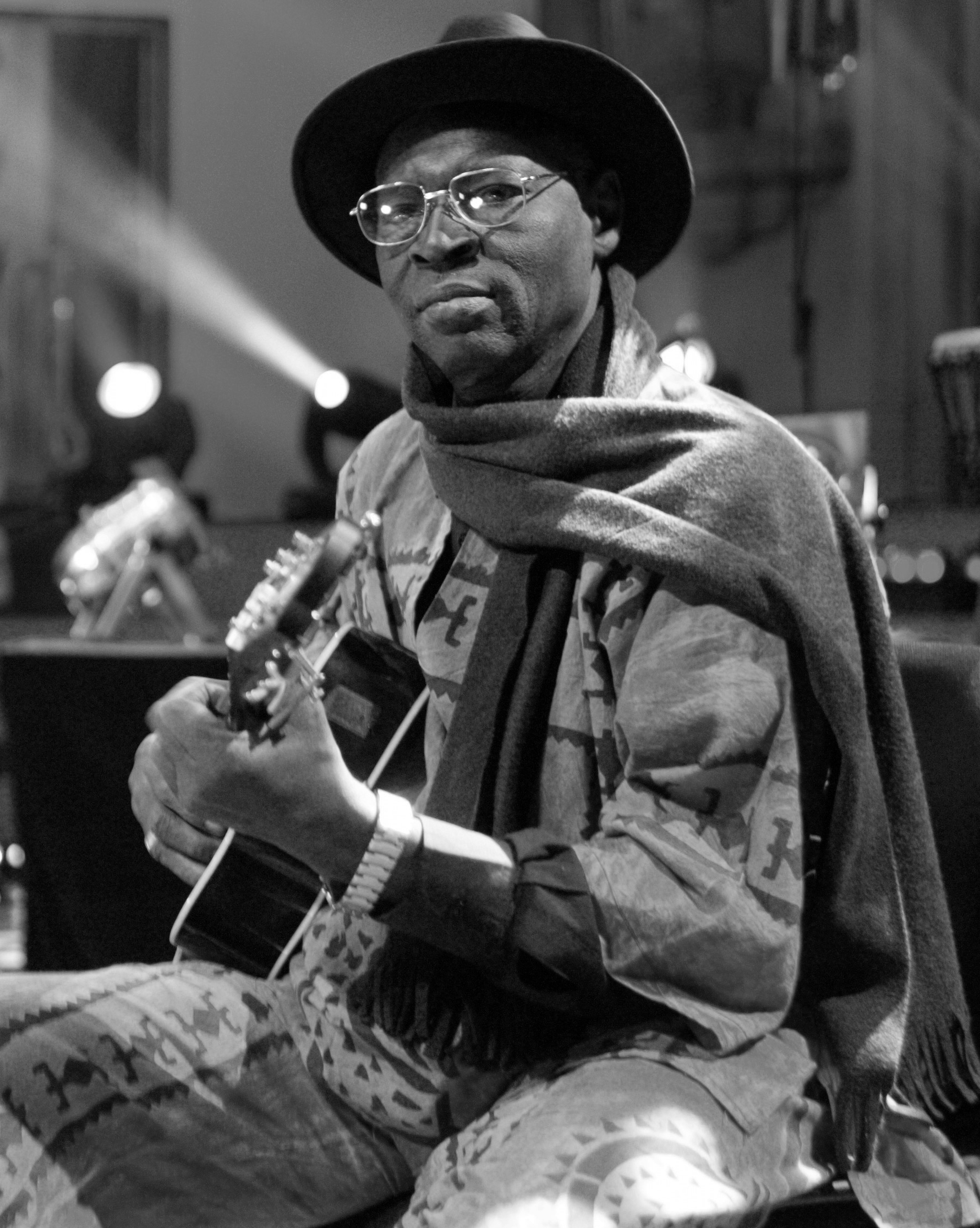
Ali Farka Touré
Ali Farka Touré was a Malian singer and multi-instrumentalist, and one of the African continent's most internationally renowned musicians. His music blends traditional Malian music and its derivative, African American blues and is considered a pioneer of African desert blues. Touré was ranked number 76 on Rolling Stone's list of "The 100 Greatest Guitarists of All Time" and number 37 on Spin magazine's "100 Greatest Guitarists of All Time".
Ali Farka Touré was born on November 31, 1939, in the village of Kanau, near the city of Timbuktu, in the Republic of Mali. His father, a farmer, was a Fulani herder, and his mother, a Tuareg woman, was a singer and a storyteller. Touré's early life was marked by his exposure to traditional Malian music and his family's nomadic lifestyle. He began playing the guitar at the age of 17, and by the time he was 20, he had already formed his first band.
Touré's music career spanned over four decades, during which he released numerous albums and collaborated with international artists such as Ry Cooder, Toumani Diabaté, and B.B. King. His music was characterized by its unique blend of traditional Malian styles, such as the griot tradition, and African American blues. This fusion of styles resulted in a distinctive sound that was both deeply rooted in African culture and accessible to international audiences.
Touré's music was not only a reflection of his cultural heritage but also a means of expressing his experiences as a Malian musician in a rapidly changing world. His songs often dealt with themes of love, social justice, and the struggles of everyday life in Mali. Through his music, Touré was able to transcend cultural and linguistic boundaries, connecting with audiences around the world and inspiring a new generation of musicians.
Early Life and Career
Ali Farka Touré was born in the village of Kanau, near the city of Timbuktu, in the Republic of Mali. His early life was marked by his exposure to traditional Malian music and his family's nomadic lifestyle. His father, a farmer, was a Fulani herder, and his mother, a Tuareg woman, was a singer and a storyteller. Touré's mother was a member of the influential Tuareg tribe, known for their rich musical heritage and their expertise in the art of storytelling.
Touré's early musical influences were shaped by his exposure to traditional Malian music, particularly the griot tradition. The griots were a class of traveling musicians and storytellers who played a crucial role in preserving and transmitting Malian culture and history. Touré's mother was a griot, and he often accompanied her on her travels, learning about the history and culture of the Tuareg people.
Career
Ali Farka Touré began playing the guitar at the age of 17, and by the time he was 20, he had already formed his first band. His early music career was marked by his performances at local festivals and events in Mali. In the 1960s, Touré began to gain recognition as a talented musician, and he was soon invited to perform at international festivals in Europe and Africa.
In the 1970s, Touré began to collaborate with international artists, including the American guitarist Ry Cooder. Cooder was instrumental in introducing Touré's music to a wider international audience, and their collaboration resulted in the album "Ali Farka Touré with Ry Cooder," which was released in 1984. This album was a critical and commercial success, and it helped to establish Touré as a major figure in the world of African music.
Legacy
Ali Farka Touré's legacy is that of a pioneer of African desert blues. His music blended traditional Malian styles with African American blues, creating a unique sound that was both deeply rooted in African culture and accessible to international audiences. Through his music, Touré was able to transcend cultural and linguistic boundaries, connecting with audiences around the world and inspiring a new generation of musicians.
Touré's influence can be heard in the music of many contemporary African artists, including Oumou Sangaré, Amadou and Mariam, and Toumani Diabaté. His music has also been recognized by international critics and audiences, and he was ranked number 76 on Rolling Stone's list of "The 100 Greatest Guitarists of All Time" and number 37 on Spin magazine's "100 Greatest Guitarists of All Time."
Discography
Ali Farka Touré released numerous albums throughout his career, including:
* "Ali Farka Touré" (1976)
* "Ali Farka Touré with Ry Cooder" (1984)
* "The River" (1990)
* "Talking Timbuktu" (1994)
* "Niafunké" (1998)
* "Farka" (2004)
Awards and Recognition
Ali Farka Touré received numerous awards and recognition for his contributions to music, including:
* Grammy Award for Best World Music Album (2005)
* BBC Radio 3 Award for World Music (2004)
* French Order of Arts and Letters (2004)







