




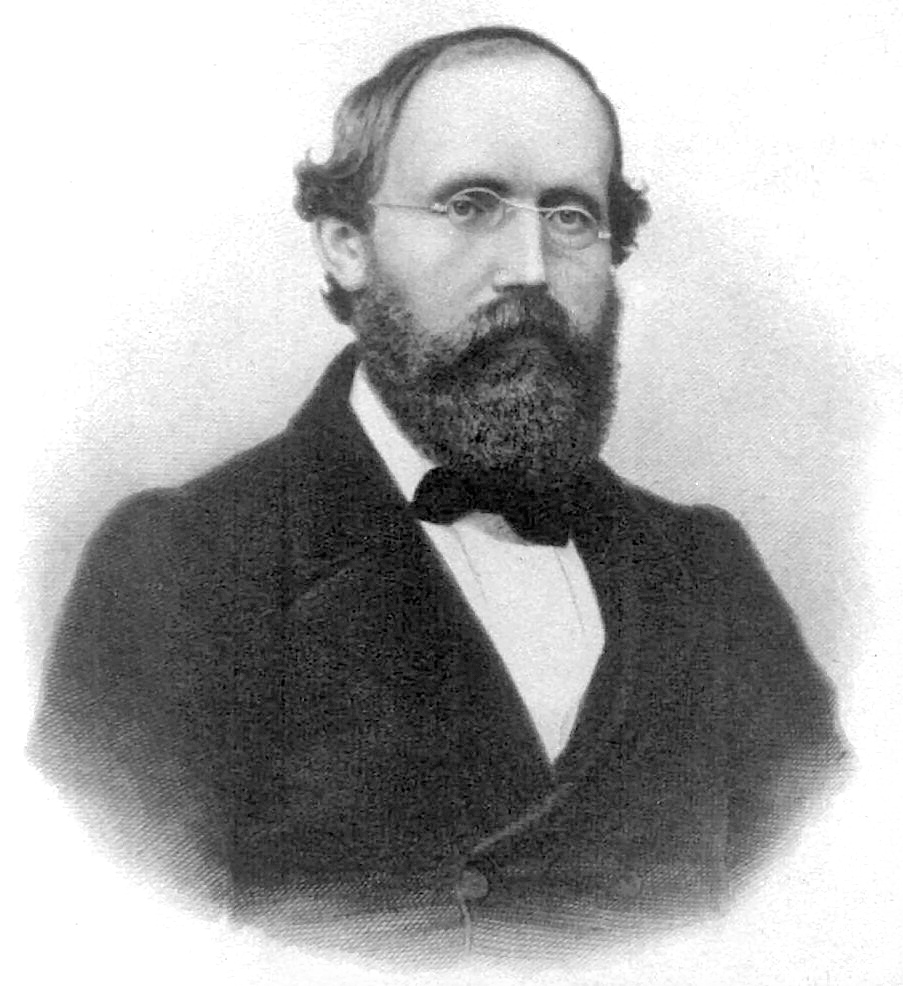
Overview
In 1854 a shy German vicar’s son with a failing memory stood before Göttingen’s faculty and sketched a geometry of curved spaces so radical that even Carl Friedrich Gauss, the “prince of mathematicians,” left the lecture hall in awe. Within twelve years Georg Friedrich Bernhard Riemann had re-defined how we integrate, how we count primes, and—decades before Einstein—how the universe itself might bend. His 1859 Riemann hypothesis remains the most famous unsolved problem in mathematics, its truth worth a million dollars and the security of every Internet transaction.
Riemann’s tools look simple on paper: the Riemann integral you meet in first-year calculus; the Riemann surfaces that turn impossible multi-valued functions into friendly single-valued ones; the zeta function ζ(s) = Σn⁻ˢ whose mysterious zeros control the music of the primes. Yet each idea cracked open entire disciplines, from algebraic topology to quantum field theory, making Riemann the bridge between 19th-century rigor and 21st-century physics.
Background & Origins
Born 17 September 1826 in Breselenz, Kingdom of Hanover, Riemann was the second of six children in a Lutheran pastor’s household. The family lived so modestly that Bernhard’s mother died of malnutrition while he was still a student. Initially sent to Göttingen to study theology—his father hoped he would return as a pastor—young Riemann soon drifted into mathematics lectures, where he encountered Gauss and the intoxicating idea that “God does arithmetic.”
A transfer to Berlin brought him under the influence of Dirichlet and Jacobi, whose analytic firepower sharpened his geometric intuition. Returning to Göttingen in 1849, Riemann completed his Ph.D. in 1851 with a thesis on complex variables that introduced Riemann surfaces, topological gadgets that let you walk around branch cuts instead of falling off them. The work so impressed Gauss that he called it “the foundations of a new epoch.”
Major Achievements & Milestones
Riemann Integral (1854): While teaching introductory calculus, Riemann replaced Cauchy’s awkward rectangles with upper and lower Darboux sums, giving the first rigorous definition of ∫ₐᵇ f(x)dx. The idea is still taught to millions of undergraduates.
Riemann Surfaces (1851–1857): By gluing sheets of the complex plane along branch cuts, Riemann turned multi-valued functions like √z or log z into single-valued functions on a surface whose genus (number of holes) predicts analytic properties. The technique birthed algebraic topology and modern string theory.
Riemann Hypothesis (1859): In an 8-page paper to the Berlin Academy, Riemann extended Euler’s zeta function ζ(s) to the entire complex plane, proved its functional equation, and conjectured that every non-trivial zero lies on the critical line Re(s)=½. The statement is equivalent to the tightest possible bound on the error π(x)−Li(x) in the prime-number estimate.
Timeline
- 1826: Born in Breselenz, Hanover
- 1846: Enters Göttingen University as a theology student
- 1851: Ph.D. thesis “Foundations for a General Theory of Functions” introduces Riemann surfaces
- 1854: Habilitation lecture “On the Hypotheses which Lie at the Bases of Geometry” defines Riemannian curvature
- 1857: Appointed full professor, marries Elise Koch
- 1859: Elected to Berlin Academy; circulates the paper containing the Riemann hypothesis
- 1862: Collapses from pleurisy and tuberculosis in the Alps
- 1866: Dies in Selasca, Italy, aged 39
Impact & Legacy
Einstein called Riemann’s 1854 lecture “the most important scientific idea since Newton”; its tensor calculus became the language of general relativity. The Riemann curvature tensor R^ρ_{σμν} appears unchanged in the Einstein field equations G_{μν}=8πT_{μν}. Number theorists still live or die by the zeros of ζ(s): the first 10¹³ zeros all lie on the critical line, yet a single counter-example would shatter confidence in cryptographic systems that rely on the pseudo-randomness of primes.
Riemann surfaces underpin modern algebraic geometry, moduli spaces, and mirror symmetry in string theory. His Roch theorem (with Gustav Roch) predicts how many linearly independent meromorphic functions exist on a surface, foreshadowing the Atiyah–Singer index theorem. Even the Riemann zeta function has metastasized into L-functions, the Langlands program, and the arithmetic of elliptic curves.
Records & Notable Facts
- Only 10 of Riemann’s papers were published during his lifetime; posthumous notes revealed he had already discovered key tools of relativity and quantum mechanics.
- The Clay Mathematics Institute offers $1 million for a proof of the Riemann hypothesis—one of seven Millennium Problems.
- Riemann’s collected works fill just a single 558-page volume, yet every page seeded a new field.
> “If I have seen further it is by standing on the shoulders of Riemann.” — widely attributed to Einstein






