Overview
The Bible—literally “the books”—is not a single volume but a portable library whose pages contain law codes, royal chronicles, love poems, apocalyptic visions, and memoirs of fishermen and prophets. Composed over a millennium by scores of authors—kings, farmers, priests, poets, tent-makers, and mystics—it claims to narrate reality from the first breath of creation to the final re-creation of heaven and earth. Jews call its first part Tanakh (Torah-Nevi’im-Ketuvim); Christians retain that corpus as the Old Testament and add twenty-seven Greek texts known as the New Testament. Yet “Bible” is also a process: communities continually debate which scrolls belong, how they should be translated, and how literally they should be read. Thus, while every canon claims closure, the Bible remains an open conversation carried in parchment, pixels, and memory.Across centuries, the text has migrated from papyrus to parchment, from illuminated manuscripts to pocket-sized printed codices, and now to glowing screens. Each technological leap widened its circle of readers and multiplied interpretations: allegorical, moral, historical-critical, feminist, post-colonial, and literary. What unites this diversity is the conviction that these particular writings somehow mediate the divine will—whether as exact dictation, dynamic inspiration, or cultural witness—and therefore demand a response of mind, heart, and action.
Background
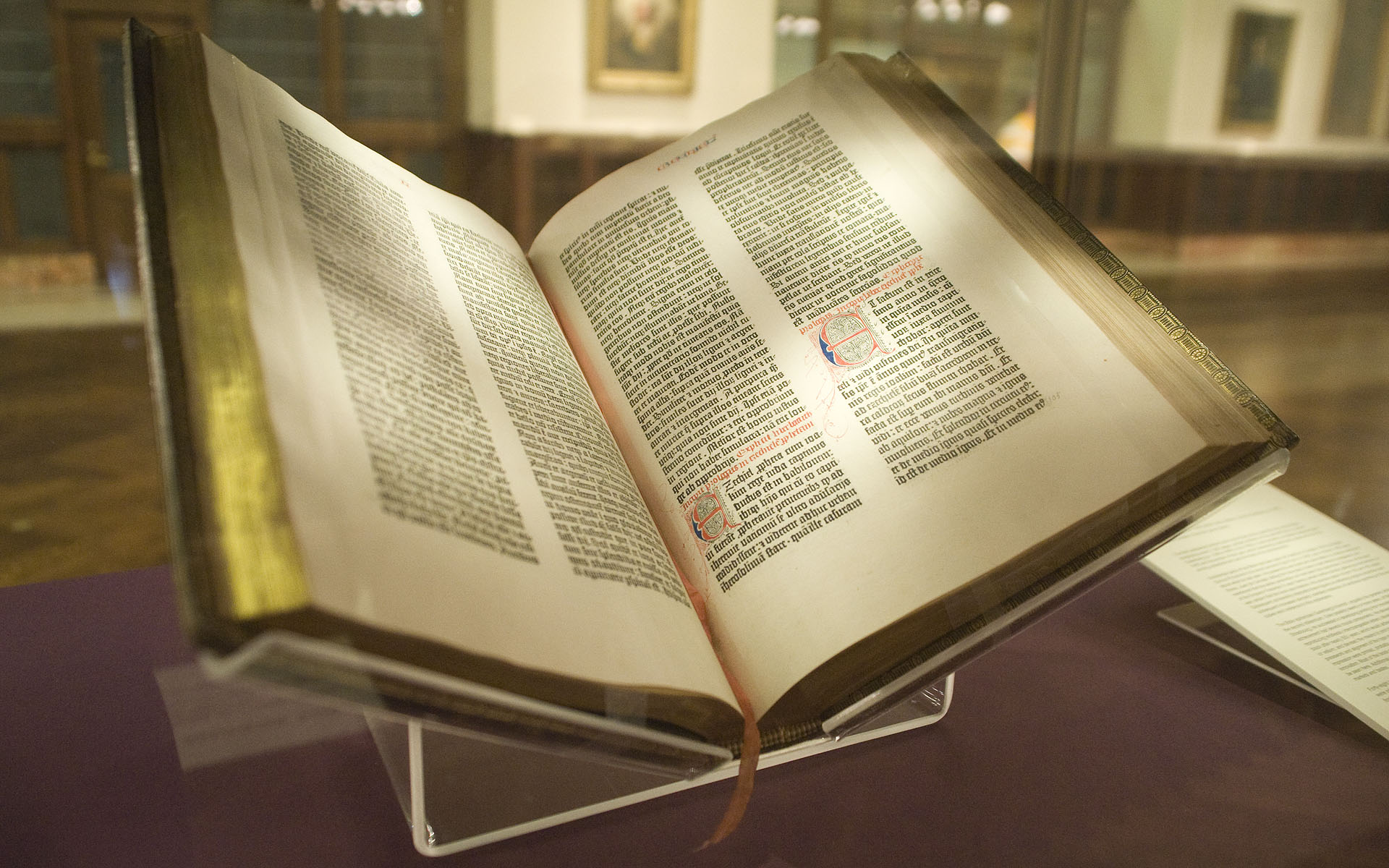
The story begins with small nomadic kin-groups who, around 1200 BCE, claimed descent from an ancestor they called Abram/Abraham. They carried oral sagas of exodus from Egypt, settled in Canaan, forged a monarchy, survived exile in Babylon, and returned to rebuild a temple. During these epochs scribes stitched earlier sources (J, E, P, D) into the Torah, prophets thundered against injustice, and sages crafted psalms and proverbs. After Rome destroyed the Second Temple (70 CE), rabbis transformed sacrifice into study, fixing the Hebrew canon circa 90 CE at Jamnia.Meanwhile, a Jewish sect proclaiming Jesus of Nazareth as risen Messiah produced new texts—letters, gospels, apocalypses—circulating in Greek. By 367 CE Athanasius listed the twenty-seven books now called the New Testament. Church councils at Hippo (393) and Carthage (397) ratified this canon, while the wider culture preserved the Septuagint (Greek Old Testament) alongside. Medieval monks copied both Testaments in Latin (the Vulgate) until humanists recovered Hebrew and Greek originals. The printing press (Gutenberg, 1455) democratized access; vernacular translations—Luther’s German (1522), Tyndale’s English (1526)—sparked reform, revolution, and missionary expansion that carried the Bible to every continent.