




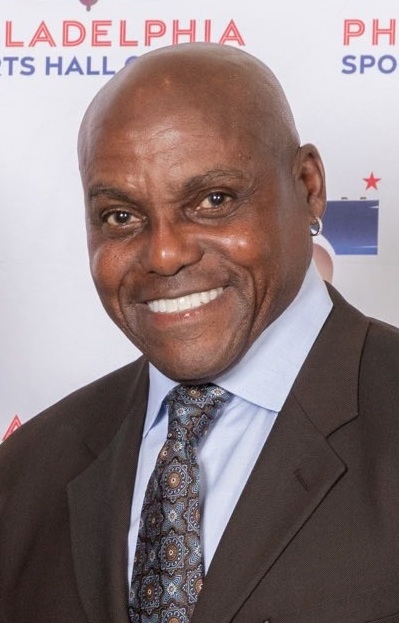
**
Overview
Frederick Carlton Lewis emerged from modest beginnings in Birmingham, Alabama, to become one of the most decorated athletes in Olympic history. Over a career that stretched from 1979 to 1996, Lewis amassed nine Olympic gold medals, one silver, and ten World Championship medals (eight of them gold). His signature blend of blistering speed, flawless technique, and competitive ferocity made him a perennial favorite in the 100 m, 200 m, 4 × 100 m relay, and especially the long jump, where he claimed four consecutive Olympic titles—a feat matched only by discus‑thrower Al Oerter.
Beyond the medals, Lewis’s charisma and media presence helped popularize track and field in the United States during a period when the sport struggled for mainstream attention. He transitioned seamlessly into coaching after retirement, taking the helm of the University of Houston’s track program and mentoring the next generation of elite jumpers and sprinters.
History/Background
Born January 13, 1961 in Birmingham, Alabama, Carl Lewis grew up in the nearby town of Ruth, where his father, Hollis Lewis, introduced him to athletics at the age of nine. By his early teens, Lewis was already breaking state high‑school records in the 100 m and long jump. He earned a scholarship to the University of Houston, studying civil engineering while training under legendary coach Tom Tellez, whose emphasis on biomechanics refined Lewis’s iconic “hurdle‑like” sprinting style.Lewis burst onto the international scene at the 1979 Pan American Games, winning gold in the long jump. His first Olympic appearance came in 1980, but the U.S. boycott denied him a chance to compete in Moscow. Undeterred, he dominated the 1983 World Championships in Helsinki, taking gold in both the 100 m and long jump. The 1984 Los Angeles Games cemented his status: Lewis captured four gold medals (100 m, 200 m, long jump, 4 × 100 m relay), a performance echoed in 1988 (Seoul), 1992 (Barcelona), and 1996 (Atlanta), where he won his final Olympic gold in the long jump at age 35.
Key Information
- Olympic Record: 9 gold, 1 silver (1984‑1996) – four consecutive golds in the long jump. - World Championships: 8 gold, 2 silver (1983‑1997) across sprints and long jump. - World Records: Co‑holder of the 100 m world record (9.86 s, 1991) and part of the 4 × 100 m relay world‑record team (37.40 s, 1992). - Career Span: 1979‑1996 (competitive), 2005‑present (head coach, University of Houston). - Awards: Four‑time World Athlete of the Year (1984, 1985, 1991, 1992), James E. Sullivan Award (1984), Presidential Medal of Freedom (2022). - Controversies: Faced doping allegations in the early 1990s; never failed a test, but the episode sparked ongoing debate about performance‑enhancing drug policies in athletics.Significance
Carl Lewis reshaped the perception of what a “track star” could achieve, proving that an athlete could dominate both sprinting and jumping disciplines simultaneously. His four‑peat in the Olympic long jump set a benchmark for consistency and longevity, inspiring athletes like Mike Powell and Bob Beamon to push the limits of the event. As a public figure, Lewis leveraged his fame to advocate for youth sports programs and to highlight the importance of education for athletes, often speaking about his own experience balancing engineering studies with elite training.In coaching, Lewis has produced world‑class talent, most notably Keshorn Walcott (javelin) and Khristian “Kris” McDonald (long jump), demonstrating his ability to translate personal excellence into mentorship. His legacy endures not only in the record books but also in the cultural memory of the 1980s and 1990s, when his victories provided a unifying narrative for a nation hungry for sporting heroes.
INFOBOX:
- Name: Frederick Carlton Lewis
- Type: Track and Field Athlete / Coach
- Date: Born January 13, 1961 (career 1979‑1996)
- Location: Birmingham, Alabama, USA (raised in Ruth, Alabama)
- Known For: Nine Olympic gold medals, four consecutive Olympic long‑jump titles, 10 World Championship medals
TAGS: Carl Lewis, Olympic athletics, long jump, sprinting, track and field history, University of Houston, sports legacy, American Olympians






