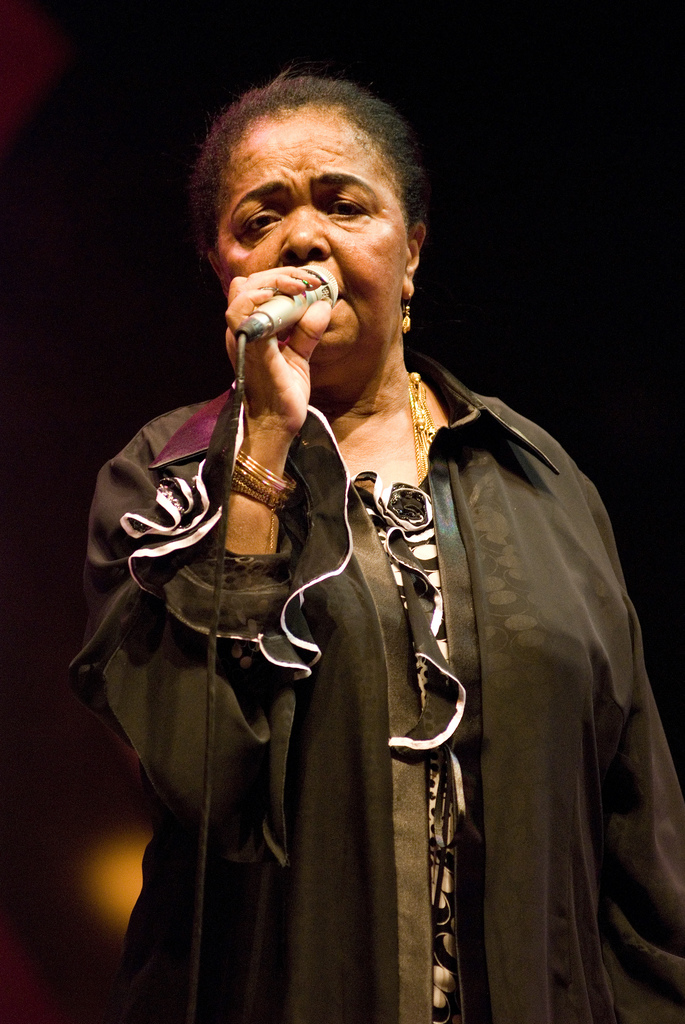
Cesaria Evora
Cesaria Evora was a renowned Cape Verdean singer-songwriter known for her unique blend of traditional Morna music with modern styles, captivating audiences worldwide with her emotive voice and poignant lyrics.
Born on August 26, 1941, in Mindelo, São Vicente, Cape Verde, Evora's early life was marked by hardship and struggle. Her mother, Maria do Carmo, was a seamstress, and her father, Manuel de Barros, was a fisherman. Evora's musical talent was evident from a young age, and she began singing in local bars and clubs in her teenage years. However, it wasn't until the 1970s that she began to gain recognition, performing at the Cape Verdean music festival, Festival de Música de Cabo Verde.
Evora's music career spanned over four decades, during which she released numerous albums, including La Diva de la Musique (1988), Miss Perfumado (1992), and Cesaria (1996). Her songs often dealt with themes of love, loss, and the struggles of everyday life, resonating deeply with listeners. Her unique voice, which blended the warmth of Cape Verdean folk music with the sophistication of French chanson, earned her international acclaim.
Early Life and Career
Evora was born in Mindelo, São Vicente, Cape Verde, a small island in the Cape Verdean archipelago. Her early life was marked by poverty and hardship, with her family struggling to make ends meet. Despite these challenges, Evora's mother encouraged her love of music, teaching her traditional Morna songs and folk dances. Evora's talent was evident from a young age, and she began performing in local bars and clubs in her teenage years.
In the 1960s, Evora moved to Portugal, where she worked as a seamstress and continued to sing in local bars and clubs. It was during this time that she began to develop her unique style, blending traditional Morna music with modern influences. In the 1970s, Evora returned to Cape Verde, where she began to gain recognition, performing at the Festival de Música de Cabo Verde.
Career
Evora's music career spanned over four decades, during which she released numerous albums and performed internationally. Her breakthrough album, La Diva de la Musique (1988), was a critical and commercial success, earning her international recognition. The album's success was followed by Miss Perfumado (1992), which further cemented her reputation as a leading Cape Verdean singer.
In the 1990s, Evora's music gained widespread recognition, with albums such as Cesaria (1996) and Caboverdiano (1998) showcasing her unique style and emotional depth. Her songs often dealt with themes of love, loss, and the struggles of everyday life, resonating deeply with listeners.
Legacy
Evora's legacy extends far beyond her music. She was a cultural ambassador for Cape Verde, bringing international attention to the country's unique culture and traditions. Her music also played a significant role in promoting Cape Verdean identity and pride, inspiring a new generation of musicians and artists.
In 2008, Evora was awarded the Grammy Award for Best World Music Album for her album Voyage. She was also awarded the Order of Prince Henry by the Portuguese government in recognition of her contributions to Cape Verdean culture.
Discography
Evora released numerous albums throughout her career, including:
- La Diva de la Musique (1988)
- Miss Perfumado (1992)
- Cesaria (1996)
- Caboverdiano (1998)
- Voyage (2001)
- Cesaria Evora (2006)
Awards and Recognition
Evora was awarded numerous awards and honors throughout her career, including:
- Grammy Award for Best World Music Album (2008)
- Order of Prince Henry (2008)
- Cape Verdean Music Award (2002)
- Portuguese Music Award (2004)