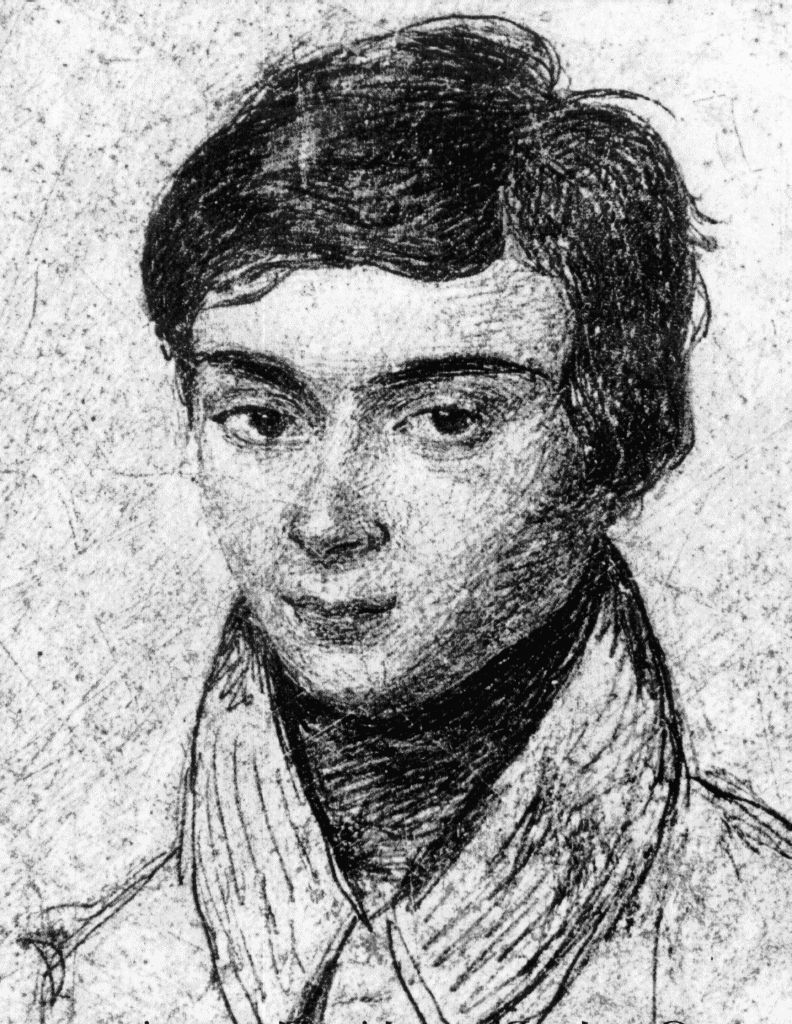

Claude Debussy was a French composer whose works are often associated with Impressionism, although he himself rejected the label. Born in the provincial town of Saint-Germain-en-Laye, he rose to prominence in Parisian musical circles at the turn of the twentieth century and became a leading figure of the Symbolist movement in music. His compositions—ranging from piano miniatures such as Clair de lune to orchestral masterpieces like La Mer—exhibited a radical departure from the functional tonality of the Romantic era, favoring modal scales, whole‑tone and pentatonic collections, and innovative orchestration techniques. Debussy’s influence extended beyond the concert hall, shaping the development of modernist composers, film scores, and contemporary popular music.
The following sections examine Debussy’s formative years, the evolution of his distinctive musical style, his most significant works, contemporary reception, and his lasting legacy in the broader cultural landscape.
Early life and education
Claude Achille Debussy was born on 22 August 1862 in Saint‑Germain‑en‑Laye, a suburb of Paris. His father, Manuel, was a railway clerk, and his mother, Victorine Manoury, worked as a seamstress. Demonstrating an early aptitude for music, Debussy entered the Paris Conservatoire at the age of ten, where he studied piano under Antoine Marmontel and composition with Ernest Guiraud. In 1884 he won the prestigious Prix de Rome with the cantata L’enfant prodigue, granting him a three‑year residency at the Villa Medici in Rome. The Roman sojourn exposed him to the works of early Italian madrigals and the burgeoning Symbolist poetry of Stéphane Mallarmé, both of which would later inform his compositional aesthetic.Musical style and innovations
Debussy’s music is characterized by several interlocking innovations that collectively challenged the prevailing tonal paradigm.Harmonic language
He abandoned traditional functional harmony in favor of modal and whole‑tone scales, creating ambiguous tonal centers. Pieces such as Voiles from Préludes, Book I exemplify his use of the whole‑tone scale to produce a sense of floating suspension. His employment of parallel chord motion—often termed “planing”—further eroded the expectations of voice leading established by the Classical tradition.Rhythm and form
Rather than adhering to strict metrical regularity, Debussy favored free, fluid rhythms that mirrored natural speech patterns and the ebb and flow of water. His piano work La cathédrale engloutie employs a non‑repetitive, rhapsodic structure that reflects the narrative of a Breton legend rather than conventional sonata form.Orchestration and timbre
Debussy’s orchestral palette emphasized coloristic effects over sheer volume. In La Mer (1905), he layered strings, woodwinds, and harp to evoke the shifting moods of the sea, employing techniques such as muted brass and flutter‑tonguing in the flutes. His innovative use of the celesta in Children’s Corner and the harpsichord in Les jeux de timbres anticipated later twentieth‑century explorations of timbre.Major works
Debussy’s oeuvre can be grouped into several categories, each illustrating a facet of his evolving style.Piano
The Préludes (Books I and II, 1910) are considered his magnum opus for solo piano, comprising 24 pieces that juxtapose evocative titles with abstract musical gestures. Earlier works such as Suite bergamasque (1905), which contains the iconic Clair de lune, reveal his transition from Romantic lyricism to a more impressionistic idiom.Orchestral
Prélude à l'après‑midi d'un faune (1894) marked Debussy’s breakthrough; its sinuous flute solo and languid harmonic progressions caused a scandal at its 1895 premiere. La Mer (1905) and the unfinished La boîte à joujoux (1913) further cemented his reputation as a master of orchestral color.Chamber music
The String Quartet in G minor (1893) showcases his early use of modal inflections and a departure from conventional quartet dialogue. The Sonata for Flute, Viola, and Harp (1915) reflects his late‑period fascination with unusual instrumental combinations.Opera
Pelléas et Mélisande (1902) remains Debussy’s sole completed opera. Its declamatory vocal lines, sparse orchestration, and emphasis on atmospheric nuance embody the Symbolist aesthetic, influencing later composers such as Maurice Ravel and Igor Stravinsky.Reception, criticism, and contemporary context
Debussy’s early reception was mixed. Critics at the 1900 Paris Exposition Universelle derided La mer as “a cacophony of noise,” while others, including the writer and composer Maurice Ravel, praised its innovative orchestration. The composer’s alignment with the Symbolist poets—Mallarmé, Verlaine, and Baudelaire—positioned his music within a broader artistic movement that emphasized suggestion over explicit narrative.During World War I, Debussy’s health deteriorated, and his final years were marked by personal and financial difficulties. He died of colorectal cancer on 25 March 1918 in Paris. Posthumously, his music was championed by conductors such as Pierre Monteux and pianists like Walter Gieseking, leading to a reassessment of his role in the transition from Romanticism to modernism.
Legacy and influence
Debussy’s impact on twentieth‑century music is profound and multifaceted.* Modernist composers: His harmonic experiments paved the way for the atonal and serial techniques of Arnold Schoenberg and the neoclassicism of Stravinsky. The French composer Olivier Messiaen cited Debussy’s use of modes as a direct influence on his own modal system.
* Film and popular music: The atmospheric qualities of Debussy’s orchestration have been emulated in film scores, notably in the works of Erik Satie and later composers such as John Williams. Jazz musicians, including Bill Evans, incorporated Debussy’s chordal textures into improvisational language.
* Pedagogy: His piano works remain central to conservatory curricula worldwide, serving as exemplars of advanced harmonic and tonal color techniques.
* Cultural symbolism: Debussy is frequently invoked as a symbol of French artistic innovation, representing a break from Germanic musical dominance in the late nineteenth century.
Scholarly debate continues regarding the appropriateness of the “Impressionist” label, with some musicologists arguing that it oversimplifies the composer's complex relationship to tradition and innovation. Nevertheless, Debussy’s contributions to harmonic language, orchestration, and the integration of literary symbolism into music remain undisputed.