




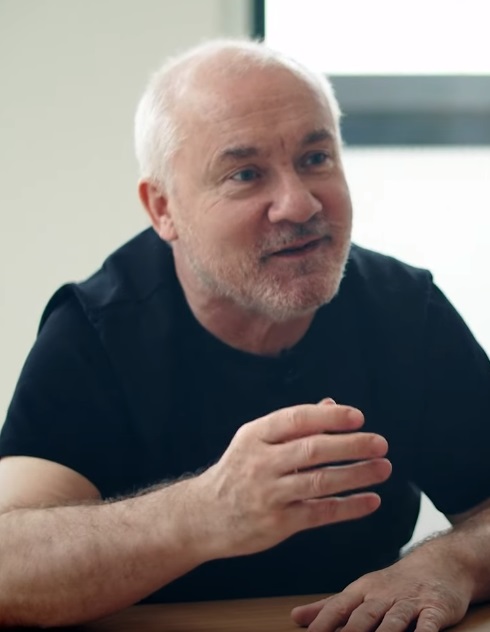
Damien Hirst
Damien Hirst is a prominent English artist and art collector, renowned for his provocative and often provocative works that challenge the boundaries of art, science, and mortality. As one of the leading figures of the Young British Artists (YBAs) movement in the 1990s, Hirst's career has been marked by controversy, innovation, and immense commercial success. With an estimated wealth of US$384 million, he is reportedly the United Kingdom's richest living artist, according to the 2020 Sunday Times Rich List.
Hirst's artistic practice encompasses a wide range of mediums, including painting, sculpture, installation, and photography. His works often explore themes of life, death, and the human condition, frequently incorporating scientific and medical imagery. The artist's use of taxidermy, formaldehyde, and other unconventional materials has sparked intense debate and criticism, while his commercial success has led to accusations of selling out.
Throughout his career, Hirst has been associated with several influential art dealers and collectors, including Charles Saatchi, with whom he had a close but ultimately tumultuous relationship. The artist's work has been exhibited in numerous high-profile galleries and museums worldwide, including the Tate, the Gagosian Gallery, and the Venice Biennale.
Early Life and Education
Damien Steven Hirst was born on June 8, 1965, in Bristol, England, to a family of modest means. His mother, Ann, was a hairdresser, and his father, Brian, was a hairdresser and a painter. Hirst's early life was marked by a strong interest in art, which was encouraged by his parents. He attended the Bristol Cathedral Choir School and later studied fine art at the Goldsmiths College, University of London, where he graduated in 1989.
Career
Hirst's early career was marked by a series of exhibitions and solo shows, including his first solo exhibition at the Institute of Contemporary Arts in London in 1991. His work quickly gained attention for its provocative and often disturbing imagery, which challenged the conventions of traditional art. In 1992, Hirst's work was included in the influential exhibition "Freeze," which showcased the work of several young British artists, including Tracy Emin, Sarah Lucas, and Sam Taylor-Johnson.
Throughout the 1990s, Hirst's career continued to flourish, with numerous solo exhibitions and commissions. In 1995, he created the iconic work "The Physical Impossibility of Death in the Mind of Someone Living," a shark suspended in a tank of formaldehyde, which became a defining image of the YBAs movement. The work was later sold to the Saatchi Gallery for £50,000 and has since become one of the most iconic and influential works of the 20th century.
Relationship with Charles Saatchi
Hirst's relationship with Charles Saatchi, the art dealer and collector, was a pivotal moment in his career. The two men met in the late 1980s, and Saatchi quickly became a key supporter and patron of Hirst's work. In 1995, Saatchi purchased Hirst's shark work for £50,000, which helped to launch the artist's career. However, the relationship between the two men became increasingly strained in the early 2000s, with Hirst accusing Saatchi of attempting to control his artistic output.
The relationship finally ended in 2003, with Hirst citing creative differences and a desire for greater artistic freedom. The split was widely reported in the media, with many speculating about the reasons behind the breakdown. Despite the controversy, Hirst's career continued to thrive, with numerous solo exhibitions and commissions.
Legacy
Damien Hirst's legacy is complex and multifaceted, reflecting the artist's innovative and often provocative approach to art. His work has been praised for its ability to challenge the conventions of traditional art and to push the boundaries of what is considered acceptable. However, his commercial success and association with the art market have also led to accusations of selling out and a lack of artistic integrity.
Despite these criticisms, Hirst's influence on contemporary art is undeniable. His use of unconventional materials and his exploration of themes such as life, death, and the human condition have inspired a generation of artists. His work has also been recognized for its technical skill and craftsmanship, with many of his pieces selling for millions of dollars at auction.
Criticism and Controversy
Hirst's work has been the subject of intense criticism and controversy throughout his career. Many have accused him of exploiting the art market and of prioritizing commercial success over artistic integrity. Others have criticized his use of taxidermy and other unconventional materials, which some have deemed to be in poor taste.
In 2008, Hirst was accused of plagiarism after it was discovered that he had used a photograph of a brain taken from a medical textbook in one of his works. The artist denied any wrongdoing, but the incident sparked a wider debate about the use of appropriation in art.







