




Overview
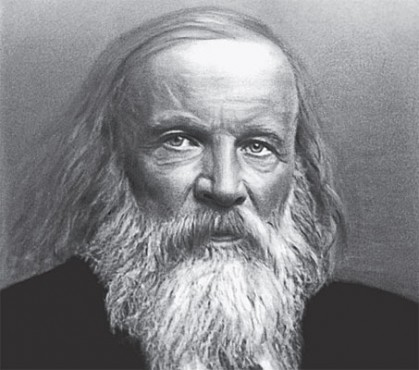
Dmitri Ivanovich Mendeleev stands as one of history's most visionary chemists, fundamentally transforming how humanity understands the building blocks of matter. In 1869, this Russian scientist unveiled his periodic table of elements, arranging the 63 known elements by atomic weight and properties, revealing an elegant pattern that seemed to govern nature itself. What made Mendeleev's achievement extraordinary wasn't merely organizing existing knowledge—it was his audacious prediction that gaps in his table represented undiscovered elements, complete with detailed forecasts of their properties. When three of these predictions were spectacularly confirmed over the next 15 years, Mendeleev's periodic law became established scientific truth, earning him recognition as the father of modern chemistry.Beyond his famous table, Mendeleev was a polymath whose interests spanned physics, economics, and technology. He developed groundbreaking theories about the nature of solutions, investigated the properties of gases at high and low pressures, and even helped establish Russia's first oil refinery. His work on the thermal expansion of liquids led to the creation of accurate thermometers, while his research on the compressibility of gases contributed to our understanding of critical temperature and pressure. This breadth of expertise made him one of the most influential scientists of his era, consulted by government and industry alike on matters ranging from agricultural chemistry to industrial development.
History/Background
Born on February 8, 1834, in Tobolsk, Siberia, Mendeleev overcame significant adversity in his early life. The youngest of 14 children, he lost his father at age 13 and witnessed his family's glass factory burn down. Despite these setbacks, his mother, Maria Dmitrievna, was determined to give her gifted son an education, traveling with him 1,300 miles to Moscow and then to St. Petersburg to secure his admission to university. After graduating from the Main Pedagogical Institute in St. Petersburg in 1855, Mendeleev pursued advanced studies in Europe, working in laboratories in Heidelberg and Paris, where he absorbed the latest developments in chemistry and physics.The pivotal moment came on February 17, 1869, when Mendeleev, then a professor at St. Petersburg University, had his famous dream. According to legend, after three days of working without sleep to organize the elements, he dreamed of a table where elements fell into place according to their properties. Upon awakening, he immediately wrote down his vision, creating what would become the periodic table. This breakthrough came at a crucial time—chemistry was in chaos, with new elements being discovered regularly and no systematic way to understand their relationships. Mendeleev's table brought order to this chaos, revealing that properties of elements recur periodically when arranged by atomic weight.
Key Information
Mendeleev's periodic table was revolutionary for several reasons. First, he arranged elements by atomic weight while also considering chemical properties, creating vertical columns (groups) of elements with similar characteristics. Second, he boldly left gaps in his table where no known elements fit, predicting that these represented undiscovered elements. For these gaps, he provided detailed predictions: eka-aluminum (gallium), eka-boron (scandium), and eka-silicon (germanium), including their atomic weights, densities, melting points, and chemical properties.The accuracy of these predictions was stunning. When gallium was discovered in 1875, its properties matched Mendeleev's predictions within experimental error. Scandium (1879) and germanium (1886) further confirmed his forecasts, with germanium's properties being predicted with remarkable precision—Mendeleev forecast a density of 5.5 g/cm³ (actual: 5.32 g/cm³) and atomic weight of 72 (actual: 72.63). He also corrected atomic weights for several elements, including beryllium (from 14 to 9) and uranium (from 120 to 240), based on their positions in his table.
Mendeleev's work extended beyond the periodic table. He developed the concept of absolute zero as -273°C, investigated the behavior of gases under varying pressures, and created a reliable method for determining the specific gravity of liquids. His textbook "Principles of Chemistry" (1868-1870) became a standard reference, going through numerous editions and translations. He also championed the use of the metric system in Russia and helped establish the Russian Chemical Society in 1868.
Significance
Mendeleev's periodic law fundamentally transformed chemistry from a collection of isolated facts into a unified science with predictive power. His table revealed that the properties of elements are not arbitrary but follow a periodic pattern, suggesting deep underlying principles governing atomic structure. This insight paved the way for future discoveries, including Henry Moseley's refinement using atomic number rather than atomic weight, and eventually to quantum mechanical explanations of periodicity.The synthetic element mendelevium (element 101), discovered in 1955, bears his name—a fitting tribute to a scientist who organized the elements. Modern chemistry, with its 118 known elements, still relies on the periodic table's basic structure, testament to Mendeleev's genius. His method of using patterns to predict unknown phenomena became a model for scientific discovery, influencing fields from physics to biology. Today, the periodic table hangs in every chemistry classroom worldwide, serving as both a practical tool and a monument to human understanding of nature's order.







