




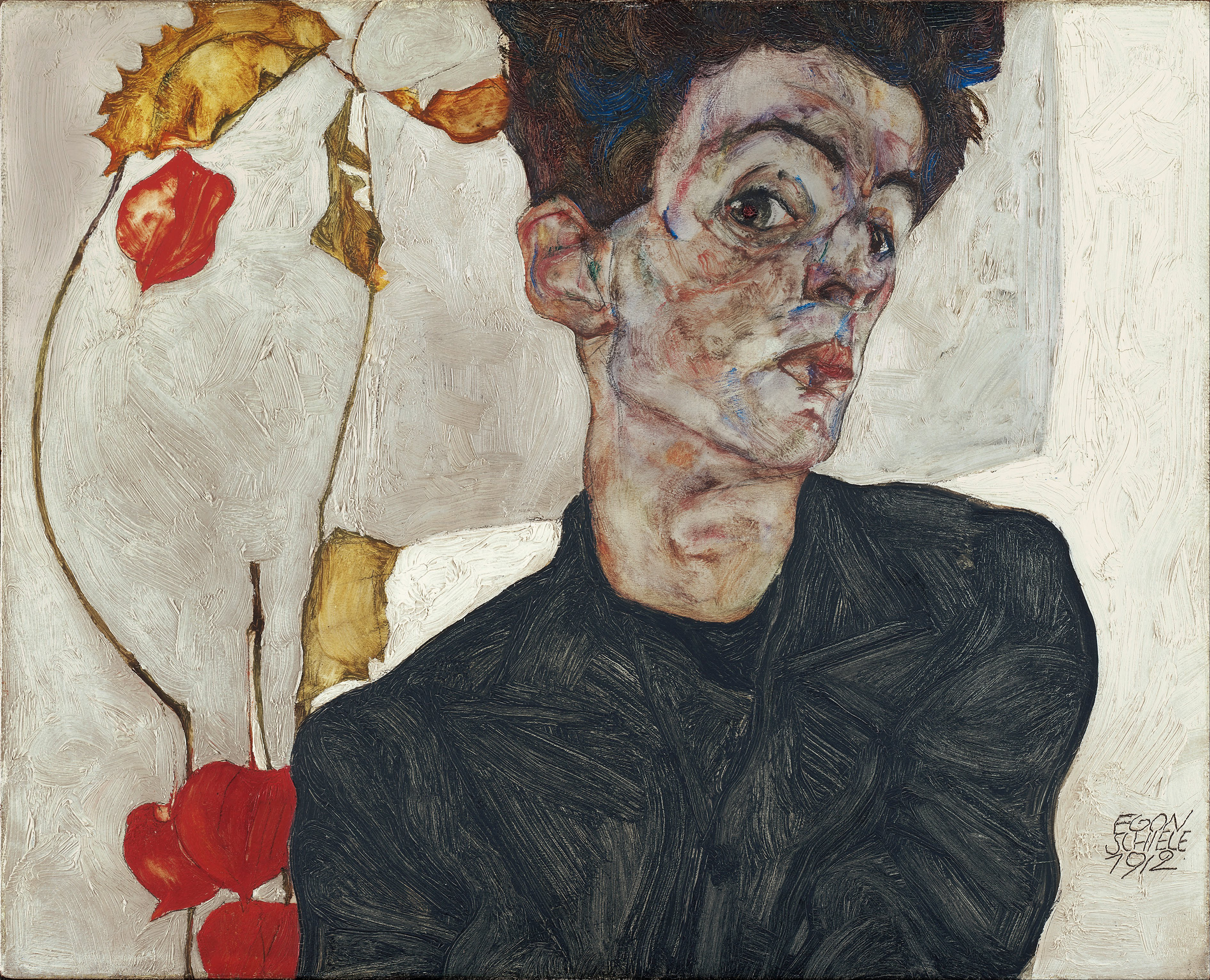
Egon Schiele
Egon Schiele was an Austrian Expressionist painter, known for his intense and raw depictions of the human form, often incorporating elements of psychoanalysis and existentialism. His work is characterized by its emphasis on emotional expression, distorted forms, and a focus on the inner lives of his subjects. Through his art, Schiele explored themes of sexuality, death, and the human condition, creating a unique and powerful visual language that continues to captivate audiences today.
Born in 1890 in Tulln an der Donau, Austria, Schiele was the eldest of three children to Adolf and Marie Schiele. His father, a station master, died when Schiele was just six years old, and his mother remarried when he was nine. Schiele's early life was marked by a series of moves, including a stint in Reichenberg, where he would later attend art school. It was during this time that he began to develop his artistic skills, influenced by the works of Gustav Klimt, who would become a mentor to the young artist.
Schiele's artistic style was shaped by his experiences as a soldier during World War I, as well as his own struggles with mental health and addiction. His paintings and drawings often feature twisted, elongated forms, and a focus on the emotional and psychological states of his subjects. Through his work, Schiele sought to capture the intensity and complexity of human experience, often using himself as a subject in his art.
Early Life and Education
Egon Schiele was born on June 12, 1890, in Tulln an der Donau, Austria, to Adolf and Marie Schiele. His father, a station master, died when Schiele was just six years old, and his mother remarried when he was nine. Schiele's early life was marked by a series of moves, including a stint in Reichenberg, where he would later attend art school.
In 1906, Schiele began attending the Reichenberg Academy of Fine Arts, where he studied under the tutelage of Karl von Blaas. It was during this time that he began to develop his artistic skills, influenced by the works of Gustav Klimt, who would become a mentor to the young artist. Schiele's early work was characterized by its emphasis on traditional techniques and forms, but he soon began to experiment with new styles and mediums.
Career
Schiele's artistic career was marked by a series of exhibitions and sales, both in Austria and abroad. In 1911, he held his first solo exhibition in Vienna, which was met with critical acclaim. Over the next several years, Schiele continued to refine his style, experimenting with new techniques and mediums. His work was influenced by the Fauvist movement, as well as the Cubist movement, and he began to incorporate elements of psychoanalysis and existentialism into his art.
In 1912, Schiele traveled to Italy, where he was exposed to the works of Renaissance artists such as Michelangelo and Leonardo da Vinci. This experience had a profound impact on his work, and he began to incorporate elements of classical art into his own style. Schiele's paintings and drawings from this period are characterized by their emphasis on emotional expression, distorted forms, and a focus on the inner lives of his subjects.
Legacy
Egon Schiele's legacy as an artist is complex and multifaceted. His work was influential in the development of Expressionism, a movement that emphasized the emotional and psychological states of its subjects. Schiele's paintings and drawings continue to captivate audiences today, and his influence can be seen in the work of artists such as Francis Bacon and Lucian Freud.
Despite his significant contributions to the art world, Schiele's life was marked by struggles with mental health and addiction. He died on October 31, 1918, at the age of 28, due to complications from the Spanish flu. Schiele's work was largely forgotten after his death, but it was rediscovered in the 1950s and 1960s, and he is now recognized as one of the most important artists of the 20th century.
Style and Technique
Schiele's artistic style was characterized by its emphasis on emotional expression, distorted forms, and a focus on the inner lives of his subjects. His paintings and drawings often feature twisted, elongated forms, and a focus on the psychological and emotional states of his subjects. Schiele's use of color was also innovative, and he often incorporated bold, vibrant hues into his work.
Schiele's technique was influenced by the Fauvist movement, as well as the Cubist movement, and he began to experiment with new mediums and techniques. He was particularly interested in the use of ink and watercolor, and his drawings and paintings often feature bold, expressive lines.
Collections and Exhibitions
Schiele's work can be found in museums and collections around the world, including the Leopold Museum in Vienna, the Museum of Modern Art in New York, and the Tate Modern in London. His paintings and drawings have been the subject of numerous exhibitions, including a retrospective at the Guggenheim Museum in 2015.







