




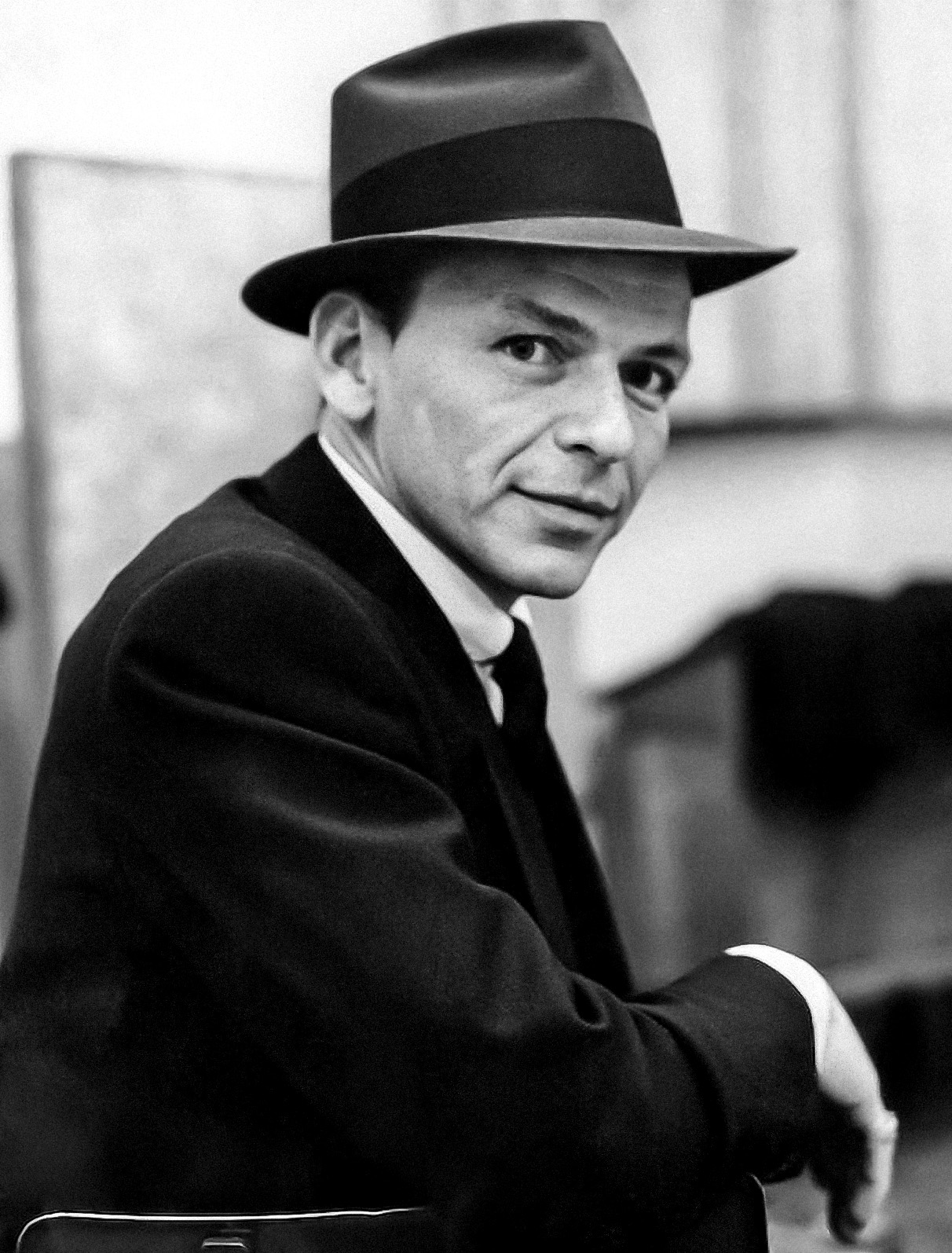
Frank Sinatra
Francis Albert Sinatra was an American singer and actor, widely regarded as one of the most influential entertainers of the 20th century. Nicknamed the "Chairman of the Board" and "Ol' Blue Eyes," Sinatra's impact on popular culture extends far beyond his own music and film career, shaping the very fabric of American entertainment. His distinctive voice, charismatic stage presence, and effortless charm captivated audiences worldwide, cementing his status as an icon of his era.
Born on December 12, 1915, in Hoboken, New Jersey, Sinatra's early life was marked by a passion for music and performance. He began singing in local bars and nightclubs as a teenager, eventually landing a recording contract with the Bluebird label in 1939. However, it was his collaboration with Columbia Records in the early 1940s that truly launched his career, yielding hits like "All or Nothing at All" and "I'll Never Smile Again." Sinatra's unique vocal style, characterized by his smooth, velvety tone and effortless phrasing, quickly set him apart from his contemporaries.
Sinatra's film career, which spanned over four decades, saw him starring in a wide range of genres, from musicals like "Anchors Aweigh" (1945) and "On the Town" (1949) to dramatic roles in "From Here to Eternity" (1953) and "The Manchurian Candidate" (1962). His collaborations with esteemed directors like Billy Wilder and Alfred Hitchcock further solidified his status as a Hollywood A-lister. Sinatra's personal life, marked by high-profile romances and marriages, including his union with actress Ava Gardner, also garnered significant media attention.
Throughout his career, Sinatra was known for his tireless work ethic, often performing multiple shows per week and recording albums at a breakneck pace. His commitment to his craft earned him a reputation as a perfectionist, driving him to continually push the boundaries of his art. Sinatra's influence can be seen in the work of countless musicians who followed in his footsteps, from Dean Martin and Sammy Davis Jr. to Tony Bennett and Elvis Presley.
Early Life
Francis Albert Sinatra was born on December 12, 1915, in Hoboken, New Jersey, to Italian immigrant parents, Anthony Martin Sinatra and Natalina "Dolly" Garaventa Sinatra. Sinatra's early life was marked by a strong musical influence, with his father serving as a amateur singer and musician. Sinatra's mother, a seamstress, encouraged his love of music, often singing traditional Italian songs to him as a child.
Sinatra's family struggled financially, with his father working multiple jobs to make ends meet. Despite these challenges, Sinatra's parents instilled in him a strong sense of ambition and determination, qualities that would serve him well throughout his career. Sinatra attended David E. Rue Jr. High School in Hoboken, where he developed a passion for singing and performing. He began singing in local bars and nightclubs as a teenager, eventually landing a recording contract with the Bluebird label in 1939.
Career
Sinatra's music career spanned over five decades, during which he released numerous albums and singles, many of which became instant classics. His early work with Columbia Records in the 1940s yielded hits like "All or Nothing at All" and "I'll Never Smile Again." Sinatra's unique vocal style, characterized by his smooth, velvety tone and effortless phrasing, quickly set him apart from his contemporaries.
Sinatra's film career, which spanned over four decades, saw him starring in a wide range of genres, from musicals like "Anchors Aweigh" (1945) and "On the Town" (1949) to dramatic roles in "From Here to Eternity" (1953) and "The Manchurian Candidate" (1962). His collaborations with esteemed directors like Billy Wilder and Alfred Hitchcock further solidified his status as a Hollywood A-lister.
Sinatra's personal life, marked by high-profile romances and marriages, including his union with actress Ava Gardner, also garnered significant media attention. His friendships with other celebrities, including Dean Martin and Sammy Davis Jr., further cemented his status as a Hollywood icon.
Legacy
Sinatra's impact on popular culture extends far beyond his own music and film career, shaping the very fabric of American entertainment. His distinctive voice, charismatic stage presence, and effortless charm captivated audiences worldwide, cementing his status as an icon of his era. Sinatra's influence can be seen in the work of countless musicians who followed in his footsteps, from Dean Martin and Sammy Davis Jr. to Tony Bennett and Elvis Presley.
Sinatra's legacy extends beyond his music and film career, with his commitment to social justice and civil rights earning him a reputation as a champion of the underdog. His support for the Civil Rights Movement, including his attendance at the 1963 March on Washington, further solidified his status as a cultural icon.
Awards and Honors
Throughout his career, Sinatra received numerous awards and honors for his contributions to music and film. He won three Academy Awards for Best Supporting Actor, as well as ten Grammy Awards for his music. Sinatra was also awarded the Presidential Medal of Freedom in 1985, the highest civilian honor in the United States.







