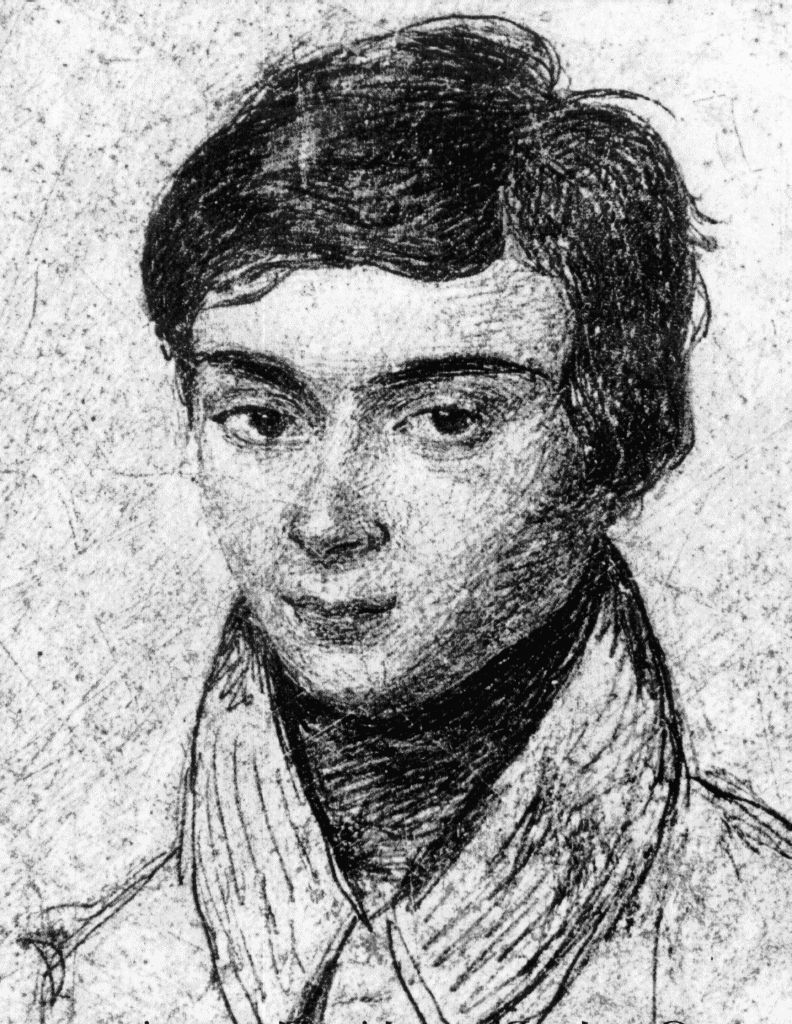

**
Overview
Franz Liszt stands as one of the most dazzling figures of the 19th‑century Romantic movement. Born in the Austro‑Hungarian border town of Raiding, he displayed prodigious musical talent from early childhood, quickly outgrowing the modest piano lessons of his father, a church organist. By his teens, Liszt was dazzling aristocratic salons across Europe, earning the nickname “the Pianist of the Century.” His performances were not merely concerts; they were theatrical events that combined technical fireworks, expressive depth, and a magnetic stage presence that turned the piano into a vehicle for heroic storytelling.Beyond his dazzling virtuosity, Liszt was a prolific composer whose output spanned symphonies, choral works, chamber music, and, most famously, a vast repertoire of piano literature. His Transcendental Études, Hungarian Rhapsodies, and Années de pèlerinage pushed the instrument’s technical limits while exploring new harmonic territories that foreshadowed modernism. As a conductor, he championed the music of his contemporaries—most notably Richard Wagner—helping to shape the direction of European opera and orchestral repertoire.
History/Background
Liszt’s early life was marked by rapid geographic and artistic mobility. After his family moved to Eisenstadt in 1821, the young Franz studied under the eminent Austrian composer Antonio Salieri and later with Carl Czerny, a pupil of Beethoven, who imparted rigorous technical discipline. By 1829, at just eighteen, Liszt embarked on his first major concert tour of Europe, dazzling audiences in Vienna, Paris, and London.In 1840, Liszt settled in Weimar, accepting a court appointment that allowed him to focus on composition, conducting, and pedagogy. This period produced his Symphonic Poems, a pioneering form that merged narrative ideas with orchestral music, influencing later composers such as Richard Strauss. Liszt’s personal life intertwined with his artistic evolution; his intense friendship with Frédéric Chopin, his romantic liaison with Countess Marie d'Agoult (with whom he fathered three children, including the famed writer Cosima, later Wagner’s wife), and his later spiritual turn toward Catholicism all left indelible marks on his music.
Liszt’s later years were spent in Rome and Budapest, where he served as Kapellmeister of the Royal Hungarian Academy of Music, mentoring a new generation of pianists—including Hans von Bülow, Carl Tausig, and Clara Schumann. He died in Bayreuth in 1886, a city he had come to love through his support of Wagner’s festival.
Key Information
- Birth/Death: 22 October 1811 – 31 July 1886. - Nationality: Hungarian (born in the Austrian Empire). - Major Works: Transcendental Études, Hungarian Rhapsodies, Les préludes (Symphonic Poem), Missa Solemnis, Piano Concerto No. 1 & 2, Années de pèlerinage. - Innovations: Pioneered the solo piano recital as a public art form; introduced the sympathetic poem (programmatic orchestral work); expanded harmonic language with chromaticism and daring modulations. - Pedagogical Impact: Developed a systematic approach to piano technique that emphasized economy of motion, influencing modern piano pedagogy. - Conducting Achievements: Directed the Weimar Court Orchestra, premiering many of Wagner’s operas and championing contemporary works. - Awards/Honors: Ennobled as Baron von Liszt by the Austrian Empire in 1859; received numerous honorary doctorates and the title of Royal Professor in Weimar.Significance
Liszt’s legacy is multifaceted. As a performer, he transformed the piano recital into a cultural spectacle, setting standards for virtuosity that still define concert expectations. His compositional daring opened doors for later Romantic and early‑modern composers, with his use of thematic transformation influencing Wagner’s leitmotif technique and foreshadowing the atonal experiments of the 20th century.Liszt’s cultural diplomacy—bridging Hungarian folk idioms with Western art music—helped legitimize nationalistic elements in classical composition, inspiring composers like Béla Bartók and Zoltán Kodály. As a teacher, his masterclasses cultivated a lineage of pianists who disseminated his techniques across Europe and America, ensuring that his interpretive ideals persisted long after his death.
In contemporary performance, Liszt’s works remain staples of the concert repertoire, celebrated for their emotional breadth and technical brilliance. Recordings by pianists such as Martha Argerich, Lang Lang, and Yuja Wang attest to the enduring appeal of his music. Moreover, his visionary concept of the symphonic poem continues to influence film scoring and programmatic composition, underscoring his lasting relevance in both classical and popular culture.
INFOBOX:
- Name: Franz Liszt
- Type: Composer, Pianist, Conductor, Teacher
- Date: 1811–1886 (active career 1823–1886)
- Location: Born in Raiding (now Austria), major activity in Weimar, Paris, Budapest, Rome, and Bayreuth
- Known For: Revolutionary piano virtuosity, pioneering symphonic poems, and expansive Romantic repertoire
TAGS: Romanticism, piano virtuoso, Hungarian composers, symphonic poem, 19th‑century music, music pedagogy, programmatic music, cultural nationalism