




Overview
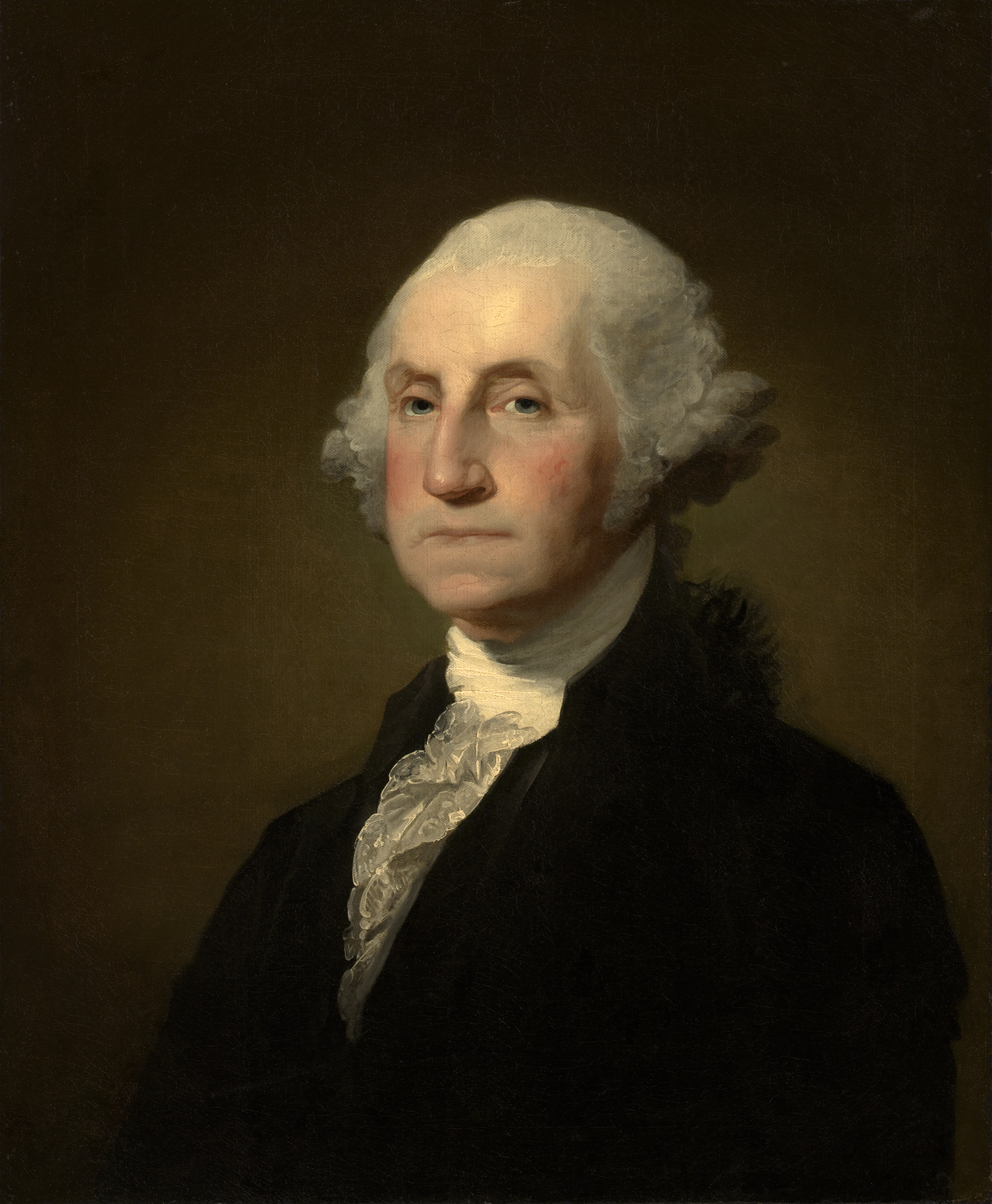
George Washington (1732-1799) occupies a singular perch in world history: the rare revolutionary general who voluntarily surrendered power twice—first to the civilian Confederation Congress in 1783 and again after his second presidential term in 1797. His blend of military prudence and republican restraint converted thirteen quarrelsome colonies into a durable federal union and gave the infant United States a cachet of legitimacy it desperately needed among skeptical European courts. Revered in his lifetime as the “American Fabius” for his Fabian tactics against the British, Washington posthumously became the touchstone of national memory, his name attached to the federal capital, a state, thirty-one counties, and innumerable schools, bridges, and mountains. Yet behind the marble icon stood a shrewd planter-entrepreneur who expanded his Mount Vernon estate from 2,000 to nearly 8,000 acres, traded western lands for political influence, and held 317 enslaved people at the time of his death—an internal contradiction that later generations have wrestled with in reassessing his legacy.Washington’s genius lay less in battlefield brilliance—he lost more actions than he won—than in preserving an under-supplied, under-paid Continental Army as a credible force for eight grinding years. By sustaining the revolution’s momentum, he created the strategic predicate for French intervention and the 1781 Yorktown capitulation that ended major combat. As president, he walked a tightrope between Federalist and Democratic-Republican factions, institutionalizing practices—cabinet governance, executive neutrality in foreign wars, two-term limits—that subsequent chief executives emulated for 144 years. His 1796 Farewell Address, ghost-written with Hamilton, became scripture for isolationists and unionists alike, warning against “the baneful effects of the spirit of party” and permanent foreign entanglements.
Background
Born 22 February 1732 on the tobacco frontier of Westmoreland County, Virginia, Washington was the eldest child of Augustine Washington and his second wife, Mary Ball. The death of his father in 1743 ended formal schooling after the equivalent of an elementary education, steering the adolescent toward surveying—an occupation that combined income with reconnaissance of trans-Appalachian lands coveted by Virginia gentry. His half-brother Lawrence’s marriage into the powerful Fairfax clan opened doors: at sixteen Washington joined a surveying expedition to the Shenandoah Valley, acquiring 1,500 acres of bounty land that seeded his fortune.Military ambition followed. Appointed major in the Virginia militia (1752), he blundered into the opening shots of the Seven Years’ War at Jumonville Glen (1754) and survived defeat at Fort Necessity. Serving under General Edward Braddock in 1755, Washington displayed conspicuous courage, emerging with four bullet holes in his coat and a reputation that propelled him into the House of Burgesses (1758). Marriage in January 1759 to Martha Dandridge Custis, a wealthy widow, instantly made him one of Virginia’s largest landholders and cemented his ascent into the planter elite. Mount Vernon became both laboratory and showcase: Washington diversified from tobacco to wheat, experimented with crop rotation, and opened a profitable distillery—while simultaneously buying more enslaved laborers to make it profitable.






