




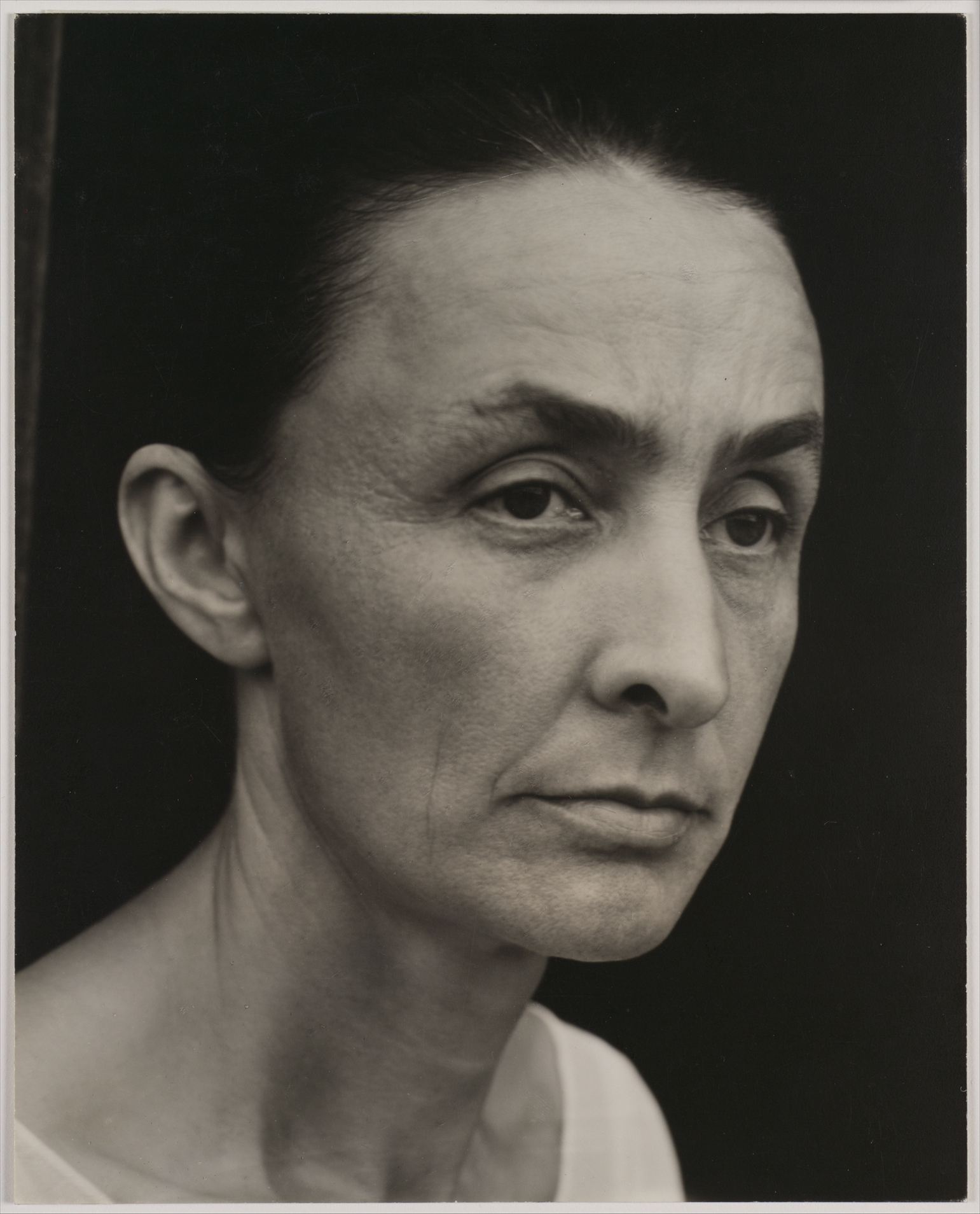
Georgia O'Keeffe
Georgia O'Keeffe was a pioneering American modernist painter and draftswoman whose career spanned seven decades, leaving an indelible mark on the art world. Dubbed the "Mother of American modernism," O'Keeffe's innovative style and unwavering dedication to her craft earned her international recognition for her captivating paintings of natural forms, particularly flowers, hills, and desert-inspired landscapes. While her work was often associated with feminist interpretations, O'Keeffe herself preferred to be seen as an artist, rather than a "woman artist." This enigmatic figure continues to inspire and intrigue art enthusiasts to this day.
Born on November 15, 1887, in Sun Prairie, Wisconsin, Georgia Totto O'Keeffe was the second of seven children to Francis and Ida Totto. Her early life was marked by a deep connection to nature, which would later become a recurring theme in her art. O'Keeffe's family moved to Madison, Wisconsin, when she was nine years old, where she developed a passion for drawing and painting. She attended the Art Institute of Chicago in 1905 and later enrolled in the Art Students League of New York in 1908, where she studied under the tutelage of William Merritt Chase.
Early Career
O'Keeffe's early career was marked by a series of significant events that would shape her artistic trajectory. In 1912, she began teaching at the Amarillo Art Institute in Texas, where she met her future husband, Alfred Stieglitz, a renowned photographer and art dealer. Stieglitz would become a crucial figure in O'Keeffe's life, not only as her husband but also as her mentor and promoter. He introduced her work to a wider audience, showcasing her paintings in his gallery, 291, in New York City. In 1916, O'Keeffe's work was featured in the Armory Show, a groundbreaking exhibition that introduced European modernism to the American public.
Career
O'Keeffe's career spanned seven decades, during which she produced an impressive body of work that defied categorization. Her paintings of flowers, hills, and desert landscapes were characterized by their bold colors, simplified forms, and sense of abstraction. O'Keeffe's use of scale, particularly in her flower paintings, was a deliberate choice to emphasize the beauty and power of these natural forms. Her work was not limited to painting; she also experimented with sculpture, printmaking, and photography. In the 1920s, O'Keeffe began to explore the American Southwest, which would become a recurring theme in her work. She settled in New Mexico in 1929, where she lived until her death in 1986.
Legacy
Georgia O'Keeffe's legacy extends far beyond her own lifetime. She paved the way for future generations of women artists, demonstrating that it was possible to succeed in a male-dominated field. Her innovative style and technique influenced a wide range of artists, from Abstract Expressionists to Pop Artists. In 1946, O'Keeffe's work was featured in a solo exhibition at the Museum of Modern Art in New York City, cementing her status as a leading figure in American modernism. Today, O'Keeffe's paintings are held in the highest esteem, with many of her works selling for millions of dollars at auction.
Criticism and Controversy
Despite her significant contributions to American modernism, O'Keeffe's work has not been without controversy. Some critics have accused her of being overly focused on her own personal experiences, particularly her relationships with men. Others have questioned the accuracy of her depictions of natural forms, suggesting that they are overly simplified or idealized. However, O'Keeffe's defenders argue that her work is a testament to the power of art to transcend the mundane and tap into the sublime.
Personal Life
O'Keeffe's personal life was marked by a series of significant relationships, including her marriage to Alfred Stieglitz in 1924. The couple's relationship was marked by a deep emotional connection, but also by periods of tension and infidelity. O'Keeffe's relationship with Stieglitz's daughter, Kitty, was also significant, as the two women developed a close bond that lasted throughout their lives.







