




Overview
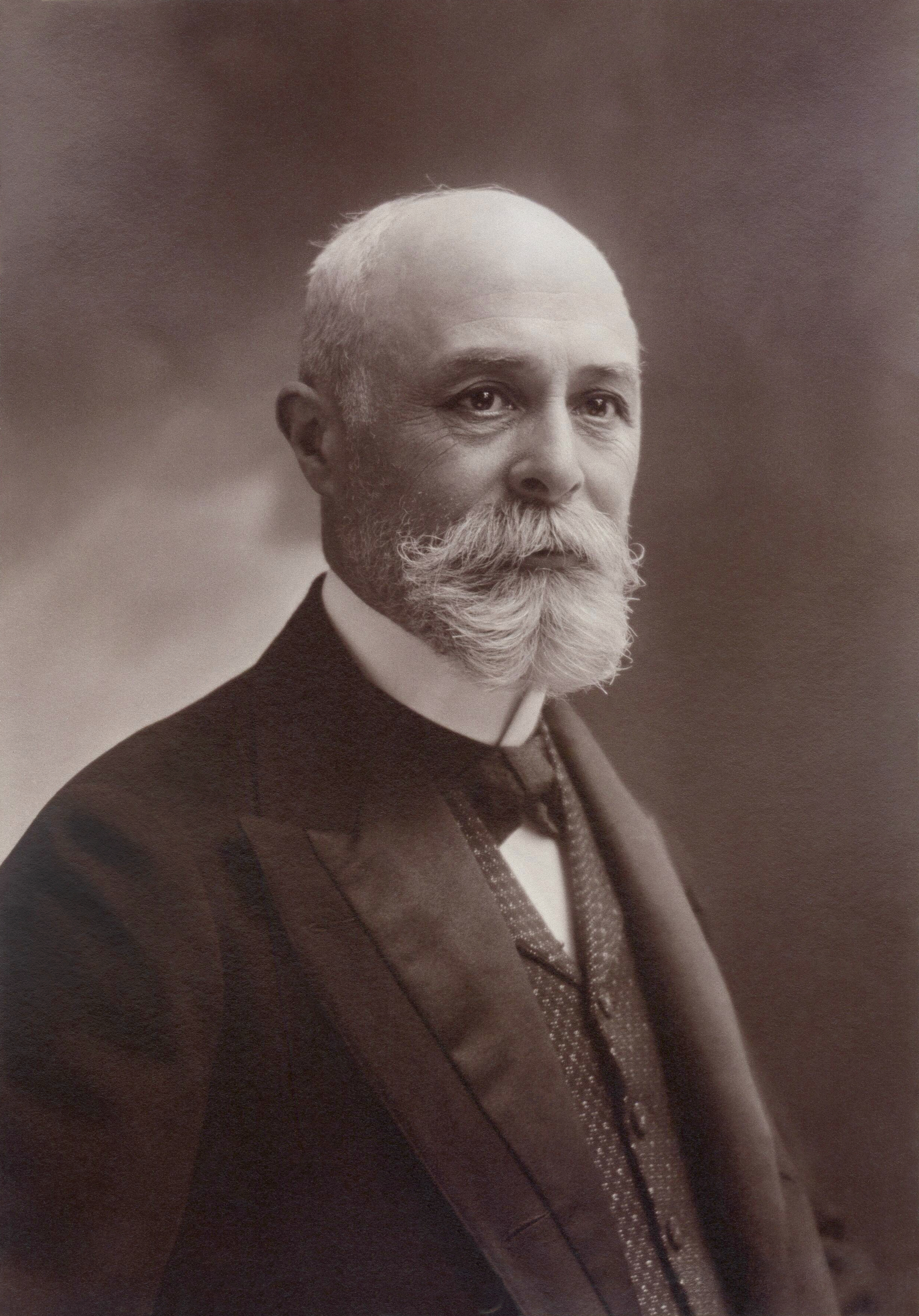
Antoine Henri Becquerel (1852-1908) revolutionized physics through his accidental discovery of natural radioactivity, revealing that atoms could spontaneously emit radiation without external stimulation. This groundbreaking observation, made on March 1, 1896, opened entirely new fields of nuclear physics and chemistry, ultimately leading to applications ranging from medical imaging to nuclear power. His meticulous experimental work demonstrated that uranium compounds emitted penetrating radiation capable of exposing photographic plates, even when wrapped in black paper and kept in darkness.Becquerel's discovery bridged the gap between chemistry and physics, showing that certain elements possessed an intrinsic property that caused them to transform into other elements over time. This phenomenon, which he initially called "uranic rays," would later be termed radioactivity by Marie Curie, who built upon his work to discover additional radioactive elements like polonium and radium.
History/Background
Born into a distinguished scientific family on December 15, 1852, Henri Becquerel inherited a legacy of physics research spanning three generations. His grandfather, Antoine César Becquerel, pioneered electrochemical studies, while his father, Alexandre-Edmond Becquerel, investigated solar radiation and phosphorescence. This scientific heritage positioned young Henri at the forefront of French physics, eventually earning him the chair of physics at the Muséum National d'Histoire Naturelle in 1892.The discovery of radioactivity emerged from Becquerel's investigation of phosphorescence in uranium salts following Wilhelm Röntgen's 1895 discovery of X-rays. Initially believing uranium's phosphorescence might emit similar penetrating radiation, Becquerel accidentally discovered that unexposed uranium salts still fogged photographic plates. This serendipitous finding occurred when cloudy weather prevented his planned experiments with sunlight, leading him to develop the plates anyway on March 1, 1896.
Key Information
Becquerel's experimental setup was elegantly simple yet profoundly revealing. He placed uranium salts on photographic plates wrapped in black paper, expecting that only sunlight-induced phosphorescence would create images. When the plates showed clear exposure patterns without light stimulation, he realized uranium possessed an intrinsic radioactive property. Subsequent experiments demonstrated that this radiation could penetrate various materials, ionize gases, and occurred continuously regardless of environmental conditions.His quantitative measurements revealed that radiation intensity depended solely on the quantity of uranium present, establishing radioactivity as an atomic property rather than a molecular one. This insight proved crucial for understanding atomic structure and led directly to the discovery of additional radioactive elements. Between 1896-1902, Becquerel published 20 papers detailing his investigations, including measurements showing that uranium's radiation decreased by half approximately every 4.5 billion years—what we now recognize as its half-life.
The 1903 Nobel Prize in Physics, shared with Marie and Pierre Curie, recognized these fundamental contributions to understanding atomic radiation. Becquerel received half the prize, while the Curies shared the remaining half for their complementary work on radium and polonium. His later research focused on radioactive decay phenomena, establishing that radiation consisted of charged particles deflected by magnetic fields.
Significance
Becquerel's discovery fundamentally altered humanity's understanding of matter, proving that atoms were not indivisible building blocks but complex systems capable of spontaneous transformation. This revelation directly inspired Marie Curie's systematic search for radioactive elements, Ernest Rutherford's nuclear model of the atom, and ultimately led to nuclear physics and chemistry. The practical applications stemming from his work transformed medicine through radiation therapy, enabled carbon dating techniques, and eventually produced nuclear energy.His legacy extends beyond the scientific breakthrough itself, demonstrating how careful observation of unexpected experimental results can yield revolutionary discoveries. The International System of Units honors him through the becquerel (Bq), defined as one radioactive decay per second, ensuring his name remains integral to radiation measurement. Modern particle physics, nuclear medicine, and astrophysics all trace their foundations to Becquerel's 1896 realization that matter contains hidden, transformative energy.







