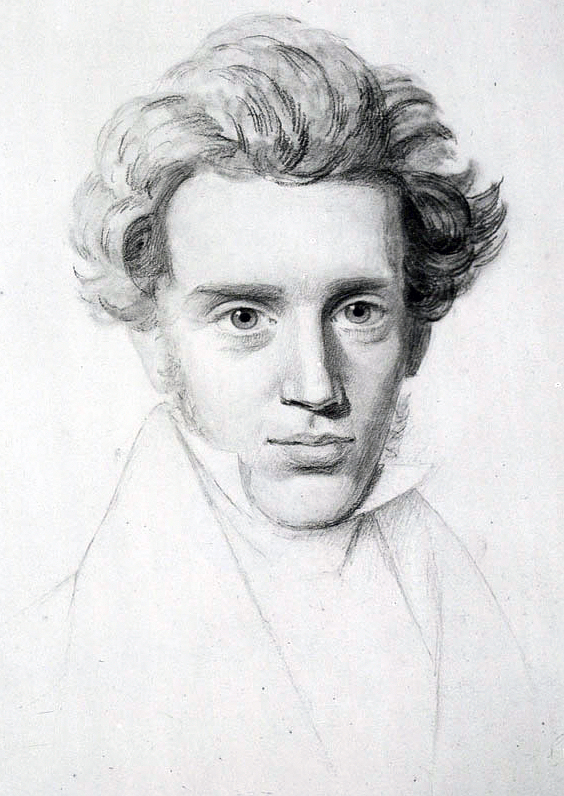
Heraclitus of Ephesus (c. 535-475 BCE) was the pre-Socratic “philosopher of flux” whose doctrine of universal change and the Logos ignited Western metaphysics, ethics, and theology.
Heraclitus stands at the crossroads of myth and reason, a solitary thinker who distilled the cosmos into a single, restless fire. Rejecting the static Being of his predecessors, he proclaimed that everything flows (panta rhei) and that strife is the father of all things. His enigmatic style—half oracle, half aphorism—earned him the sobriquet “the Obscure,” yet his fragments became seeds from which Plato, the Stoics, Hegel, Nietzsche, and modern process philosophy grew. Central to his vision is the Logos: an immanent rational order that steers the kosmos like a hidden helm, accessible to the waking soul but closed to those “asleep.” Thus Heraclitus shifted philosophical inquiry from stuff to structure, from matter to meaning, inaugurating a perennial conversation about change, identity, and the unity of opposites.
Background
Ephesus, a wealthy Ionian port under Persian satrapal rule, fostered a cosmopolitan ferment of Greek, Lydian, and Persian ideas. Born into the aristocratic lineage of the Androclids, Heraclitus renounced the honorary kingship (basileia) in favor of solitary contemplation, retreating to the temple of Artemis where, legend says, he played knucklebones with children to mock the folly of grown-ups. Disgusted by the vulgarity of his fellow citizens and the polymath pretensions of earlier thinkers, he wrote a single prose–poem On Nature, depositing it in the temple as a spiritual time-capsule. Fragments survive only because later authors—especially Aristotle’s pupil Theophrastus—quoted them as philosophical curiosities.
Key Facts
- Flourished c. 500 BCE; died c. 475 BCE at ~60 years old
- Only 126 short fragments (c. 1,300 words) survive from an original single scroll
- Coined the term “Logos” as cosmic rational principle; influenced Stoic theology and John 1:1
- Doctrine of flux preserved in Plato’s Cratylus: “You cannot step into the same river twice”
- Held fire as the arche (first-stuff), a self-measuring blaze that transforms in measured cycles
- Posthumous epithet: “The Weeping Philosopher,” contrasted with Democritus, “The Laughing Philosopher”
- Buried in the Ceramicus of Ephesus; tomb inscribed: “I am Heraclitus, who laid down the law that all things change”
Impact
Heraclitus’ assertion that change itself is the only constant became the metaphysical bedrock of Western thought. Plato reworked the flux doctrine into his theory of Forms, while Aristotle tempered it with the principle of non-contradiction. The Stoics identified his cosmic fire with their divine pneuma and cyclic conflagration (ekpyrosis). Hegel saw in the unity of opposites the dialectical motor of history; Nietzsche celebrated Heraclitus as the first tragic thinker who said Yes to becoming; Whitehead’s process philosophy and modern physics’ flux of quantum fields echo his vision. In theology, the Logos bridged Greek reason and Judeo-Christian revelation, shaping patristic Christology. Ethically, Heraclitus reminds us that identity is achieved, not given, and that wisdom consists in attuning the soul to the hidden harmony of strife.
Tip: double-click any word in this article for an instant definition from the NerdDictionary.