Overview
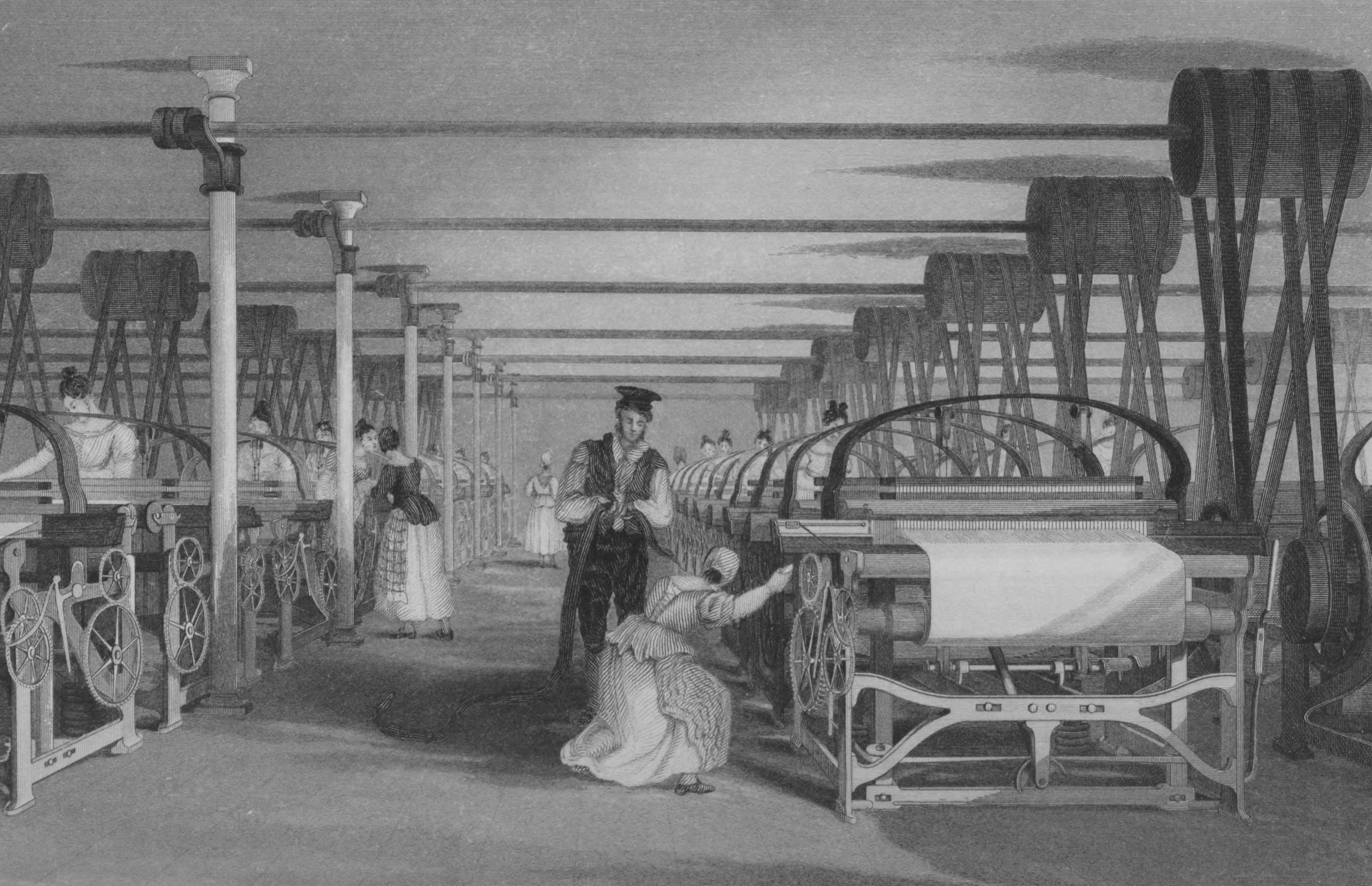
Between 1760 and 1840 the British Isles became the laboratory for a new civilisation. Water frames, coke-fired blast furnaces and rotative steam engines displaced handlooms, charcoal hearths and seasonal mills. By 1850 the “First” Industrial Revolution had crossed the Atlantic and the Rhine; a “Second” wave (c. 1870-1914) fused electricity, chemistry and steel into mass-production networks. Textiles led the charge: mechanised spinning lowered yarn costs by 90 % and drew rural hand-spinners into urban mills. Iron output rose from 17,000 t in 1740 to 2,000,000 t in 1850, while railway track grew from nil to 6,600 km in Britain alone. Productivity per worker in constant prices roughly tripled between 1760 and 1913, while European population quadrupled. For the first time in history, living standards rose faster than births, creating a sustained escape from the Malthusian trap.
Yet the revolution was never merely technical. It re-organised time (the factory bell replaced the sun), space (industrial cities mushroomed) and society (wage labour became the norm). Contemporaries called it “the great metamorphosis”; historians now see it as the hinge between millennia of slow growth and the modern era of perpetual innovation.
Background
Britain’s peculiar cocktail of coal, colonies and constitutional stability set the stage. Geological good fortune placed easily mined coal seams near navigable rivers; by 1700 Newcastle alone shipped 1.5 million t annually to London. Colonial markets—especially India and the Caribbean—absorbed woollens and ironware, while sugar and cotton flowed back, feeding both calories and raw fibre to domestic industry. Post-1688 parliamentary supremacy protected property rights without stifling dissent, so Dissenters such as the Darbys and Wedgwoods could bank and experiment freely. The Scientific Revolution supplied a culture of measurement and experiment; the Newtonian ethos permeated the Lunar Society where James Watt, Joseph Priestley and Erasmus Darwin exchanged data over tea. Finally, the “Industrious Revolution” of the seventeenth century had already lengthened working hours and commercialised households, priming consumers for cheap cotton and pottery.
Key Facts
- 1712 – Thomas Newcomen’s atmospheric engine first drains a Staffordshire coal-mine.
- 1733 – John Kay patents the flying shuttle, doubling weaver productivity.
- 1764 – James Hargreaves invents the spinning jenny (8 spindles).
- 1769 – Richard Arkwright’s water frame and Watt’s separate condenser patent; steam becomes profitable.
- 1779 – Cromford mill combines water frame and mechanised carding; 600 workers under one roof.
- 1784 – Henry Cort’s puddling & rolling cuts iron costs by 50 %.
- 1785 – Edmund Cartwright’s power loom; by 1833 100,000 operate in Britain.
- 1801 – Richard Trevithick’s high-pressure locomotive; by 1830 Liverpool–Manchester railway carries 500,000 passengers a year.
- 1825 – UK exports 250 million yards of cotton cloth; by 1860 the figure tops 2 billion.
- 1840 – Britain produces 60 % of world coal, 50 % of iron, 75 % of cotton textiles.
- 1851 – Great Exhibition showcases 13,000 exhibits in the Crystal Palace: 6 million visitors marvel at the “work of all nations.”
Impact
The Industrial Revolution rewrote the human condition. Global GDP per capita, flat for centuries, hockey-sticked upward; DeLong (2022) estimates a fifteen-fold increase since 1800. Urbanisation raced ahead: Manchester’s population exploded from 25,000 in 1770 to 300,000 in 1850, creating both bourgeois suburbs and proletarian slums. The labour movement, public-health legislation and the first environmental laws (Alkali Acts 1863) emerged in response to soot and typhus. Imperial power shifted: steam gunboats could sail up the Yangtze, while Indian weavers faced machine-made Lancashire yarn. Feminists debate whether mill work liberated or exploited women; real wages for British workers probably doubled between 1815 and 1850, but gains were uneven and cyclical. Carbon emissions began their climb toward today’s climate crisis: coal use rose from 10 million t in 1800 to 160 million t by 1900. Culturally, the revolution fostered new notions of progress, time-discipline and the very idea of “industry” as a virtue. In short, it supplied both the material surplus that made universal education possible and the carbon legacy that now imperils the planet.