Overview
From its first appearance in the 1180s to its final gasp in the 1820s, the Inquisition was less a single monolithic body than a flexible judicial procedure that popes, kings, and bishops adapted to local needs. At its core lay the inquisitio, a Roman-law method that allowed judges to ex officio denounce, interrogate, and sentence suspects. When fused with the medieval Church’s claim to universal spiritual authority, this procedure became a powerful engine for policing belief. Over six centuries the Inquisition spawned a constellation of tribunals—Medieval, Spanish, Portuguese, Roman, and Neo-Spanish—whose records run to millions of pages and whose prisons once stretched from Lima to Manila. While modern memory fixates on torture and autos-da-fé, the institution’s deeper legacy lies in the creation of a bureaucratic model for state surveillance and in the forging of a Catholic identity defined, in part, by the enemies it expelled or reformed.History/Background
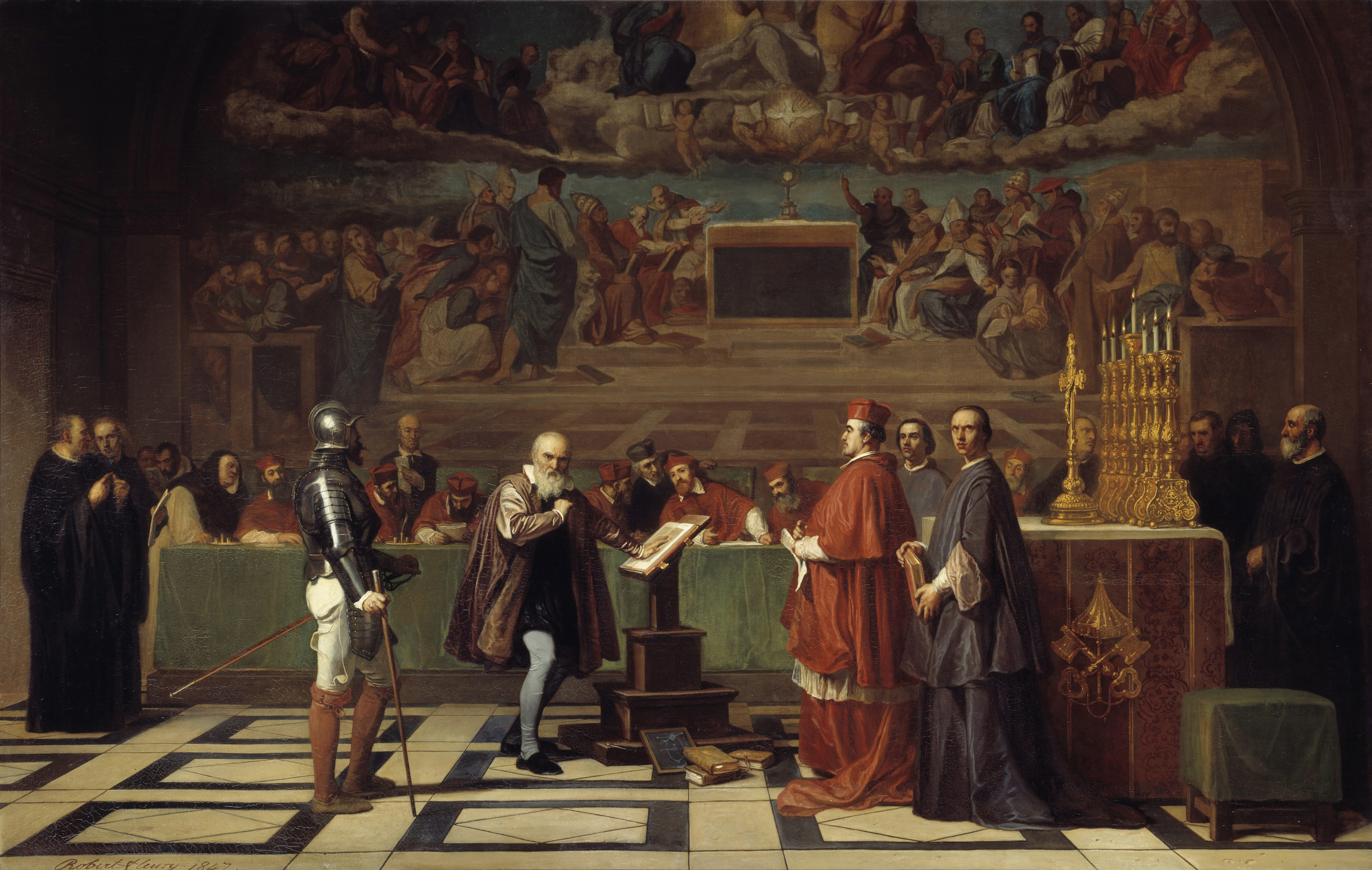
The legal roots reach to the late Roman Empire, but the specifically religious inquisition emerged in 1184 when Pope Lucius III’s decretal Ad Abolendam authorized bishops to pursue heretics in Languedoc. The Albigensian Crusade (1209-29) bloodily weakened the Cathars, yet pockets of dissident Waldensians, Spiritual Franciscans, and Beguines persisted. In 1231 Gregory IX appointed the first full-time “inquisitors of heretical depravity,” usually Dominicans or Franciscans armed with papal bulls that overrode normal diocesan courts. Manuals such as Bernard Gui’s Practica (1324) codified interrogation techniques, penances, and the use of secular “arm” for burning unrepentants. After 1478 the Spanish crown wrested control from Rome, creating the famed Spanish Inquisition whose original brief—conversos suspected of Judaizing—soon widened to Protestants, Moriscos, and Illuminists. Portugal followed suit (1536), while the Roman Inquisition (1542) pivoted toward internal Catholic reform, condemning books and trying Galileo. By the 18th century Enlightenment ridicule, Bourbon regalism, and fiscal crisis eroded the tribunals; Spain suppressed its version in 1834, Portugal in 1821.Key Information
• Procedure: anonymous denunciation → imprisonment → interrogation under oath → defense counsel forbidden → confession sought; torture (rarely fatal) authorized 1252-1256 by Innocent IV’s Ad Extirpanda.
• Punishments: private penance, public abjuration, confiscation, imprisonment, relaxed to secular arm for capital penalty.
• Personnel: Dominicans dominated after 1250s; local bishops, jurists, and lay familiars assisted; Spanish and Portuguese crowns appointed civil “inquisitor-generals.”
• Geography: Languedoc, Northern Italy, Aragon, Castile, Sicily, Goa, Mexico, Lima, Manila; tribunals sat in 26 Spanish American cities by 1600.
• Victims: historians now estimate 50,000–60,000 trials across all inquisitions, with c. 1,500–2,000 executions—far fewer than 19th-century Protestant polemics claimed.
• Innovations: systematic record-keeping (registros), indices of prohibited books, networks of spies, and early use of print propaganda to shape public opinion.Significance
The Inquisition’s impact is paradoxical. It incubated modern state power: centralized archives, secret police methods, and bureaucratic procedure later copied by secular absolutist regimes. Yet by tying orthodoxy to blood-purity statutes (limpieza de sangre) it also hardened racial categories that outlasted the institution itself. Intellectually, its censorship slowed Iberian engagement with scientific revolution, while simultaneously fostering a baroque scholastic culture that produced Suárez and Vitoria. Globally, inquisitorial archives—preserved because procedure required two notarized copies—now constitute the largest coherent judicial record in world history, indispensable for social historians of gender, race, and sexuality. Finally, the mythic “Black Legend” of an omnipresent, omniscient Inquisition became a foil for Enlightenment notions of tolerance and individual conscience, ensuring that this medieval tribunal still shapes modern debates on religion, coercion, and human rights.
Tip: double-click any word in this article for an instant definition from the NerdDictionary.