Overview
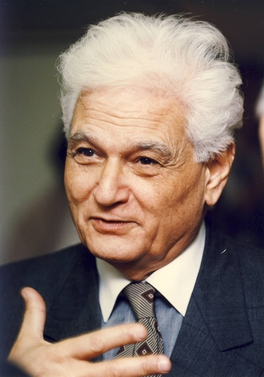
Jacques Derrida’s name has become shorthand for a radical way of reading that loosens the bolts of Western metaphysics. Rather than a method or doctrine, deconstruction is a vigilant attentiveness to the hierarchies and exclusions on which systems of meaning depend. By demonstrating how key oppositions—speech/writing, presence/absence, inside/outside—continually reverse themselves, Derrida showed that apparently stable concepts carry traces of what they suppress. His dense, punning style enacts the very instability he describes, forcing readers to confront the limits of language and the ethical-political consequences of those limits.Although routinely labeled the father of “postmodernism,” Derrida resisted the tag, insisting that deconstruction was neither nihilistic relativism nor a fashionable “-ism.” Rooted in close, patient readings of Plato, Rousseau, Husserl, Heidegger, Saussure, and Levinas, his work is better seen as a continuation of the phenomenological quest for rigor, pushed to the point where phenomenology undoes itself. Across forty-plus books and hundreds of essays, Derrida wove deconstruction through literature, law, psychoanalysis, architecture, gender studies, religion, and politics, leaving a legacy that is still being translated, contested, and lived.
Background
Born in El-Biar, Algeria, on 15 July 1930, Derrida experienced the fractures of colonial identity early: a French-speaking Sephardic Jew in an Arab land, excluded first by Vichy racial laws and later by the metropolitan Parisian elite. After twice failing the baccalauréat, he moved to Paris in 1949, studying at the École normale supérieure where he befriended future luminaries such as Louis Althusser and Michel Foucault. His 1954 mémoire on Husserl already announced a lifelong preoccupation: how does the ideal, timeless meaning sought by phenomenology get contaminated by the empirical, historical, and above all linguistic conditions of its expression?The 1966 Johns Hopkins conference “The Languages of Criticism and the Sciences of Man” proved catalytic. Derrida’s lecture “Structure, Sign, and Play in the Discourse of the Human Sciences” upended structuralist certainties by arguing that every structure harbors a “play” that no center can fix. The following year saw the publication of three game-changing books—Of Grammatology, Speech and Phenomena, and Writing and Difference—announcing deconstruction to a world hungry for new tools after existentialism’s decline. From 1968 onward Derrida divided his time between Paris and U.S. universities, notably Johns Hopkins, Yale, and UC Irvine, cultivating trans-Atlantic networks that carried his thought around the globe.
Key Facts
- 1930 – Born Jackie Derrida, 15 July, El-Biar, Algeria. - 1942 – Expelled from lycée under Vichy anti-Semitic statutes; secretly continues studies. - 1952 – Admitted to École normale supérieure; begins Husserl research. - 1956 – Marries Marguerite Aucouturier; two sons, Pierre (b. 1963) and Jean (b. 1967). - 1967 – Publishes the “deconstruction trilogy,” establishing international reputation. - 1975 – Co-founds the Jan Hus philosophy group for prisoners, foregrounding ethics of hospitality. - 1980 – Defends thèse d’état at the Sorbonne; the 900-page file becomes The Post Card. - 1982 – Receives the Prix Hegel (France) for philosophical innovation. - 1986 – Elected professor at École des hautes études en sciences sociales (EHESS). - 1992 – Cambridge University honorary degree provokes worldwide academic controversy. - 2001 – Final visit to Algeria; delivers “The Future of the Profession” at NYU. - 2004 – Dies 8 October, Paris, of pancreatic cancer; buried in Princeton Cemetery, USA.Impact
Deconstruction reshaped the humanities by revealing how texts undermine the very certainties they assert. Literary critics learned to trace aporias—moments when narratives contradict their ostensible theses—while legal scholars exposed the unstable foundations of constitutional interpretation. Feminist, post-colonial, and queer theorists deployed Derridean tools to unmask binary gender and racial logics, even as they criticized his early inattention to material power. In architecture, the Parc de la Villette project with Peter Eisenman translated undecidability into built form; in theology, the “death of God” became re-thinkable through Derrida’s later writings on the messianic without messianism.Beyond academia, Derrida’s insistence that “justice” is always ‘to come’ nourished global debates on human rights, immigration, and forgiveness. His late concept of “hauntology” (a pun on ontology) informs contemporary politics of memory, from South Africa’s Truth Commission to climate justice movements that confront the specters of future generations. While critics accuse deconstruction of relativism, Derrida maintained that rigorous deconstruction is the condition of responsible decision-making: only by acknowledging the irreducible complexity of every context can one act ethically. Thus, like the ancient Zoroastrian fire that is never pure but always mixed with darkness, Derrida’s legacy burns as a vigilant reminder that meaning, identity, and truth are forever in flux, demanding endless interpretation rather than final closure.