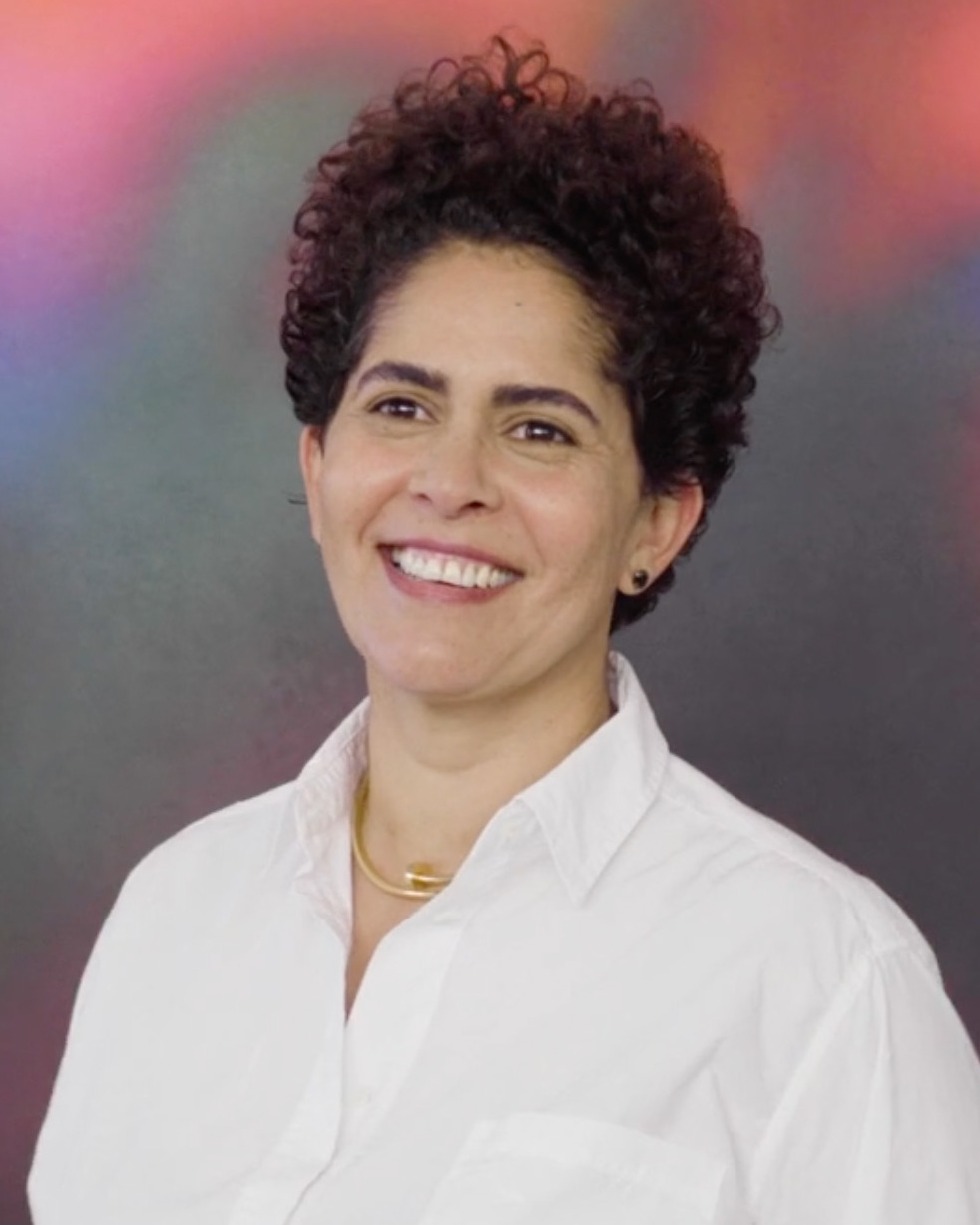
Julie Mehretu
Julie Mehretu is a renowned Ethiopian American contemporary visual artist known for her large-scale, multi-layered paintings, drawings, and prints that explore the complexities of urban sociopolitical changes.
Julie Mehretu was born in 1972 in Addis Ababa, Ethiopia, and immigrated to the United States with her family at the age of nine. She grew up in East Lansing, Michigan, and later moved to Kalamazoo, Michigan, where she began to develop her artistic skills. Mehretu earned her Bachelor of Fine Arts degree from Kalamazoo College in 1995 and her Master of Fine Arts degree from the Rhode Island School of Design in 1997.
Mehretu's work is characterized by its intricate, layered compositions that blend elements of architecture, geography, and abstract expressionism. Her paintings often depict urban landscapes, cityscapes, and abstracted forms that reflect her experiences of displacement, migration, and cultural identity. Mehretu's use of color, texture, and scale creates a sense of depth and complexity, inviting viewers to engage with her work on multiple levels.
Mehretu's artistic practice is deeply rooted in her experiences as an immigrant and her observations of the urban environment. Her work often explores the tensions between tradition and modernity, as well as the ways in which cultural identity is shaped by geography and history. Mehretu's use of abstract forms and geometric shapes also reflects her interest in the relationships between architecture, urban planning, and social justice.
Early Life and Education
Julie Mehretu was born in 1972 in Addis Ababa, Ethiopia, to a family of modest means. Her father was a government official, and her mother was a homemaker. Mehretu's early life was marked by the Ethiopian Civil War, which led to her family's decision to immigrate to the United States in 1981. The family settled in East Lansing, Michigan, where Mehretu grew up and developed an interest in art.
Mehretu's early artistic training was influenced by her mother, who encouraged her to draw and paint from a young age. Mehretu's parents also supported her decision to pursue a career in art, despite the challenges and uncertainties that came with it. Mehretu's early artistic experiences were shaped by her observations of the urban environment, including the cityscapes and landscapes of East Lansing and Kalamazoo, Michigan.
Career
Mehretu's artistic career began to take shape in the late 1990s, when she began to exhibit her work in galleries and museums in the United States. Her early work was characterized by its use of abstract forms and geometric shapes, which reflected her interest in architecture and urban planning. Mehretu's work also began to explore themes of identity, culture, and social justice, which would become central to her artistic practice.
In 2003, Mehretu was awarded the MacArthur Fellowship, which provided her with the financial support and recognition she needed to take her career to the next level. Mehretu's work began to gain international recognition, and she was included in several high-profile exhibitions, including the 2005 Venice Biennale and the 2010 Whitney Biennial.
Style and Technique
Mehretu's artistic style is characterized by its use of abstract forms, geometric shapes, and intricate layering. Her paintings often depict urban landscapes, cityscapes, and abstracted forms that reflect her experiences of displacement, migration, and cultural identity. Mehretu's use of color, texture, and scale creates a sense of depth and complexity, inviting viewers to engage with her work on multiple levels.
Mehretu's technique is highly labor-intensive, involving the use of multiple layers of paint, ink, and paper. Her paintings often take months or even years to complete, and involve a process of iterative refinement and revision. Mehretu's use of digital tools and software also allows her to experiment with new forms and techniques, pushing the boundaries of her artistic practice.
Exhibitions and Collections
Mehretu's work has been exhibited in numerous museums and galleries around the world, including the Museum of Modern Art, the Whitney Museum of American Art, and the Tate Modern. Her work is held in the collections of several major museums, including the Museum of Modern Art, the Whitney Museum of American Art, and the Guggenheim Museum.
Mehretu's exhibitions often take the form of large-scale installations, which reflect her interest in the relationships between architecture, urban planning, and social justice. Her exhibitions also often involve the use of digital tools and software, which allows her to experiment with new forms and techniques.
Legacy
Mehretu's legacy as an artist is complex and multifaceted. Her work has been recognized for its innovative use of abstract forms and geometric shapes, as well as its exploration of themes such as identity, culture, and social justice. Mehretu's use of digital tools and software has also pushed the boundaries of her artistic practice, allowing her to experiment with new forms and techniques.
Mehretu's impact on the art world has been significant, inspiring a new generation of artists to explore the relationships between architecture, urban planning, and social justice. Her work has also been recognized for its ability to engage viewers on multiple levels, inviting them to reflect on the complexities of urban life and the experiences of displacement and migration.