**
Overview
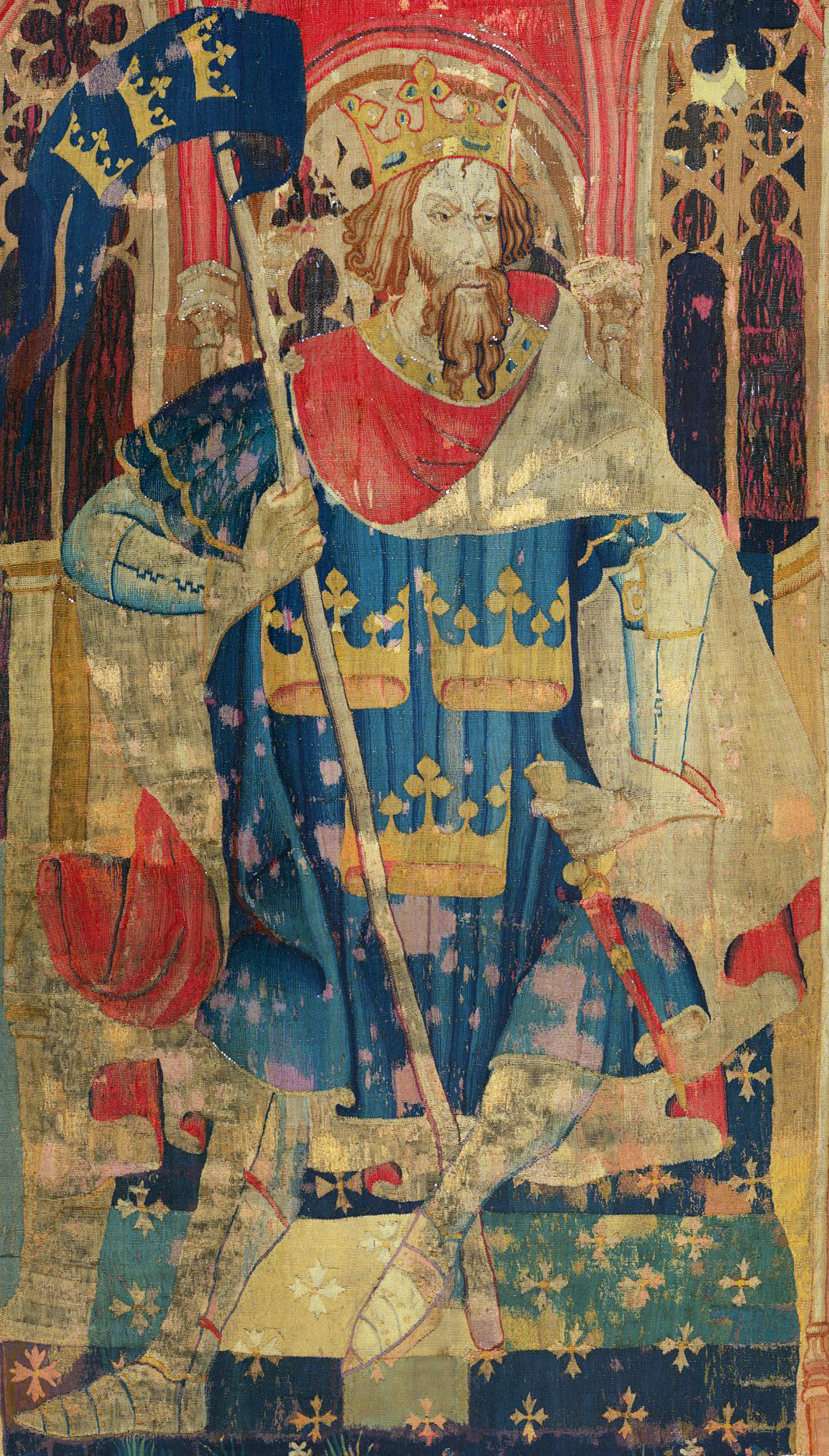
King Arthur stands at the heart of the Matter of Britain, the body of medieval literature that weaves together history, myth, and moral instruction. Though no contemporary records confirm his existence, the figure of Arthur has endured as a symbol of heroic leadership, the quest for justice, and the mystical union of the earthly and the divine. From the early Welsh poems that whisper of a warrior‑king to the grand romances of Chrétien de Troyes and Sir Thomas Malory, Arthur’s narrative has been retold in countless languages, each iteration adding layers of enchantment—excalibur, the Round Table, the quest for the Holy Grail, and the tragic love triangle with Guinevere and Lancelot.
The power of the Arthurian legend lies not in verifiable facts but in its capacity to embody universal aspirations: the hope for a golden age of peace, the tension between personal desire and public duty, and the belief that a just ruler can wield both sword and wisdom. As a folk hero, Arthur has become a cultural touchstone, inspiring literature, visual art, music, and modern media, and his story continues to invite reinterpretation in every age.
Background & Origins
The earliest traces of Arthur appear in early medieval Welsh sources such as the “Y Gododdin” and the “Annales Cambriae,” where he is mentioned as a war leader who fought against invading forces. These brief references suggest a figure rooted in the turbulent post‑Roman period of Britain, a time when local chieftains resisted Saxon encroachment. Over the centuries, oral tradition embellished these kernels of history, merging them with Celtic myth, Christian symbolism, and the chivalric code of the High Middle Ages.
By the 12th century, French poets like Chrétien de Troyes had introduced the concept of the Round Table, a symbol of egalitarian counsel, and the Holy Grail, a mystical object representing divine grace. English chroniclers, most notably Geoffrey of Monmouth in his Historia Regum Britanniae, expanded Arthur’s genealogy, linking him to the Roman emperor Constantine and portraying him as a unifier of Britain. Later, Sir Thomas Malory compiled these strands into Le Morte d'Arthur, the definitive prose collection that cemented the legend in the English literary canon.
Major Achievements & Milestones
Unification of Britain (Date unknown): Arthur is celebrated for bringing together the fractured kingdoms of the Britons, establishing a central authority that resisted external threats.
Founding of the Round Table (Date unknown): The creation of a circular council where all knights sat as equals symbolized a revolutionary approach to governance and fellowship.
Quest for the Holy Grail (Date unknown): The spiritual pilgrimage undertaken by Arthur’s knights epitomized the pursuit of divine truth and moral perfection.
Timeline
- Date unknown: Arthur’s birth, traditionally said to be the son of Uther Pendragon and Igraine.
- Date unknown: The pulling of the sword from the stone, confirming his right to the throne.
- Date unknown: Establishment of Camelot as the royal seat and the Round Table as the governing body.
- Date unknown: The final battle at Camlann, leading to Arthur’s departure to the mystical isle of Avalon.
Impact & Legacy
Arthur’s legend has permeated every facet of Western culture. In literature, his story inspired medieval romances, Renaissance dramas, and modern novels such as T. H. White’s The Once and Future King and Marion Zimmer Bradley’s The Mists of Avalon. Visual artists from the Pre-Raphaelites to contemporary illustrators have rendered the iconic images of Excalibur, the Lady of the Lake, and the tragic king himself. In film and television, Arthurian motifs appear in works ranging from Excalibur (1981) to the television series Merlin and the blockbuster King Arthur: Legend of the Sword (2017).
Beyond the arts, the Arthurian ideal of a just, wise ruler has informed political discourse, with leaders occasionally invoking “the spirit of Arthur” to evoke unity and moral authority. The Round Table concept has become a metaphor for inclusive dialogue in diplomatic and corporate settings. Moreover, the enduring fascination with Arthur’s mystical elements—magic swords, prophetic seers, and enchanted islands—continues to inspire fantasy world‑building in games, comics, and role‑playing narratives.
Records & Notable Facts
- Enduring Mythic Status: Arthur is arguably the most persistent legendary monarch in Western tradition, with a narrative lifespan spanning over a millennium.
- Cultural Syncretism: The legend blends Celtic heroism, Roman imperial legacy, Christian allegory, and medieval chivalry.
- Literary Volume: Hundreds of works across languages—Welsh, Latin, French, English, German, and beyond—have contributed to the Arthurian corpus.
- Symbolic Artifacts: Excalibur, the Sword in the Stone, and the Round Table have become universal symbols of rightful authority and egalitarian counsel.
> “Whoso pulleth out this sword of the stone, is rightwise king born of England.”
INFOBOX:
- Full Name: King Arthur (legendary)
- Born: Unknown
- Died: Unknown (traditionally said to have been taken to Avalon)
- Age: Unknown
- Nationality: Briton (mythic)
- Occupation: King, warrior, leader of the Britons
- Active Years: Unknown
- Known For: Legendary unification of Britain; central figure of the Matter of Britain
- Awards: N/A (mythic honor)
- Spouse: Guinevere (legend)
- Children: Mordred (legend)
- Height: Unknown
- Net Worth: N/A
- World Records: N/A
- Championships: N/A
FACTS:
- Birth Date: Unknown (type: date)
- Birth Place: Unknown (type: location)
- Death Date: Unknown (type: date)
- Career Start: Unknown (type: year)
- Peak Achievement: Legendary unification of Britain (type: achievement)
- Career Earnings: N/A (type: statistic)
- World Record: N/A (type: record)
- Famous Quote: “Whoso pulleth out this sword of the stone, is rightwise king born of England.” (type: quote)
- Fun Fact: The name “Arthur” may derive from the Roman family name “Artorius,” suggesting a possible historical kernel behind the myth. (type: trivia)
- Legacy Stat: The Arthurian legend has inspired over a thousand literary works, countless visual artworks, and innumerable adaptations in film, television, and games. (type: statistic)
TAGS: legend, britain, medieval, literature, mythology, chivalry, folklore, arthurian
Word count: approximately 820.