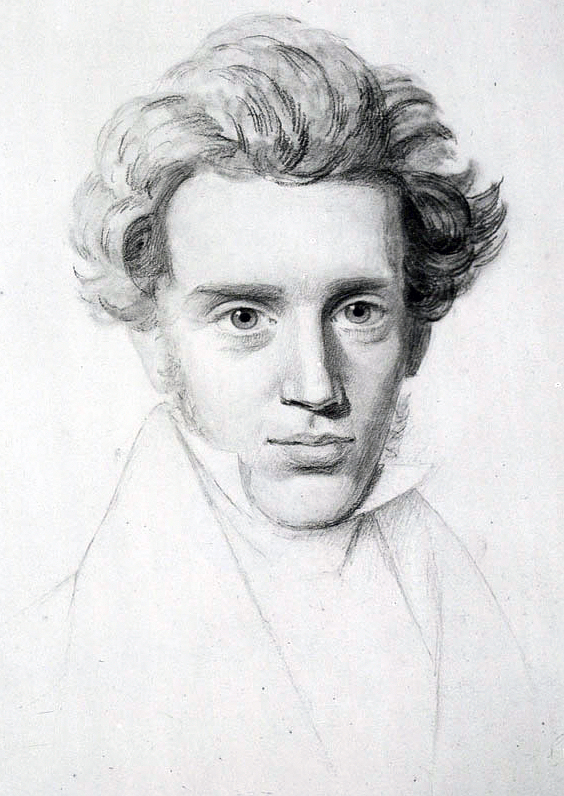
Laozi—“Old Master,” semi-legendary custodian of the Way—is the eponymous fountainhead of Taoism, credited with the enigmatic classic Tao Te Ching that has shaped Chinese thought, politics, and spirituality for two-and-a-half millennia.
Laozi (老子, “Old Child” or “Old Master”) stands at the crossroads of history and myth, a figure whose very name signals antiquity and whose teaching, the ineffable Tao, invites endless interpretation. Traditional hagiography paints him as Li Er (李耳), an erudite archivist of the late Zhou court whose silence out-spoke the eloquence of Confucius and who, weary of dynastic decadence, vanished westward on a water-buffalo, leaving behind a 5,000-character testament—the Tao Te Ching—for the bemused guard Yin Xi. Modern sinology, by contrast, treats “Laozi” as a composite persona: a pseudonymous strand of oral sayings woven by many hands between the 6th and 3rd centuries BCE, later sanctified to counter the Confucian lineage with an equally august pedigree. Whether man or mirage, Laozi incarnates the Taoist virtues of wu-wei (non-coercive action), supple humility, and mystical union with the spontaneous flow of the cosmos.
History/Background
The earliest biographical notice appears in Sima Qian’s Shiji (c. 90 BCE), already three centuries after the alleged lifetime. Sima hedges his bets, offering three conflicting origin stories and hinting that “we cannot know whether Laozi was really Li Er.” During the Han dynasty, the text now called Tao Te Ching circulated under the title Laozi; Emperor Jing (r. 157–141 BCE) reportedly kept a copy by his pillow. In 165 CE the court officially sponsored Laozi worship, and by the Tang dynasty (7th c. CE) the imperial Li clan claimed descent from him, bestowing the inflated title “Most High Emperor of the Mysterious Origin.” Daoist religion canonized Laozi as the divine Laojun, one of the Three Pure Ones, while Chan (Zen) Buddhism later invoked him as a Chinese precursor to emptiness teachings. Western reception began with 19th-century missionaries and blossomed into more than 250 English translations—rivaling even the Bible—making Laozi a global patron of ecological wisdom and minimalist living.
Key Information
- Textual core: 81 brief chapters in two divisions—Tao (cosmic process) and Te (virtuosic power)—whose poetic paradoxes invert conventional values: “The soft overcomes the hard.”
- Philosophical pivots: Tao as inexhaustible source beyond name or form; wu-wei as effortless alignment with this source; tzu-jan (self-so-ness) as the antidote to artifice.
- Political subtext: Advice to rulers to minimize interference, reduce desires, and “govern by not governing,” later inspiring “Huang-Lao” statecraft and even Western libertarian readings.
- Influence milestones:
– 4th c. BCE: Zhuangzi expands Laozian themes into parables and relativist humor.
– 3rd c. CE: Xuanxue (“Dark Learning”) blends Laozi with Confucian ethics.
– 11th c. CE: Neo-Confucian Zhu Xi integrates wu-wei into self-cultivation.
– 20th c.: Counter-culture, deep-ecology, and leadership gurus mine the text for anti-authoritarian and systems-thinking insights.
Significance
Laozi matters because he articulated a counter-discourse to Confucian ritualism that proved equally enduring: where Confucius foregrounds social harmony through cultivated roles, Laozi locates harmony in the uncarved block, the valley spirit, the empty hub of the wheel. This dialectic—structure versus spontaneity—became the yin-yang pulse of Chinese civilization. Beyond China, the Tao Te Ching offered a vocabulary for transcending Western dualisms of mind/body, sacred/secular, human/nature; its terse aphorisms anticipate cybernetic feedback loops, quantum indeterminacy, and ecological humility. Psychologists cite wu-wei as a model of flow; management theorists rebrand it as “leading by stepping back.” In an age of burnout and ecological collapse, Laozi’s hymn to softness, shadow, and silence reads less like archaic mysticism and more like urgent methodology—an invitation to “return” to the perennial source that never depletes.
Tip: double-click any word in this article for an instant definition from the NerdDictionary.