**
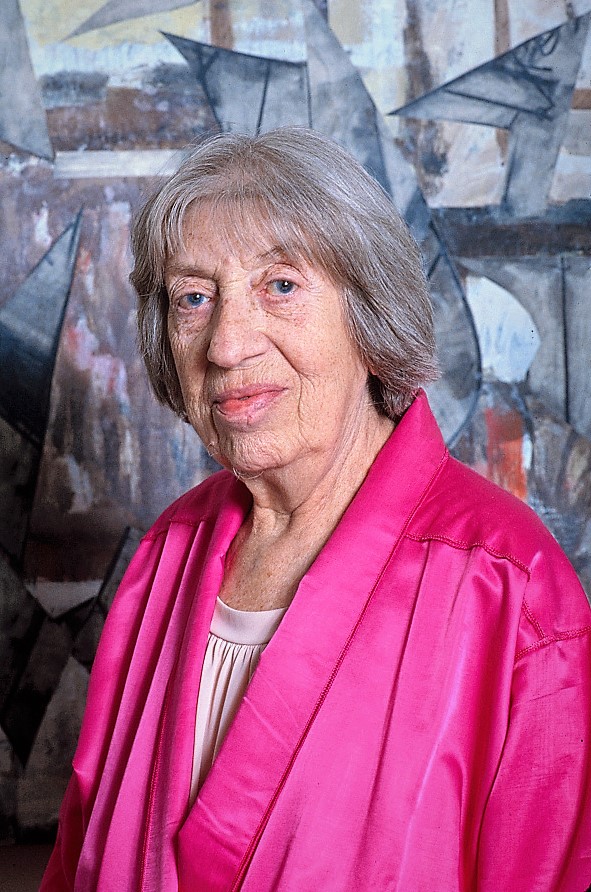
Lee Krasner was an American painter whose work evolved from early figurative modernism to a mature, gestural abstraction that placed her among the leading artists of the New York School. Born in Brooklyn to Russian‑Jewish immigrants, she received rigorous academic training at the National Academy of Design, the Art Students League, and the Whitney Museum School before immersing herself in the avant‑garde circles of 1930s Manhattan. Over the course of her career she exhibited widely, taught at several institutions, and, despite being historically eclipsed by her husband, Jackson Pollock, she achieved critical recognition in the 1970s and posthumously, influencing subsequent generations of women artists and contributing to the re‑evaluation of Abstract Expressionism’s gender dynamics.
Krasner’s oeuvre is marked by a relentless experimentation with scale, material, and compositional strategy. Early works reveal a fascination with Cubist fragmentation and Surrealist automatism, while her mature canvases—such as the “Little Image” series (1950–1952) and the “Earth Paintings” (1960–1965)—display a vigorous, layered approach that balances controlled geometry with spontaneous brushwork. Her artistic identity was both shaped and complicated by her marriage to Pollock; she managed his estate after his death, championed his legacy, and simultaneously forged an independent visual language that has been reassessed as a cornerstone of mid‑century American abstraction.
Krasner’s contributions extend beyond her paintings. She was an active participant in the Artists’ Union, a founding member of the Artists’ Club, and a mentor to younger artists through teaching positions at the Art Students League and the New School. Her later retrospectives, notably the 1983 exhibition at the Museum of Modern Art, cemented her status as a pivotal figure whose work bridges the first and second generations of Abstract Expressionism.
Early life and education
Lee Krasner was born Lenore Krasner on October 6, 1908, in Brooklyn, New York, to Jewish immigrants David and Anna Krasner, who had fled the pogroms of the Russian Empire. The family’s modest means meant that Krasner’s early exposure to art came through public institutions. She attended the Girls’ High School in Brooklyn, where a teacher recognized her talent and encouraged her to apply for a scholarship to the National Academy of Design.From 1925 to 1929 Krasner studied at the National Academy, receiving a solid grounding in drawing, anatomy, and classical composition. Dissatisfied with the Academy’s conservative curriculum, she transferred to the Art Students League in 1929, where she studied under Kenneth Hayes Miller, a proponent of urban realism, and later under the modernist John Sloan. During this period she met fellow students such as Arshile Gorky and Mark Rothko, whose experimental approaches would leave a lasting impression.
Krasner also enrolled in the Whitney Museum School (later the Whitney Independent Study Program) in 1930, where she was introduced to the ideas of European modernism and the emerging American avant‑garde. Her exposure to the works of Cézanne, Picasso, and Matisse, combined with the influence of the Federal Art Project, encouraged her to explore abstraction and to develop a personal visual vocabulary that would later define her career.
Artistic development and Abstract Expressionism
Early work (1930s)
Krasner’s early paintings reflect a synthesis of Cubist fragmentation and Surrealist automatism. Works such as The City (1932) and Composition (1934) demonstrate a rigorous structural approach, employing muted palettes and flattened planes. In 1935 she joined the Artists’ Union and participated in the Federal Art Project, creating murals for public buildings, including a series of allegorical panels for the New York City Department of Parks and Recreation.Transition to abstraction (1940s)
The late 1940s marked a decisive shift in Krasner’s practice. Influenced by the burgeoning Abstract Expressionist milieu centered around the 8th Street Club, she began to abandon representational references in favor of gestural mark‑making. Paintings such as The Seasons (1947) exhibit a dynamic interplay of thick impasto and sweeping brushstrokes, aligning her with contemporaries like Willem de Kooning and Franz Kline.Krasner’s participation in the 1949 Second Annual Exhibition of Artists of the New York School at the Whitney Museum solidified her position within the movement. Critics such as Clement Greenberg praised her “vigorous handling of paint” and noted her capacity to “balance spontaneity with compositional rigor.”
Mature period (1950s–1960s)
During the 1950s Krasner produced the “Little Image” series (1950–1952), a body of small‑scale works that juxtaposed dense, calligraphic lines with luminous color fields. The series was a response to the dominance of large‑format canvases in Abstract Expressionism, allowing her to explore intimacy and precision.In the early 1960s she embarked on the “Earth Paintings,” a series of large, earth‑toned canvases that incorporated sand, grit, and other natural materials. These works emphasized texture and the physicality of the medium, prefiguring later developments in post‑minimalist and process art.
Relationship with Jackson Pollock
Lee Krasner met Jackson Pollock in 1942 through mutual acquaintances in the Artists’ Club. Their marriage in 1945 was both a personal partnership and a professional alliance that profoundly impacted both artists’ trajectories. Krasner provided emotional and logistical support during Pollock’s struggles with alcoholism and his intense work habits, often managing his studio, arranging exhibitions, and negotiating with galleries.While Pollock’s fame eclipsed hers during the 1940s and early 1950s, Krasner continued to develop her own practice. After Pollock’s death in 1956, she assumed control of his estate, organizing posthumous exhibitions that cemented his mythic status. Simultaneously, she intensified her own artistic output, producing some of her most acclaimed works in the late 1950s and early 1960s.
Scholars have debated the extent to which Krasner’s style was influenced by Pollock’s drip technique. While early analyses suggested a derivative relationship, recent scholarship emphasizes her independent evolution, noting that her use of color, compositional balance, and incorporation of mixed media diverge significantly from Pollock’s approach.
Major works and exhibitions
Krasvan’s career includes several landmark exhibitions that charted her rising prominence. In 1957 the Krasner Gallery in New York presented a solo show featuring the “Little Image” series, garnering positive reviews from Art News and The New York Times.The 1970 retrospective at the Whitney Museum, Lee Krasner: A Retrospective, was the first major museum survey of her work and highlighted her contributions to Abstract Expressionism. The exhibition traveled to the San Francisco Museum of Modern Art and the Los Angeles County Museum of Art, expanding her national reputation.
In 1983, the Museum of Modern Art organized Lee Krasner: Paintings, 1930–1983, a comprehensive retrospective that included early figurative works, the “Earth Paintings,” and late series such as the “Mosaics” (1978–1980). The MoMA catalogue, authored by art historian Susan Davidson, positioned Krasner as a “bridge between the first and second generations of the New York School.”
Key works include:
The Seasons* (1947) – early Abstract Expressionist canvas, oil on canvas, 84 × 72 in.
Little Image* (1951) – small oil on board, 12 × 9 in., noted for its intricate line work.
Earth Paintings* (1962) – large-scale mixed media, oil, sand, and acrylic, 96 × 120 in.
Mosaics* (1979) – vibrant, layered composition, acrylic on canvas, 60 × 48 in.
Legacy and influence
Lee Krasner’s legacy has been reassessed in recent decades, particularly within feminist art history. Her perseverance in a male‑dominated art world and her role in preserving Pollock’s oeuvre have been recognized as pivotal to the narrative of mid‑century American art.Krasner’s work has inspired subsequent generations of women abstract painters, including Joan Mitchell, Helen Frankenthaler, and contemporary artists such as Julie Mehretu. Her incorporation of mixed media and emphasis on materiality prefigured the process‑oriented practices of the 1970s and 1980s.
Institutions continue to acquire her work; as of 2023, the Metropolitan Museum of Art, the Guggenheim Museum, and the National Gallery of Art hold significant holdings. The Lee Krasner Foundation, established by her estate, provides grants to emerging artists and funds scholarly research on her oeuvre.
Criticism and reassessment
Early critical reception often framed Krasner in relation to Pollock, describing her as “the wife of Jackson Pollock” rather than as an autonomous artist. This gendered bias limited her visibility in major surveys of Abstract Expressionism throughout the 1950s and 1960s.In the 1970s, feminist scholars such as Linda Nochlin and Griselda Pollock challenged this narrative, arguing that Krasner’s contributions were systematically marginalized. Subsequent exhibitions and catalogues have sought to rectify this imbalance, though some critics contend that the emphasis on her gender can obscure formal analysis of her work.
Debates persist regarding the degree to which Krasner’s style was influenced by her peers versus her own innovations. While some art historians maintain that her “gestural lyricism” reflects a synthesis of Pollock’s drip technique and Gorky’s biomorphic forms, others assert that her distinct use of color, scale, and mixed media establishes a unique visual language independent of her contemporaries.
Overall, contemporary scholarship positions Lee Krasner as a central figure in Abstract Expressionism whose artistic achievements merit recognition on their own terms, contributing to a more inclusive understanding of post‑war American art.
INFOBOX:
- Name: Lenore “Lee” Krasner
- Type: Visual artist / painter
- Date: 1908 – 1984
- Location: New York City, United States
- Known For: Pioneering contributions to Abstract Expressionism and a prolific body of gestural abstract paintings
TAGS: abstract expressionism, American painters, women artists, 20th‑century art, New York School, modernism, feminist art history, postwar art