Overview
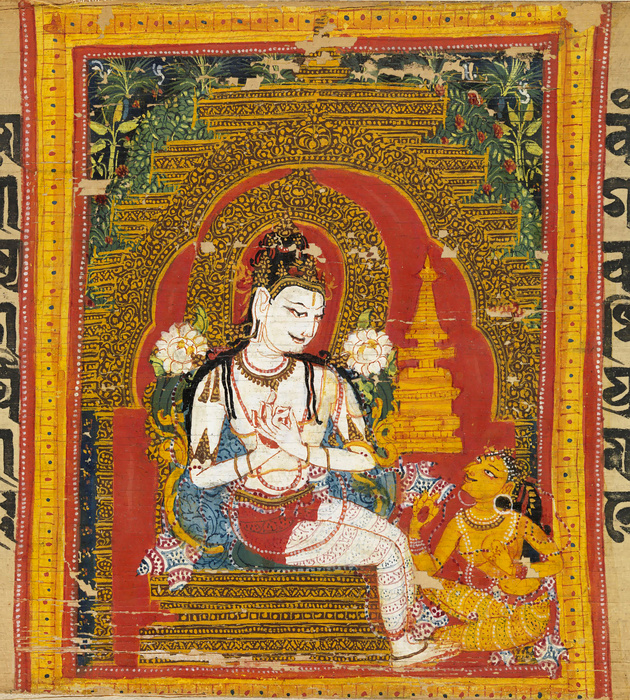
Mahayana Buddhism emerged in ancient India (c. 1st century BCE – 2nd century CE) as a self-consciously “universal” reform movement within the broader Buddhist sangha. Whereas earlier schools (later grouped as “Śrāvakayāna”) emphasized the arhat’s personal liberation, Mahayanists proclaimed the
bodhisattva path—a vocation of boundless compassion (karuṇā) and transcendent wisdom (prajñā) aimed at the complete awakening of a Buddha. Mahayana therefore accepts the core doctrines of the historical Buddha—
Four Noble Truths,
Eightfold Path,
Three Marks of Existence—but supplements them with new sūtras (the
Prajñāpāramitā,
Lotus,
Pure Land,
Avataṃsaka, and
Vimalakīrti among them) and philosophical systems such as
Madhyamaka and
Yogācāra.
Philosophically, Mahayana is distinguished by the teaching of śūnyatā (“emptiness”), the claim that all phenomena (dharmas) lack independent, intrinsic existence. This insight undercuts dogmatic clinging and opens space for skillful means (upāya) that adapt the Dharma to diverse capacities. Devotionally, Mahayana venerates a cosmic pantheon of Buddhas (e.g., Amitābha, Vairocana) and high-level bodhisattvas (Avalokiteśvara, Mañjuśrī, Kṣitigarbha) who assist beings toward awakening. Ritually, Mahayana produced new liturgies, ethical codes (bodhisattva prātimokṣa), and meditative technologies—including the tantric methods later codified as Vajrayāna—that promise Buddhahood within a single lifetime.
History/Background
Mahayana arose in the cosmopolitan milieu of post-Mauryan India, when urban mercantile elites patronized wandering ascetics and Buddhist universities (Nālandā, Vikramaśīla, Odantapurī). Early Mahāyāna sūtras circulated in Prakrit and Sanskrit among forest dwellers and lay associations (parivāra). By the Gupta era (4th–6th centuries CE), philosophers such as
Nāgārjuna systematized the Perfection of Wisdom literature into the
Madhyamaka (“Middle Way”) school, while
Asaṅga and
Vasubandhu articulated
Yogācāra, emphasizing the constructive role of consciousness. From India, Mahayana radiated along trade routes: northward to Nepal, Tibet, and the Tangut/Chinese capitals (becoming
Chinese Buddhism), then to Korea (
Goryeo Seon), Japan (
Heian and Kamakura schools), and Vietnam. A southern maritime strand seeded
Sri Lankan and Javanese forms, while the Himalayan plateau incubated
Vajrayāna lineages that fused Mahayana bodhisattva vows with tantric deity yoga. From the 8th century onward,
Pure Land devotionalism and
Chan/Zen meditation schools reshaped East-Asian religiosity, producing masterpieces of art, poetry, and philosophy.
Key Information
-
Canon: Mahayana recognizes the
Tripiṭaka but adds the
Mahāyāna sūtras and
śāstras (treatises). Tibetan and Chinese canons preserve hundreds of texts absent in the Pali canon.
-
Bodhisattva Ideal: A being who vows to postpone final nirvāṇa until all sentient beings are liberated, guided by the
Six (or Ten) Pāramitās—generosity, morality, patience, effort, meditation, wisdom, etc.
-
Philosophical Schools:
–
Madhyamaka: Emptiness of all dharmas; two-truths theory (conventional vs. ultimate).
–
Yogācāra: “Mind-only” (cittamātra); eight consciousnesses including ālaya-vijñāna (store-consciousness).
–
Buddha-nature (tathāgatagarbha): Innate potential for awakening, influential in East-Asian thought.
-
Major Traditions Today:
–
East-Asian “Great Vehicle”: Chinese Chan, Tiantai, Huayan, Pure Land; Korean Seon; Japanese Zen, Nichiren, Jōdo-shū.
–
Tibetan Buddhism: Gelug, Kagyu, Nyingma, Sakya—classified as Vajrayāna but doctrinally Mahayana.
-
Global Presence: ≈ 53% of the world’s 500 million Buddhists; dominant in China, Korea, Japan, Vietnam, Tibet, Bhutan, Mongolia, and expanding diaspora centers in Europe, North America, Australia.
-
Ethical Innovation: The
Brahma-net Sūtra and
Śikṣāsamuccaya articulate social ethics, vegetarianism, and ecological concern, influencing modern engaged-Buddhism movements.
Significance
Mahayana transformed Buddhism from a primarily monastic soteriology into a universal religion of compassion, aesthetic grandeur, and philosophical sophistication. Its universities fostered scientific medicine, logic, and linguistics; its art gave the world the cave murals of Ajanta, the colossal Buddhas of Bamiyan, and the Zen ink landscapes of Sesshū. By democratizing the path—asserting that laypeople, women, and even animals possess Buddha-nature—Mahayana broadened spiritual agency and inspired social welfare institutions (hospitals, tea houses, printing presses). Contemporary teachers translate Mahayana insights into psychological therapy, environmental activism, and interfaith dialogue, ensuring that the “Great Vehicle” remains a living force in global ethics and culture.