
**
Overview
The Voyager Interstellar Mission is a historic space exploration project that was launched by NASA in 1977. The mission consists of two spacecraft, Voyager 1 and Voyager 2, which were designed to study the outer planets of our solar system and beyond. The Voyager spacecraft are the most distant human-made objects in space, with Voyager 1 being the most distant at a distance of over 14.5 billion miles (23.3 billion kilometers) from Earth.
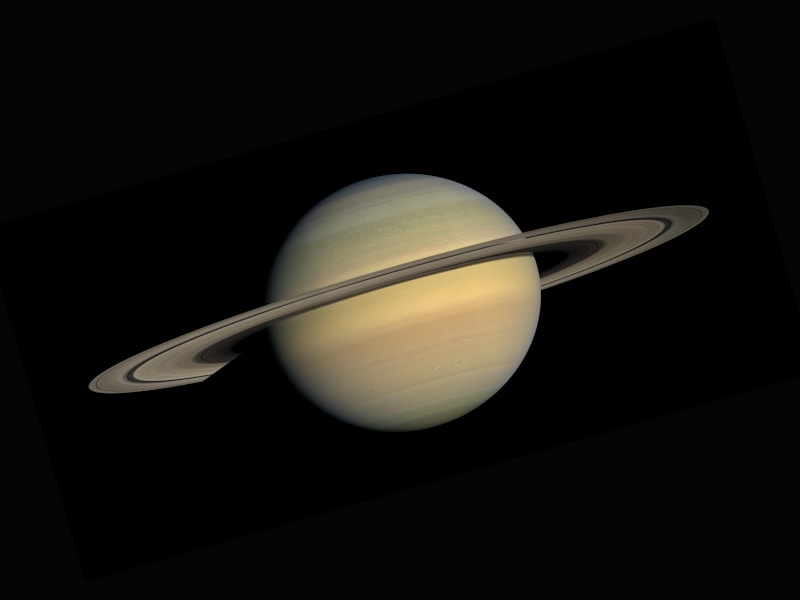
The Voyager spacecraft were originally designed to study the outer planets of our solar system, including Jupiter, Saturn, Uranus, and Neptune. However, after completing their primary mission, the spacecraft were redirected to continue on a trajectory into interstellar space, where they would become the first human-made objects to enter this uncharted region. The Voyager spacecraft are equipped with a range of instruments, including cameras, spectrometers, and magnetometers, which have provided a wealth of data about the outer planets and interstellar space.
History/Background
The Voyager Interstellar Mission was conceived in the 1960s, during the height of the Space Age. NASA was looking for a new mission that would build on the success of the Pioneer and Mariner spacecraft, which had explored the inner solar system. The Voyager mission was designed to be a follow-up to the Pioneer mission, which had sent back stunning images of the outer planets. The Voyager spacecraft were built by a team of engineers and scientists at NASA's Jet Propulsion Laboratory (JPL) in Pasadena, California.
The Voyager spacecraft were launched on separate launch vehicles, with Voyager 1 launching on September 5, 1977, and Voyager 2 launching on August 20, 1977. The spacecraft followed a complex trajectory, which took them past Jupiter and Saturn, and then into the outer reaches of the solar system. The Voyager spacecraft were equipped with a range of instruments, including cameras, spectrometers, and magnetometers, which were designed to study the outer planets and interstellar space.
Key Information
The Voyager Interstellar Mission has achieved a number of historic milestones, including:
* Farthest Human-Made Objects: The Voyager spacecraft are the most distant human-made objects in space, with Voyager 1 being the most distant at a distance of over 14.5 billion miles (23.3 billion kilometers) from Earth.
* First Interstellar Objects: The Voyager spacecraft are the first human-made objects to enter interstellar space, where they are now traveling through the Local Interstellar Cloud.
* Pioneering Science: The Voyager spacecraft have provided a wealth of data about the outer planets and interstellar space, including the discovery of interstellar gas and dust.
* Golden Records: The Voyager spacecraft are equipped with Golden Records, which contain sounds and images of Earth, as well as a message from humanity.
Significance
The Voyager Interstellar Mission has had a profound impact on our understanding of the solar system and beyond. The mission has provided a wealth of data about the outer planets and interstellar space, and has paved the way for future space exploration missions. The Voyager spacecraft are also a testament to human ingenuity and the power of space exploration to inspire and educate the public.
INFOBOX:
- Name: Voyager Interstellar Mission
- Type: Space Exploration Mission
- Date: 1977
- Location: Interstellar Space
- Known For: First human-made objects to enter interstellar space
TAGS: Voyager, Space Exploration, Interstellar Space, Outer Planets, NASA, Space Age, Golden Records, Pioneer, Mariner.