
Missions Encyclopedia Entry 1775587805: Voyager 1
SUMMARY: Voyager 1 is a historic unmanned space mission launched by NASA in 1977, designed to study the outer Solar System and beyond, and is now the most distant human-made object in space.
Overview
Voyager 1 is a space probe that was launched on September 5, 1977, from Cape Canaveral, Florida, as part of NASA's Voyager program. The mission was designed to take advantage of a rare alignment of the outer planets in our Solar System, allowing the spacecraft to visit Jupiter and Saturn while studying their magnetic fields, atmospheres, and moons. Voyager 1 was built by NASA's Jet Propulsion Laboratory (JPL) and is powered by a radioisotope thermoelectric generator (RTG), which converts the heat generated by the decay of radioactive materials into electricity.
The Voyager spacecraft are equipped with a range of scientific instruments, including magnetometers, plasma detectors, and cameras, which have provided a wealth of information about the outer Solar System and the interstellar medium. The spacecraft are also equipped with a Golden Record, a gold-plated copper record containing sounds and images of Earth, intended as a message to any extraterrestrial life form that might encounter the spacecraft.
History/Background
The Voyager program was conceived in the early 1970s as a follow-up to the Pioneer 10 and 11 missions, which had successfully flown by Jupiter and Saturn in the early 1970s. The Voyager spacecraft were designed to take advantage of the rare alignment of the outer planets in 1979, which would allow them to visit Jupiter and Saturn while studying their magnetic fields, atmospheres, and moons. Voyager 1 was launched on September 5, 1977, followed by Voyager 2 on August 20, 1977.
The Voyager spacecraft were built by NASA's Jet Propulsion Laboratory (JPL) and were powered by RTGs, which provided a reliable source of electricity for the spacecraft's instruments and communication systems. The spacecraft were equipped with a range of scientific instruments, including magnetometers, plasma detectors, and cameras, which were designed to study the outer Solar System and the interstellar medium.
Key Information
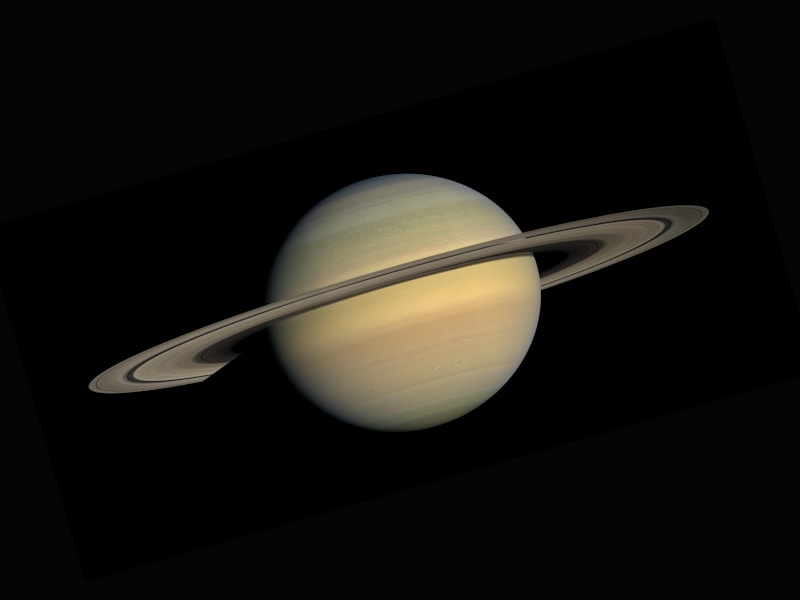
Voyager 1 has achieved a number of historic milestones during its journey through space. On September 12, 1977, the spacecraft flew by Jupiter, providing the first close-up images of the planet's magnetic field and atmosphere. On November 12, 1980, Voyager 1 flew by Saturn, providing a wealth of information about the planet's rings and moons. In 1990, Voyager 1 entered the heliosheath, a region of space where the solar wind slows down and becomes turbulent.
In 2012, Voyager 1 crossed the heliopause, the boundary between the heliosphere and interstellar space, becoming the most distant human-made object in space. The spacecraft is now traveling through the interstellar medium, a region of space filled with gas and dust from other stars. Voyager 1 is expected to continue traveling through interstellar space for millions of years, providing a unique opportunity for scientists to study the outer reaches of our Solar System and the interstellar medium.
Significance
Voyager 1 is a historic mission that has greatly expanded our understanding of the outer Solar System and the interstellar medium. The spacecraft has provided a wealth of information about the magnetic fields, atmospheres, and moons of Jupiter and Saturn, and has helped to shed light on the formation and evolution of our Solar System. The Voyager spacecraft are also equipped with a Golden Record, a message to any extraterrestrial life form that might encounter the spacecraft, which contains sounds and images of Earth.
The Voyager mission has also raised important questions about the long-term survival of the spacecraft and the potential for future human exploration of the outer Solar System. The spacecraft are expected to continue traveling through interstellar space for millions of years, providing a unique opportunity for scientists to study the outer reaches of our Solar System and the interstellar medium.
INFOBOX:
- Name: Voyager 1
- Type: Space Probe
- Date: September 5, 1977
- Location: Interstellar Space
- Known For: Most Distant Human-Made Object in Space
TAGS: Voyager, Space Probe, NASA, Outer Solar System, Interstellar Space, Golden Record, Radioisotope Thermoelectric Generator, Jet Propulsion Laboratory, Space Exploration, Astronomy.