
**
Overview
The Voyager Interstellar Mission is a historic space exploration project that has been ongoing for over four decades, sending two spacecraft, Voyager 1 and Voyager 2, on a journey to explore the outer Solar System and beyond. Launched in 1977, the mission was designed to study the outer planets, their magnetic fields, and the interstellar medium, which is the material that fills the space between stars. The Voyager spacecraft are equipped with a range of instruments, including cameras, spectrometers, and magnetometers, which have provided a wealth of data about the outer Solar System and the heliosphere, the region of space influenced by the Sun.
The Voyager mission was conceived in the 1960s, when scientists were eager to explore the outer planets and the interstellar medium. The project was led by NASA's Jet Propulsion Laboratory (JPL) and involved a team of scientists and engineers from various institutions. The Voyager spacecraft were designed to be robust and long-lived, with a power source that would last for at least 5 years. However, the mission has far exceeded expectations, with both spacecraft still operational today, over 45 years after launch.
History/Background
The Voyager mission was launched on September 5, 1977, with Voyager 1 and Voyager 2 departing from Earth on a trajectory that would take them to the outer planets. The spacecraft were powered by radioisotope thermoelectric generators (RTGs), which converted the heat generated by the decay of radioactive isotopes into electricity. The Voyager spacecraft were equipped with a range of instruments, including cameras, spectrometers, and magnetometers, which were designed to study the outer planets, their magnetic fields, and the interstellar medium.
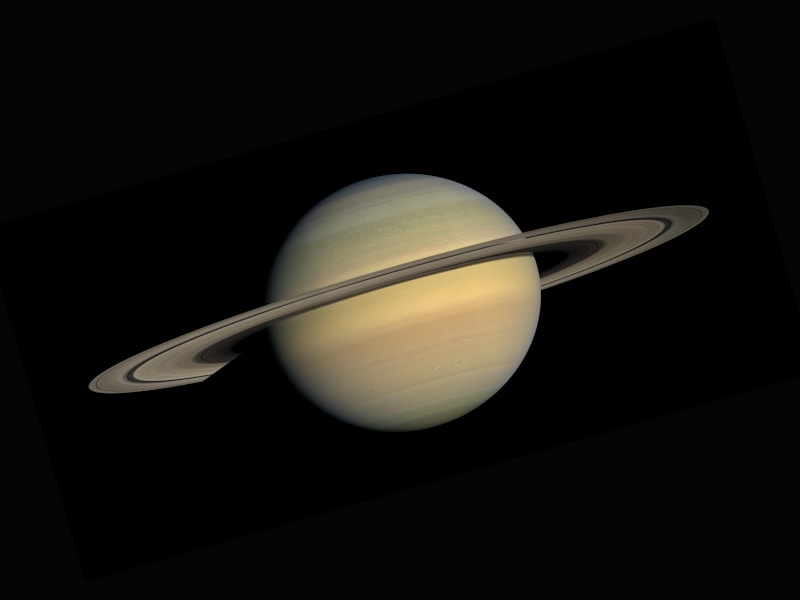
Voyager 1 flew by Jupiter in March 1979 and Saturn in November 1980, while Voyager 2 flew by Jupiter in July 1979 and Saturn in August 1981. The spacecraft also studied the magnetic fields and atmospheres of the outer planets, providing a wealth of data about the outer Solar System. In 2012, Voyager 1 crossed the heliopause, the boundary between the heliosphere and interstellar space, becoming the first human-made object to enter interstellar space.
Key Information
The Voyager mission has provided a wealth of data about the outer Solar System and the interstellar medium. The spacecraft have studied the magnetic fields and atmospheres of the outer planets, including Jupiter, Saturn, Uranus, and Neptune. The Voyager spacecraft have also studied the interstellar medium, which is the material that fills the space between stars. The mission has provided insights into the structure and composition of the interstellar medium, as well as the properties of the heliosphere.
The Voyager spacecraft are equipped with a range of instruments, including:
* Cosmic Ray System: a detector that measures the energy and composition of cosmic rays, which are high-energy particles that originate from outside the Solar System.
* Magnetometer: an instrument that measures the magnetic field of the outer planets and the interstellar medium.
* Plasma Science Instrument: a detector that measures the properties of the plasma, which is a high-energy state of matter that fills the space between stars.
* Ultraviolet Spectrometer: an instrument that measures the ultraviolet radiation emitted by the outer planets and the interstellar medium.
Significance
The Voyager mission has had a profound impact on our understanding of the outer Solar System and the interstellar medium. The mission has provided insights into the structure and composition of the interstellar medium, as well as the properties of the heliosphere. The Voyager spacecraft have also provided a wealth of data about the outer planets, including their magnetic fields and atmospheres.
The Voyager mission has also had a significant impact on the search for extraterrestrial life. The spacecraft have been equipped with a golden record, which contains sounds and images of Earth, as well as a message from humanity. The record is intended to serve as a message to any extraterrestrial life form that may encounter the spacecraft.
INFOBOX:
- Name: Voyager Interstellar Mission
- Type: Space Exploration
- Date: September 5, 1977
- Location: Outer Solar System and Interstellar Space
- Known For: First Human-Made Object to Enter Interstellar Space
TAGS: Space Exploration, Voyager, Outer Solar System, Interstellar Medium, Heliosphere, Cosmic Rays, Magnetometer, Plasma Science, Ultraviolet Spectrometer, Extraterrestrial Life