
Missions Encyclopedia Entry 1776178744: Voyager 1
SUMMARY: Voyager 1 is a historic space mission that has traveled farther than any human-made object, providing unparalleled insights into the outer Solar System and interstellar space.
Overview
Launched on September 5, 1977, Voyager 1 is a space probe designed to study the outer Solar System and beyond. The mission was conceived by NASA's Jet Propulsion Laboratory (JPL) as a follow-up to the successful Pioneer 10 mission. Voyager 1 was built to take advantage of a rare alignment of the outer planets, allowing it to visit Jupiter and Saturn while studying the outer reaches of the Solar System. The spacecraft is powered by a radioisotope thermoelectric generator (RTG), which converts the heat generated by the decay of plutonium-238 into electricity.Voyager 1 is a remarkable example of human ingenuity and technological advancement. Weighing approximately 1,590 pounds (720 kg), the spacecraft measures 7.5 feet (2.3 meters) in length and 10 feet (3 meters) in width. Its gold-plated aluminum body is designed to withstand the harsh conditions of space, including extreme temperatures and radiation. The spacecraft is equipped with a range of scientific instruments, including a magnetometer, plasma analyzer, and ultraviolet spectrometer.
History/Background
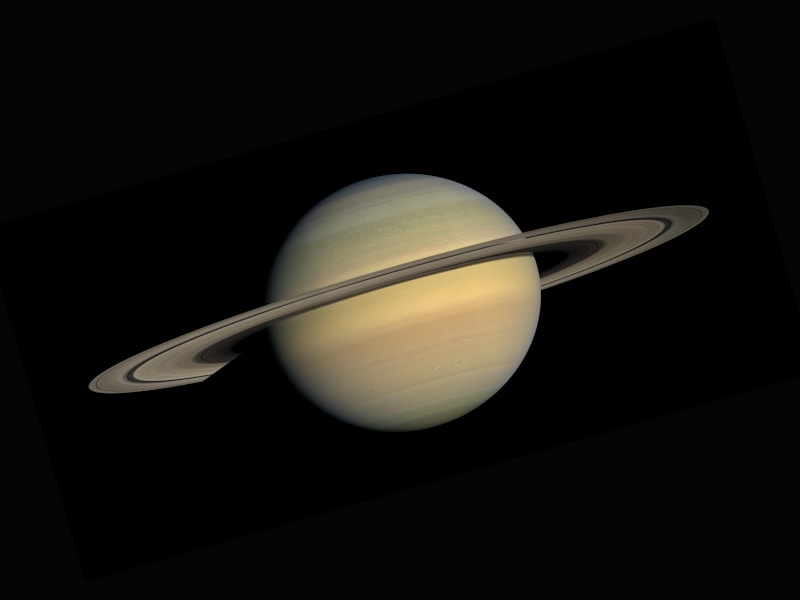
The development of Voyager 1 began in the early 1970s, with a team of scientists and engineers at JPL working on the mission design and instrument selection. The spacecraft was built by a consortium of companies, including NASA's Marshall Space Flight Center, the Jet Propulsion Laboratory, and the Goddard Space Flight Center. Voyager 1 was launched on September 5, 1977, from Cape Canaveral Air Force Station in Florida. The spacecraft flew by Jupiter in March 1979, providing stunning images and valuable scientific data. Voyager 1 continued on its journey, flying by Saturn in November 1980 and entering the interstellar medium in August 2012.Key Information
Voyager 1 has achieved several notable milestones throughout its mission. On August 25, 2012, the spacecraft crossed the heliopause, the boundary between the Solar System and interstellar space. This marked a historic moment in space exploration, as Voyager 1 became the first human-made object to enter interstellar space. The spacecraft has traveled over 14 billion miles (22.5 billion kilometers) from Earth, making it the most distant human-made object in space. Voyager 1 is also notable for its Golden Record, a gold-plated copper record containing sounds and images of Earth, intended as a message to any extraterrestrial life form that might encounter the spacecraft.Significance
Voyager 1 has significantly expanded our understanding of the outer Solar System and interstellar space. The mission has provided valuable insights into the magnetic fields, plasma environments, and cosmic rays of the outer Solar System. The spacecraft has also made several groundbreaking discoveries, including the detection of a new type of radiation belt around Jupiter and the discovery of a massive, diffuse cloud of gas and dust surrounding the outer Solar System. Voyager 1's journey has also raised important questions about the nature of interstellar space and the possibility of life beyond our Solar System.INFOBOX:
- Name: Voyager 1
- Type: Space Probe
- Date: September 5, 1977 (launch)
- Location: Interstellar space
- Known For: First human-made object to enter interstellar space
TAGS: Voyager 1, Space Probe, NASA, Jet Propulsion Laboratory, Outer Solar System, Interstellar Space, Golden Record, Space Exploration, Astronomy