
Missions Encyclopedia Entry 1776345124
Summary: The Voyager 1 space mission is a pioneering interstellar exploration project launched by NASA in 1977, designed to study the outer Solar System and beyond, providing unparalleled insights into the cosmos.
Overview
The Voyager 1 mission is a groundbreaking space exploration project that has been operational for over 45 years, making it one of the longest-running space missions in history. Launched on September 5, 1977, from Cape Canaveral, Florida, Voyager 1 was designed to study the outer Solar System and beyond, with a primary objective of exploring the outer reaches of the heliosphere and entering interstellar space. The mission was conceived during the 1960s, with a team of scientists and engineers led by NASA's Jet Propulsion Laboratory (JPL) working tirelessly to design and develop the spacecraft.
Voyager 1 is a twin mission to Voyager 2, which was launched on August 20, 1977. Both spacecraft were equipped with a range of scientific instruments, including cameras, spectrometers, and magnetometers, to study the outer Solar System and its various components. The mission's primary objectives were to study the outer planets, their moons, and the surrounding space environment, as well as to explore the outer reaches of the heliosphere and enter interstellar space.
History/Background
The concept of the Voyager mission dates back to the 1960s, when NASA began planning for a series of space missions to explore the outer Solar System. The Voyager project was formally approved in 1972, with a team of scientists and engineers at JPL leading the development of the spacecraft. The mission was designed to take advantage of a rare alignment of the outer planets, which would allow the spacecraft to visit multiple planets in a relatively short period.
The Voyager 1 spacecraft was launched on September 5, 1977, aboard a Titan IIIE-Centaur rocket from Cape Canaveral, Florida. The spacecraft was equipped with a range of scientific instruments, including a plasma science instrument, a low-energy charged particle instrument, and a cosmic ray system. The mission's primary objectives were to study the outer planets, their moons, and the surrounding space environment, as well as to explore the outer reaches of the heliosphere and enter interstellar space.
Key Information
Voyager 1 has achieved numerous milestones throughout its mission, including:
* First close-up of Jupiter: Voyager 1 flew within 217,000 miles of Jupiter's cloud tops on March 5, 1979, providing the first close-up images of the planet's atmosphere and magnetic field.
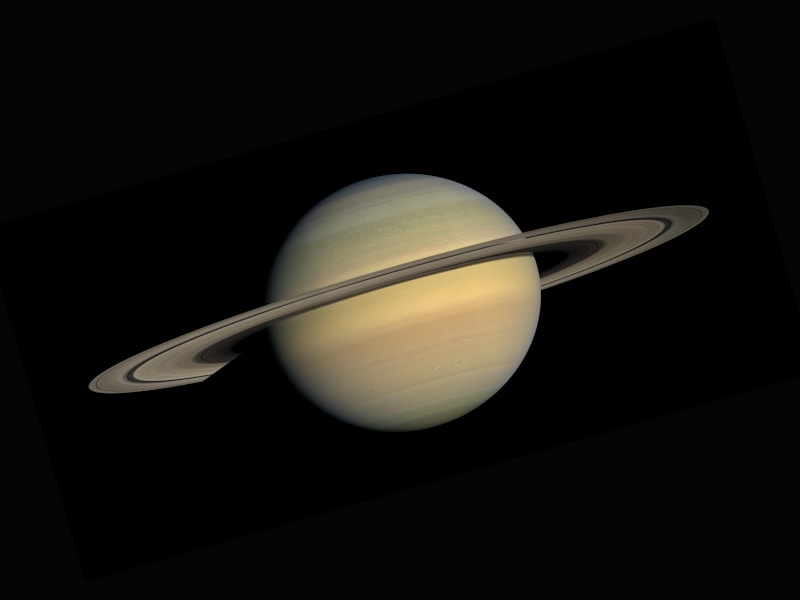
* First close-up of Saturn: Voyager 1 flew within 77,000 miles of Saturn's cloud tops on November 12, 1980, providing the first close-up images of the planet's rings and moons.
* Entry into interstellar space: Voyager 1 entered interstellar space on August 25, 2012, becoming the first human-made object to do so.
* Most distant human-made object: Voyager 1 is currently the most distant human-made object in space, with a distance of over 14 billion miles from Earth.
Significance
The Voyager 1 mission has provided unparalleled insights into the outer Solar System and beyond, expanding our understanding of the cosmos and its various components. The mission's scientific discoveries have had a significant impact on our understanding of the outer planets, their moons, and the surrounding space environment. The mission's exploration of interstellar space has also opened up new avenues for research and exploration, with potential implications for future space missions.
INFOBOX:
- Name: Voyager 1
- Type: Spacecraft
- Date: September 5, 1977
- Location: Outer Solar System and interstellar space
- Known For: First close-up of Jupiter and Saturn, entry into interstellar space, most distant human-made object
TAGS: Voyager 1, Space Exploration, Interstellar Space, Outer Solar System, Jupiter, Saturn, NASA, Jet Propulsion Laboratory, Spacecraft, Cosmos, Astronomy