
**
Overview
Voyager 1 is a space exploration mission launched by NASA on September 5, 1977, with the primary objective of studying the outer Solar System and beyond. The mission was designed to take advantage of a rare alignment of the outer planets, allowing the spacecraft to visit Jupiter, Saturn, and their moons. Voyager 1 is a twin mission to Voyager 2, which was launched on August 20, 1977. The twin spacecraft were built to withstand the harsh conditions of space and to provide a wealth of scientific data about the outer Solar System.The Voyager 1 spacecraft is a remarkable achievement in engineering and design. It is powered by a radioisotope thermoelectric generator (RTG), which converts the heat generated by the decay of radioactive isotopes into electricity. This power source allows the spacecraft to operate for decades, even though it is over 14 billion miles (22.5 billion kilometers) away from Earth. Voyager 1 is equipped with a range of scientific instruments, including a magnetometer, a plasma spectrometer, and a cosmic ray detector.
History/Background
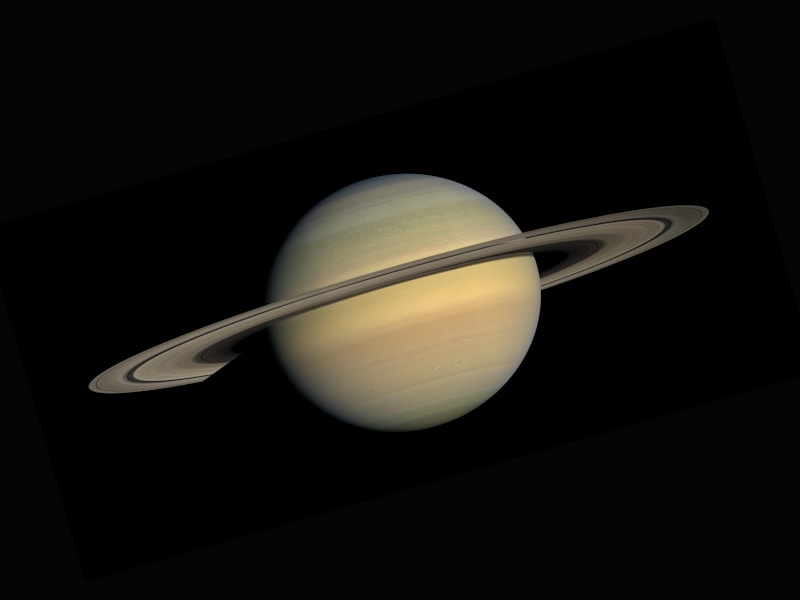
The Voyager 1 mission was conceived in the early 1970s as a follow-up to the Pioneer 10 and 11 missions, which had successfully explored the outer Solar System in the early 1970s. The Voyager 1 spacecraft was built by a team of engineers and scientists at NASA's Jet Propulsion Laboratory (JPL) in Pasadena, California. The spacecraft was launched on a Titan IIIE-Centaur rocket from Launch Complex 41 at Cape Canaveral Air Force Station in Florida.Voyager 1's primary mission was to study the outer Solar System, with a focus on the Jupiter and Saturn systems. The spacecraft flew by Jupiter on March 5, 1979, and by Saturn on November 12, 1980. During these encounters, Voyager 1 provided a wealth of scientific data about the magnetic fields, atmospheres, and moons of these planets.
Key Information
Voyager 1 has achieved several notable milestones in its mission. On August 25, 2012, the spacecraft crossed the heliopause, the boundary between the Solar System and interstellar space. This marked the first time that a human-made object had entered interstellar space. Voyager 1 is now the most distant human-made object in space, with a distance of over 14 billion miles (22.5 billion kilometers) from Earth.Voyager 1 is also equipped with a Golden Record, a gold-plated copper record containing sounds and images of Earth and its inhabitants. The record was designed to serve as a message to any extraterrestrial life form that might encounter the spacecraft. The record contains a range of sounds, including natural sounds like rain and thunder, as well as music from around the world.
Significance
Voyager 1's mission has greatly expanded our understanding of the outer Solar System and beyond. The spacecraft has provided a wealth of scientific data about the magnetic fields, atmospheres, and moons of the outer planets. Voyager 1's encounter with the heliopause has also marked a new era in space exploration, as it has opened up the possibility of exploring the interstellar medium.Voyager 1's legacy extends beyond its scientific achievements. The spacecraft has inspired generations of scientists and engineers, and has played a significant role in shaping our understanding of the universe. As the most distant human-made object in space, Voyager 1 serves as a reminder of humanity's ingenuity and curiosity.
INFOBOX:
- Name: Voyager 1
- Type: Spacecraft
- Date: September 5, 1977
- Location: Interstellar space
- Known For: First human-made object to enter interstellar space
TAGS: Space Exploration, Voyager 1, NASA, Outer Solar System, Interstellar Space, Golden Record, Spacecraft, Jupiter, Saturn, Heliopause.