
Missions Encyclopedia Entry 1777190346: Voyager 1
SUMMARY: Voyager 1 is a historic space mission that has traveled farther than any human-made object, providing unparalleled insights into the outer reaches of our solar system and beyond.
Overview
Launched on September 5, 1977, Voyager 1 is a space probe designed to study the outer Solar System and beyond. The mission was part of the Voyager program, a series of space missions developed by NASA to explore the outer planets and their moons. Voyager 1 was built by a team of scientists and engineers at the Jet Propulsion Laboratory (JPL) in Pasadena, California, and was launched aboard a Titan IIIE rocket from Cape Canaveral Air Force Station in Florida.
The primary objectives of the Voyager 1 mission were to study the outer planets, particularly Jupiter and Saturn, and to explore the outer reaches of the Solar System. The spacecraft was equipped with a range of scientific instruments, including a magnetometer, a plasma spectrometer, and a cosmic ray detector. These instruments allowed Voyager 1 to study the magnetic fields, atmospheres, and radiation environments of the outer planets, as well as the interplanetary medium.
History/Background
The Voyager program was conceived in the early 1970s, with the goal of exploring the outer planets and their moons. The program was developed in response to the success of the Mariner 10 mission, which had flown by Venus and Mercury in the early 1970s. The Voyager spacecraft were designed to be more powerful and capable than Mariner 10, with a range of scientific instruments and a more advanced propulsion system.
Voyager 1 was launched on September 5, 1977, just 16 days after its twin, Voyager 2. The spacecraft followed a complex trajectory, using a combination of gravity assists from Jupiter and Saturn to reach the outer reaches of the Solar System. Voyager 1 flew by Jupiter in March 1979, and by Saturn in November 1980. The spacecraft continued on its journey, passing the orbit of Neptune in August 1989 and entering the interstellar medium in August 2012.
Key Information
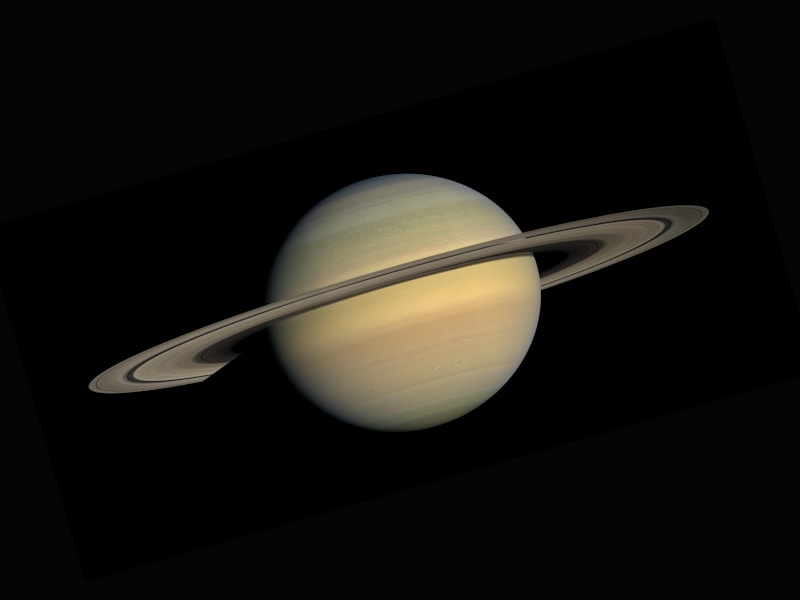
Voyager 1 has achieved a number of historic milestones during its journey. In 1979, the spacecraft became the first human-made object to visit Jupiter, providing a wealth of new information about the planet's magnetic field, atmosphere, and moons. In 1980, Voyager 1 flew by Saturn, providing the first close-up images of the planet's rings and moons. The spacecraft continued on its journey, passing the orbit of Neptune in 1989 and entering the heliosheath, a region of space where the solar wind slows down, in 2004.
In 2012, Voyager 1 entered the interstellar medium, becoming the first human-made object to leave the Solar System. The spacecraft is now traveling through the interstellar medium, a region of space filled with gas and dust from other stars. Voyager 1 is currently about 14 billion miles (22.5 billion kilometers) from Earth, and is traveling at a speed of about 38,000 miles per hour (61,155 kilometers per hour).
Significance
Voyager 1 has had a profound impact on our understanding of the outer Solar System and beyond. The spacecraft has provided a wealth of new information about the magnetic fields, atmospheres, and radiation environments of the outer planets, as well as the interplanetary medium. Voyager 1 has also paved the way for future space missions, demonstrating the feasibility of long-duration spaceflight and the importance of exploring the outer reaches of the Solar System.
INFOBOX:
- Name: Voyager 1
- Type: Space Probe
- Date: September 5, 1977
- Location: Interstellar Medium
- Known For: First human-made object to leave the Solar System
TAGS: Space Exploration, Voyager Program, Outer Solar System, Interstellar Medium, Space Probe, NASA, Jet Propulsion Laboratory, Titan IIIE Rocket.