Missions Encyclopedia Entry 1777232944: Voyager 1
SUMMARY: Voyager 1 is a space exploration mission launched by NASA in 1977, designed to study the outer Solar System and beyond, and is now the most distant human-made object in space.
Overview
Voyager 1 is a space probe that was launched on September 5, 1977, from Cape Canaveral, Florida, as part of NASA's Voyager program. The mission was designed to take advantage of a rare alignment of the outer planets in our Solar System, allowing the spacecraft to visit Jupiter and Saturn in a single mission. Voyager 1 was built by a team of scientists and engineers at NASA's Jet Propulsion Laboratory (JPL) in Pasadena, California, and was intended to study the outer Solar System, the heliosphere, and the interstellar medium.
The Voyager spacecraft are twin probes, with Voyager 1 and Voyager 2 being launched just a few weeks apart. While Voyager 2 has also achieved great success, Voyager 1 has become the most distant human-made object in space, with a distance of over 14 billion miles (22.5 billion kilometers) from Earth. The spacecraft is powered by a radioisotope thermoelectric generator (RTG), which converts the heat generated by the decay of radioactive isotopes into electricity. This power source has allowed Voyager 1 to continue operating long after its primary mission was completed.
History/Background
The Voyager program was conceived in the early 1970s as a follow-up to the Pioneer 10 and 11 missions, which had visited Jupiter and Saturn in the early 1970s. The Voyager spacecraft were designed to take advantage of the rare alignment of the outer planets, which occurs every 176 years. The mission was approved by NASA in 1975, and the spacecraft were built and launched in 1977. Voyager 1 was launched on September 5, 1977, and Voyager 2 was launched on August 20, 1977.
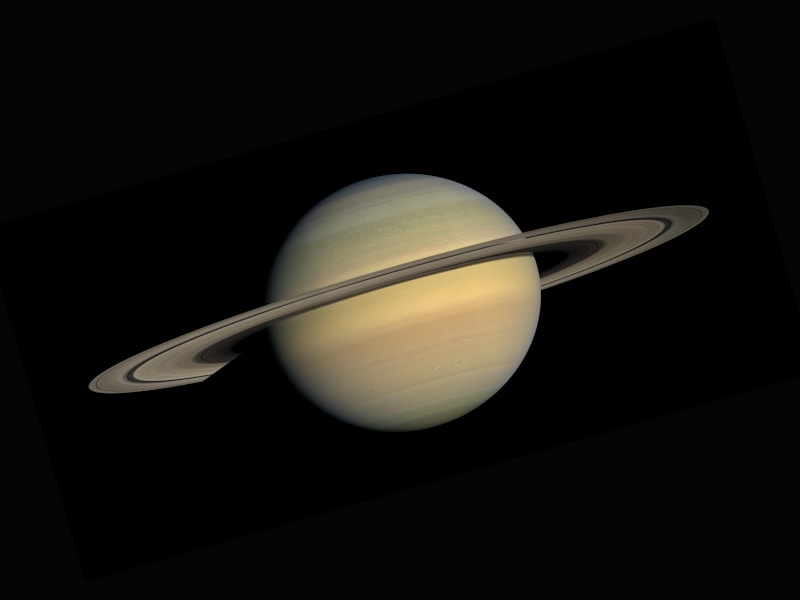
During its primary mission, Voyager 1 flew by Jupiter on March 5, 1979, and Saturn on November 12, 1980. The spacecraft sent back a wealth of data and images of the two planets, including the famous "Pillars of Creation" image of the Eagle Nebula. After completing its primary mission, Voyager 1 entered a new phase of its mission, known as the "interstellar mission," in which it would study the heliosphere and the interstellar medium.
Key Information
Voyager 1 has achieved many notable milestones during its mission. Some of the key facts about the spacecraft include:
* Distance: Voyager 1 has a distance of over 14 billion miles (22.5 billion kilometers) from Earth, making it the most distant human-made object in space.
* Speed: The spacecraft has a speed of over 38,000 miles per hour (61,155 kilometers per hour), making it one of the fastest objects in space.
* Power source: Voyager 1 is powered by a radioisotope thermoelectric generator (RTG), which has provided the spacecraft with power for over 40 years.
* Data transmission: The spacecraft has sent back over 6,000 images and 17 gigabytes of data to Earth during its mission.
* Interstellar medium: Voyager 1 has entered the interstellar medium, the region of space outside of our Solar System, and is now studying the properties of this region.
Significance
Voyager 1 has had a significant impact on our understanding of the outer Solar System and the interstellar medium. The spacecraft has provided a wealth of data and images that have helped scientists to better understand the properties of the outer planets and the heliosphere. The mission has also raised important questions about the nature of the interstellar medium and the possibility of life beyond our Solar System.
The Voyager spacecraft have also become cultural icons, representing humanity's exploration of the cosmos. The Golden Record, a gold-plated copper record that was included on the Voyager spacecraft, contains sounds and images of Earth and its inhabitants, and is intended to serve as a message to any extraterrestrial life form that may encounter the spacecraft.
INFOBOX:
- Name: Voyager 1
- Type: Space probe
- Date: September 5, 1977
- Location: Interstellar medium
- Known For: Most distant human-made object in space
TAGS: Voyager, Space exploration, NASA, Outer Solar System, Interstellar medium, Heliosphere, Radioisotope thermoelectric generator, Golden Record, Spacecraft, Space probe.