
Missions Encyclopedia Entry 1777261444
SUMMARY: The Voyager 1 spacecraft is a historic interplanetary probe that has traveled farther than any human-made object, providing groundbreaking insights into the outer Solar System and the interstellar medium.
Overview
Launched on September 5, 1977, Voyager 1 is a twin spacecraft to Voyager 2, designed to study the outer Solar System and beyond. The mission was conceived by NASA's Jet Propulsion Laboratory (JPL) to explore the outer planets and their moons, as well as the outer reaches of the heliosphere. Voyager 1 is a remarkable example of human ingenuity and technological advancement, having traveled over 14 billion miles (22.5 billion kilometers) from Earth, making it the most distant human-made object in space.
The Voyager 1 spacecraft is a marvel of engineering, consisting of a cylindrical bus with a diameter of 7.5 feet (2.3 meters) and a height of 6.5 feet (2 meters). It is powered by a radioisotope thermoelectric generator (RTG), which converts the heat generated by radioactive decay into electricity. The spacecraft is equipped with a range of scientific instruments, including a magnetometer, a plasma spectrometer, and a cosmic ray detector.
History/Background
The Voyager 1 mission was conceived in the early 1970s, during a period of intense interest in space exploration. The Apollo program had successfully landed humans on the Moon, and scientists were eager to explore the outer Solar System. The Voyager 1 spacecraft was designed to take advantage of a rare alignment of the outer planets, which would allow the spacecraft to visit Jupiter, Saturn, Uranus, and Neptune in a relatively short period of time.
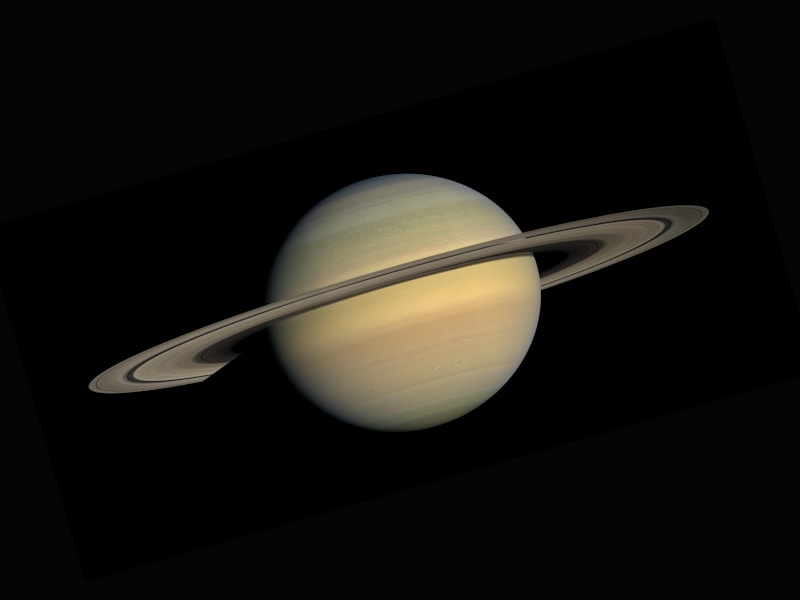
The Voyager 1 spacecraft was launched on September 5, 1977, from Cape Canaveral Air Force Station in Florida. The spacecraft flew by Jupiter in March 1979, providing stunning images of the planet's atmosphere and magnetic field. Voyager 1 then flew by Saturn in November 1980, revealing the planet's rings and moons in unprecedented detail.
Key Information
Voyager 1 has achieved numerous milestones throughout its mission, including:
* Farthest Human-Made Object: Voyager 1 is the most distant human-made object in space, having traveled over 14 billion miles (22.5 billion kilometers) from Earth.
* Interstellar Medium: Voyager 1 entered the interstellar medium in August 2012, becoming the first human-made object to do so.
* Cosmic Ray Detection: Voyager 1 has detected a significant increase in cosmic rays, which are high-energy particles that originate from outside the Solar System.
* Magnetic Field: Voyager 1 has measured the magnetic field of the outer Solar System, providing insights into the dynamics of the heliosphere.
Significance
The Voyager 1 mission has had a profound impact on our understanding of the outer Solar System and the interstellar medium. The spacecraft has provided a wealth of scientific data, which has helped scientists to better understand the formation and evolution of our Solar System. The Voyager 1 mission has also inspired a new generation of scientists and engineers, who are working to push the boundaries of space exploration.
INFOBOX:
- Name: Voyager 1
- Type: Interplanetary Probe
- Date: September 5, 1977
- Location: Outer Solar System/Interstellar Medium
- Known For: Farthest Human-Made Object in Space
TAGS: Voyager 1, Interplanetary Probe, Outer Solar System, Interstellar Medium, Cosmic Rays, Magnetic Field, Space Exploration, NASA