
**
Overview
Launched on September 5, 1977, Voyager 1 is a space probe designed to study the outer Solar System and beyond. The mission was conceived by NASA's Jet Propulsion Laboratory (JPL) in Pasadena, California, with the primary objective of exploring the Jupiter and Saturn systems. However, due to its remarkable design and trajectory, Voyager 1 has far exceeded its original mission parameters, becoming the most distant human-made object in space.
Voyager 1 is part of a twin mission, accompanied by Voyager 2, which was launched on August 20, 1977. Both spacecraft were designed to take advantage of a rare alignment of the outer planets, allowing them to visit Jupiter, Saturn, and their moons in a single mission. The probes were built to withstand the harsh conditions of space, including extreme temperatures, radiation, and the vacuum of interstellar space.
History/Background
The Voyager mission was born out of the success of the Pioneer program, which sent two spacecraft, Pioneer 10 and Pioneer 11, to explore the outer Solar System in the early 1970s. The Voyager mission was designed to be more ambitious, with a focus on the gas giants Jupiter and Saturn. The spacecraft were equipped with a range of instruments, including cameras, spectrometers, and magnetometers, to study the planets' atmospheres, magnetic fields, and moons.
The Voyager mission was also notable for its innovative design, which included a unique power source: three radioisotope thermoelectric generators (RTGs). These devices converted the heat generated by the decay of radioactive isotopes into electricity, providing a reliable and long-lasting power source for the spacecraft.
Key Information
Voyager 1 has achieved numerous milestones throughout its journey, including:
* First close-up images of Jupiter: On March 5, 1979, Voyager 1 sent back stunning images of Jupiter's atmosphere, revealing the planet's Great Red Spot, a persistent anticyclonic storm.
* Discovery of volcanic activity on Io: Voyager 1 observed volcanic eruptions on Jupiter's moon Io, providing evidence of geological activity in the outer Solar System.
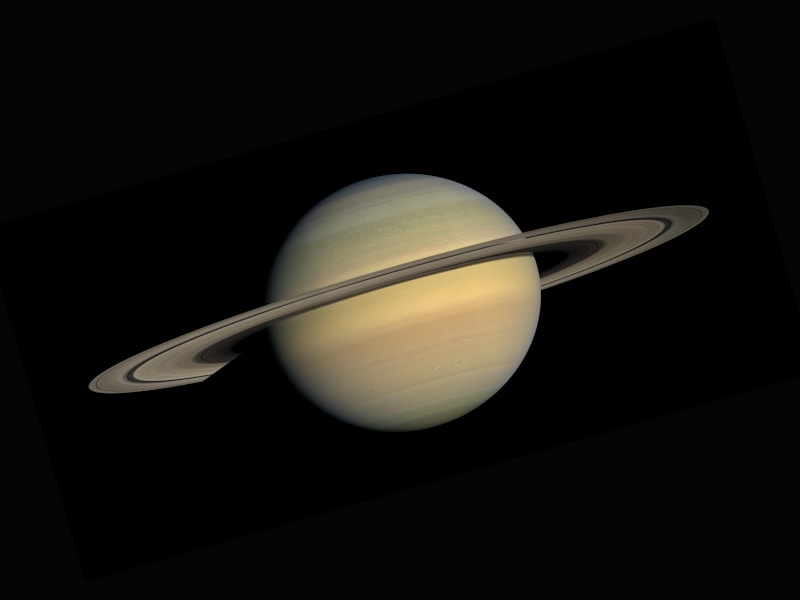
* First flyby of Saturn: On November 12, 1980, Voyager 1 flew within 77,000 miles of Saturn's cloud tops, capturing breathtaking images of the planet's rings and moons.
* Entry into interstellar space: On August 25, 2012, Voyager 1 crossed the heliopause, the boundary between the Solar System and interstellar space, becoming the first human-made object to enter this region.
Significance
The Voyager mission has significantly expanded our understanding of the outer Solar System and the conditions of interstellar space. The spacecraft's instruments have provided invaluable data on the magnetic fields, atmospheres, and moons of the gas giants, as well as the interstellar medium. Voyager 1 has also served as a pioneer for future space missions, demonstrating the feasibility of long-duration spaceflight and the importance of exploring the outer reaches of our Solar System.
INFOBOX:
- Name: Voyager 1
- Type: Space probe
- Date: September 5, 1977
- Location: Interstellar space
- Known For: First human-made object to enter interstellar space
TAGS: Space exploration, Voyager mission, Jupiter, Saturn, Interstellar space, Space probe, NASA, JPL, Pioneer program, RTGs, Radioisotope thermoelectric generators.