
Missions Encyclopedia Entry 1777729926
SUMMARY: The Voyager 1 spacecraft is a historic interstellar probe launched by NASA in 1977, designed to study the outer Solar System and beyond.
Overview
Launched on September 5, 1977, Voyager 1 is one of the most iconic and enduring space missions in human history. Conceived as a follow-up to the Pioneer 10 spacecraft, Voyager 1 was designed to explore the outer reaches of the Solar System, providing unprecedented insights into the Jupiter and Saturn systems. The mission was also intended to test the feasibility of interstellar travel and to gather data on the outer heliosphere, the region of space influenced by the Sun.
Voyager 1 was built by NASA's Jet Propulsion Laboratory (JPL) at a cost of approximately $125 million, a relatively modest sum for a mission of its scope and complexity. The spacecraft is powered by a radioisotope thermoelectric generator (RTG), which converts the heat generated by the decay of plutonium-238 into electricity. This innovative power source allowed Voyager 1 to operate for extended periods, even in the harsh environment of interstellar space.
History/Background
The Voyager program was conceived in the early 1970s, during a period of intense interest in space exploration and the search for extraterrestrial life. The Voyager spacecraft were designed to take advantage of a rare alignment of the outer planets, which occurred in the late 1970s. This alignment allowed the spacecraft to visit Jupiter and Saturn in a relatively short period, minimizing the time required for the mission.
Voyager 1 was launched on September 5, 1977, from Cape Canaveral Air Force Station in Florida. The spacecraft followed a complex trajectory, using a combination of gravity assists from Jupiter and Saturn to achieve its final destination in interstellar space. The mission was initially planned to last for five years, but Voyager 1 has far exceeded its expected lifespan, continuing to operate for over 45 years.
Key Information
Voyager 1 has achieved numerous milestones throughout its mission, including:
* Closest approach to Jupiter: September 5, 1979, at a distance of 348,000 kilometers (216,000 miles)
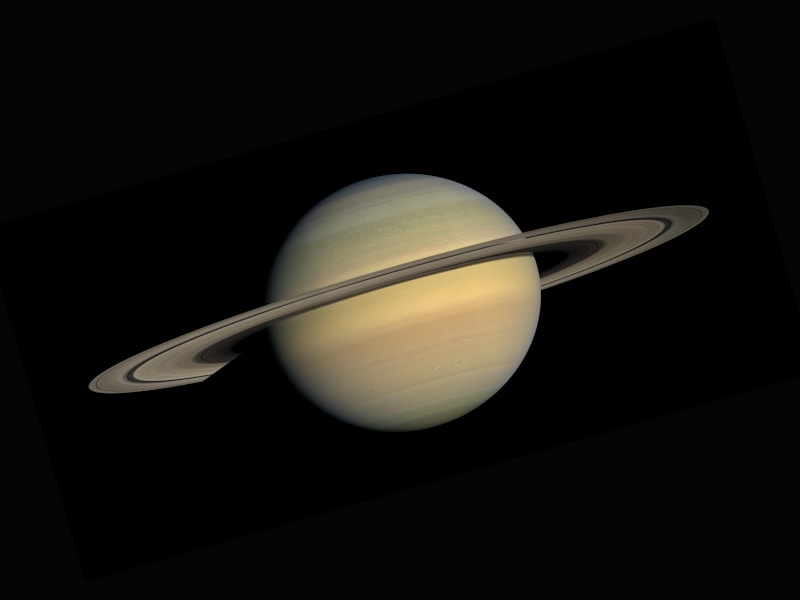
* Closest approach to Saturn: November 12, 1980, at a distance of 124,000 kilometers (77,000 miles)
* Exit from the Solar System: August 25, 2012, marking the beginning of interstellar space travel
* Most distant human-made object: Currently located over 14 billion miles (22.5 billion kilometers) from Earth, making it the most distant human-made object in space
Voyager 1 has also made significant contributions to our understanding of the outer Solar System, including:
* Jupiter's magnetic field: Voyager 1 discovered a complex magnetic field surrounding Jupiter, which has helped scientists understand the planet's internal dynamics.
* Saturn's rings: Voyager 1 provided the first close-up images of Saturn's rings, revealing their intricate structure and composition.
* Interstellar medium: Voyager 1 has entered the interstellar medium, a region of space influenced by nearby stars and galaxies, providing valuable insights into the properties of this region.
Significance
Voyager 1 has had a profound impact on our understanding of the Solar System and the universe as a whole. The mission has:
* Expanded our knowledge of the outer Solar System: Voyager 1 has provided unprecedented insights into the Jupiter and Saturn systems, revealing their complex dynamics and composition.
* Paved the way for interstellar travel: Voyager 1 has demonstrated the feasibility of interstellar travel, opening up new possibilities for future space missions.
* Inspired new generations of scientists and engineers: Voyager 1 has captivated the imagination of scientists and engineers around the world, inspiring new generations to pursue careers in space exploration.
INFOBOX:
- Name: Voyager 1
- Type: Interstellar probe
- Date: September 5, 1977
- Location: Interstellar space
- Known For: First human-made object to enter interstellar space
TAGS: Voyager 1, Interstellar Space, Jupiter, Saturn, Space Exploration, NASA, JPL, Pioneer 10, Radioisotope Thermoelectric Generator, Interstellar Medium