
Missions Encyclopedia Entry 1777762864: Voyager 1
SUMMARY: Voyager 1 is a historic space mission that has traveled farther than any human-made object, providing groundbreaking insights into the outer Solar System and interstellar space.
Overview
Launched on September 5, 1977, Voyager 1 is a space probe designed to study the outer Solar System and beyond. The mission was conceived by NASA's Jet Propulsion Laboratory (JPL) in Pasadena, California, with the primary objective of exploring the outer planets and their moons. Voyager 1 is the second of two identical spacecraft, the first being Voyager 2, which was launched on August 20, 1977. Both spacecraft were designed to take advantage of a rare alignment of the outer planets, allowing them to visit Jupiter, Saturn, Uranus, and Neptune in a single mission.
The Voyager spacecraft were equipped with a range of scientific instruments, including cameras, spectrometers, and magnetometers, which were designed to study the outer planets' atmospheres, magnetic fields, and moons. The spacecraft were also equipped with a Golden Record, a gold-plated copper record containing sounds and images of Earth, intended to serve as a message to any extraterrestrial life form that might encounter the spacecraft.
History/Background
The Voyager 1 mission was the culmination of a decade-long effort by NASA to explore the outer Solar System. The mission was conceived in the 1960s, when NASA's Mariner 10 spacecraft flew by Mercury and Venus, providing the first close-up images of these planets. The success of Mariner 10 sparked interest in exploring the outer planets, and NASA began planning a new mission to study Jupiter and Saturn.
The Voyager 1 spacecraft was designed and built by a team of engineers and scientists at JPL, led by Dr. Edward Stone, who would later become the director of JPL. The spacecraft was launched on a Titan IIIE-Centaur rocket from Cape Canaveral Air Force Station in Florida, and it took advantage of a gravity assist from Jupiter to change its trajectory and head towards Saturn.
Key Information
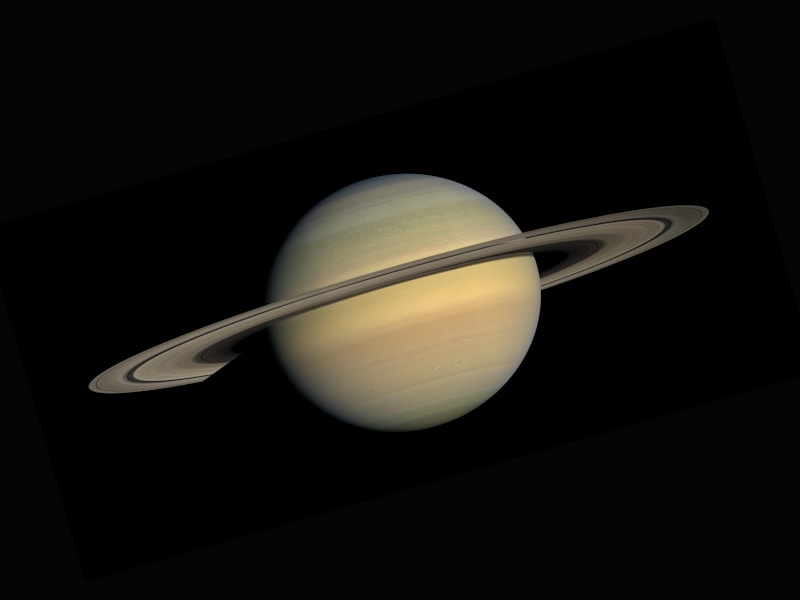
Voyager 1 has traveled an astonishing 14.5 billion miles (23.3 billion kilometers) from Earth, making it the most distant human-made object in space. The spacecraft has sent back a wealth of data and images of the outer planets and their moons, including the first close-up images of Jupiter's Great Red Spot and Saturn's rings.
One of the most significant discoveries made by Voyager 1 was the detection of a region of space known as the heliopause, where the solar wind from the Sun meets the interstellar medium. This region marks the boundary between the Solar System and interstellar space, and Voyager 1 has provided the first direct measurements of the properties of this region.
Voyager 1 has also encountered several notable events, including the Jupiter and Saturn flybys, which provided valuable insights into the magnetic fields and atmospheres of these planets. The spacecraft has also detected the presence of cosmic rays and high-energy particles in the outer Solar System, which has helped scientists to better understand the origins of these particles.
Significance
Voyager 1 has had a profound impact on our understanding of the outer Solar System and interstellar space. The mission has provided a wealth of data and images that have helped scientists to better understand the properties of the outer planets and their moons. The spacecraft has also served as a messenger to the universe, carrying a message from humanity that will be preserved for millions of years.
The Voyager 1 mission has also raised important questions about the origins of the Solar System and the possibility of life beyond Earth. The detection of cosmic rays and high-energy particles in the outer Solar System has sparked interest in the search for extraterrestrial life, and the mission has provided valuable insights into the conditions necessary for life to exist.
INFOBOX:
- Name: Voyager 1
- Type: Space Probe
- Date: September 5, 1977
- Location: Interstellar space
- Known For: Most distant human-made object in space
TAGS: Voyager 1, Space Exploration, Outer Solar System, Interstellar Space, Cosmic Rays, High-Energy Particles, Golden Record, Space Probe, NASA, Jet Propulsion Laboratory, Jupiter, Saturn, Uranus, Neptune.