
Missions Encyclopedia Entry 1777856344: Voyager 1
SUMMARY: Voyager 1 is a space mission that has traveled farther than any human-made object, providing unparalleled insights into the outer reaches of our solar system and the interstellar medium.
Overview
Launched on September 5, 1977, Voyager 1 is a twin spacecraft to Voyager 2, designed to study the outer Solar System and beyond. The mission was conceived by NASA's Jet Propulsion Laboratory (JPL) to explore the outer planets and their moons, as well as the outer reaches of the heliosphere. Voyager 1 is a remarkable example of human ingenuity and technological advancement, having traveled over 14 billion miles (22.5 billion kilometers) from Earth, making it the most distant human-made object in space.
The Voyager 1 spacecraft is a remarkable 23.4 feet (7.1 meters) tall and 10.6 feet (3.2 meters) wide, with a mass of approximately 1,600 pounds (725 kilograms). It is powered by a radioisotope thermoelectric generator (RTG), which converts the heat generated by the decay of radioactive isotopes into electricity. This power source has allowed Voyager 1 to continue operating for over 45 years, long after its primary mission was completed.
History/Background
The Voyager 1 mission was conceived in the early 1970s, with the primary goal of studying the outer Solar System. The spacecraft was designed to fly by Jupiter and Saturn, using the gravity of these planets to alter its trajectory and send it into the interstellar medium. Voyager 1 was launched on September 5, 1977, from Cape Canaveral Air Force Station in Florida, along with its twin spacecraft, Voyager 2. The two spacecraft were identical, with the main difference being the trajectory they would follow.
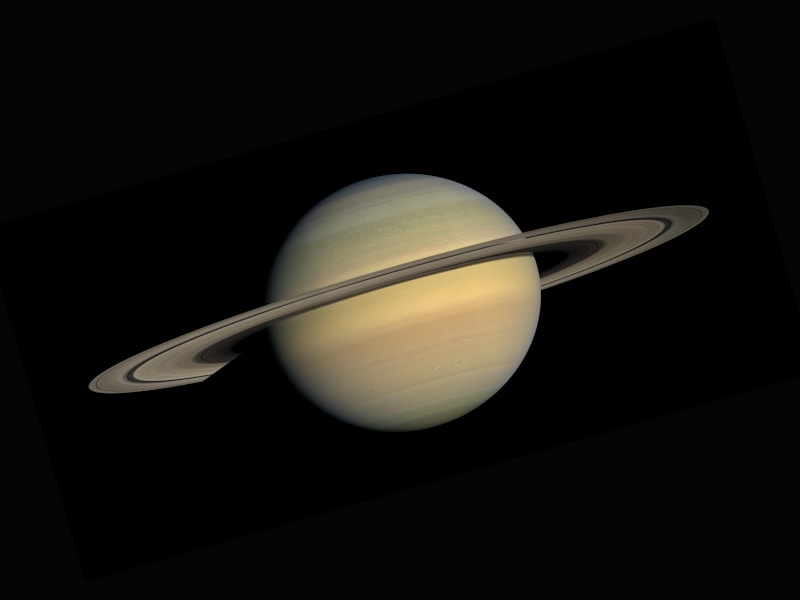
Voyager 1's primary mission was completed in 1980, when it flew by Saturn. However, the spacecraft continued to operate, and its trajectory was altered to send it into the interstellar medium. In 2012, Voyager 1 crossed the heliopause, the boundary between the heliosphere and interstellar space, becoming the first human-made object to enter interstellar space.
Key Information
- Launch Date: September 5, 1977
- Launch Site: Cape Canaveral Air Force Station, Florida
- Primary Mission: Study the outer Solar System and beyond
- Spacecraft Design: Radioisotope thermoelectric generator (RTG) powered, with a mass of approximately 1,600 pounds (725 kilograms)
- Distance Traveled: Over 14 billion miles (22.5 billion kilometers) from Earth
- Speed: Approximately 38,000 miles per hour (61,155 kilometers per hour)
- Power Source: Radioisotope thermoelectric generator (RTG)
- Scientific Instruments: Magnetometer, plasma science instrument, ultraviolet spectrometer, and others
Significance
Voyager 1's mission has provided unparalleled insights into the outer reaches of our solar system and the interstellar medium. The spacecraft has sent back a wealth of data on the magnetic fields, plasma, and radiation in the outer Solar System, as well as the conditions in interstellar space. Voyager 1 has also carried a Golden Record, a gold-plated copper record containing sounds and images of Earth, which serves as a message to any extraterrestrial life form that may encounter the spacecraft.
Voyager 1's legacy extends beyond its scientific discoveries. The mission has inspired generations of scientists, engineers, and explorers, and has pushed the boundaries of what is possible in space exploration. As the most distant human-made object in space, Voyager 1 serves as a reminder of human ingenuity and the boundless potential of space exploration.
INFOBOX:
- Name: Voyager 1
- Type: Spacecraft
- Date: September 5, 1977
- Location: Interstellar space
- Known For: Most distant human-made object in space
TAGS: Voyager 1, Space Exploration, Outer Solar System, Interstellar Space, Radioisotope Thermoelectric Generator (RTG), Golden Record, Spacecraft, NASA, Jet Propulsion Laboratory (JPL), Space Mission, Cosmic Ray, Heliosphere, Heliopause.