Missions Encyclopedia Entry 1777903744: Voyager 1
SUMMARY: Voyager 1 is a historic space mission that has traveled farther than any human-made object, providing unparalleled insights into the outer Solar System and interstellar space.
Overview
Launched on September 5, 1977, Voyager 1 is a space probe designed to study the outer Solar System and beyond. Conceived by NASA's Jet Propulsion Laboratory (JPL), the mission aimed to explore the outer planets, their moons, and the surrounding interplanetary medium. The Voyager 1 spacecraft is a remarkable example of human ingenuity, featuring a robust design that has enabled it to withstand the harsh conditions of space for over four decades.
Voyager 1's primary objectives were to:
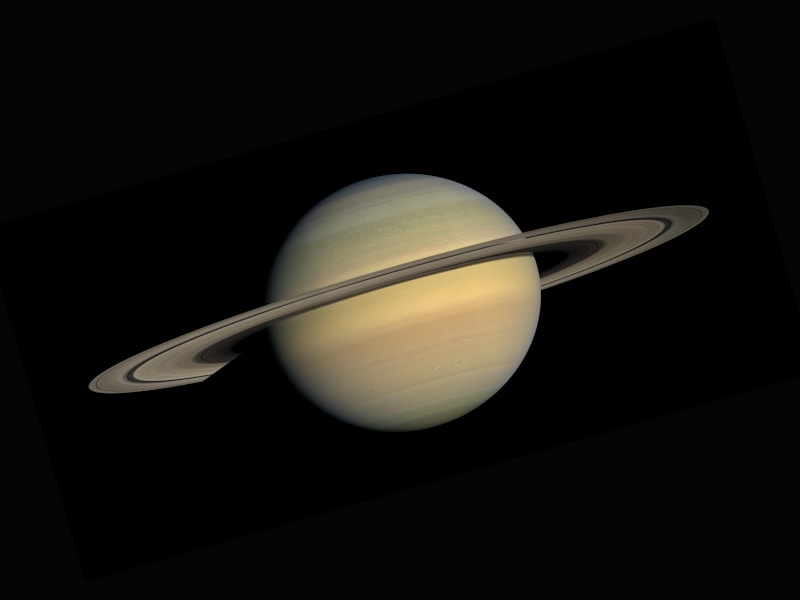
1. Explore the outer Solar System, focusing on Jupiter and Saturn.
2. Study the magnetic fields, atmospheres, and moons of these gas giants.
3. Investigate the interplanetary medium, including the solar wind and cosmic rays.
4. Search for evidence of extraterrestrial life.
History/Background
The Voyager 1 mission was born out of the success of the Pioneer 10 and 11 missions, which had explored the outer Solar System in the early 1970s. NASA's JPL team, led by Dr. Carl Sagan, proposed a follow-up mission that would venture even farther into the unknown. The Voyager 1 spacecraft was designed to take advantage of a rare alignment of the outer planets, allowing it to visit Jupiter and Saturn in a relatively short period.
The Voyager 1 spacecraft was launched on September 5, 1977, from Cape Canaveral Air Force Station in Florida. The spacecraft was powered by a radioisotope thermoelectric generator (RTG), which converted the heat generated by radioactive decay into electricity. This innovative power source enabled the spacecraft to operate for an extended period, far beyond its initial design lifespan.
Key Information
Some of the most significant achievements of the Voyager 1 mission include:
1. Farthest Human-Made Object: Voyager 1 has traveled over 14 billion miles (22.5 billion kilometers) from Earth, making it the farthest human-made object in space.
2. Interstellar Space: On August 25, 2012, Voyager 1 crossed the heliopause, the boundary between the Solar System and interstellar space.
3. Cosmic Ray Detection: Voyager 1 has detected high-energy cosmic rays, providing valuable insights into the origins of these particles.
4. Magnetic Field Measurements: The spacecraft has studied the magnetic fields of Jupiter and Saturn, revealing complex and dynamic structures.
5. Golden Records: Voyager 1 carries a Golden Record, a gold-plated copper record containing sounds and images of Earth, intended as a message to any extraterrestrial life form that might encounter the spacecraft.
Significance
The Voyager 1 mission has significantly expanded our understanding of the outer Solar System and the interstellar medium. The spacecraft's discoveries have:
1. Advanced Our Understanding of the Solar System: Voyager 1's observations have revealed the complex and dynamic nature of the outer planets and their moons.
2. Provided Insights into Interstellar Space: The spacecraft's entry into interstellar space has provided valuable data on the properties of this region.
3. Inspired New Areas of Research: The Voyager 1 mission has sparked interest in the search for extraterrestrial life and the study of the interstellar medium.
INFOBOX:
- Name: Voyager 1
- Type: Space Probe
- Date: September 5, 1977
- Location: Interstellar Space
- Known For: Farthest Human-Made Object in Space
TAGS: Space Exploration, Voyager 1, Outer Solar System, Interstellar Space, Cosmic Rays, Magnetic Fields, Golden Records, Spacecraft Design.