
Missions Encyclopedia Entry 1778098577: Voyager 1
SUMMARY: Voyager 1 is a historic space mission that has traveled farther than any human-made object, providing unparalleled insights into the outer Solar System and interstellar space.
Overview
Launched on September 5, 1977, Voyager 1 is a twin spacecraft mission, along with Voyager 2, designed to study the outer Solar System and beyond. The mission was conceived by NASA's Jet Propulsion Laboratory (JPL) in Pasadena, California, with the primary objective of exploring the Jupiter and Saturn systems, as well as the outer reaches of the heliosphere. Voyager 1 is a remarkable example of human ingenuity and technological advancement, having traveled over 14 billion miles (22.5 billion kilometers) from Earth, making it the most distant human-made object in space.The Voyager 1 spacecraft is a remarkable 23 feet (7 meters) long and 8 feet (2.4 meters) wide, with a mass of approximately 1,600 pounds (725 kilograms). It is powered by a radioisotope thermoelectric generator (RTG), which converts the heat generated by radioactive decay into electricity. The spacecraft is equipped with a range of scientific instruments, including a magnetometer, a plasma spectrometer, and a cosmic ray detector, designed to study the magnetic fields, plasma, and radiation in the outer Solar System.
History/Background
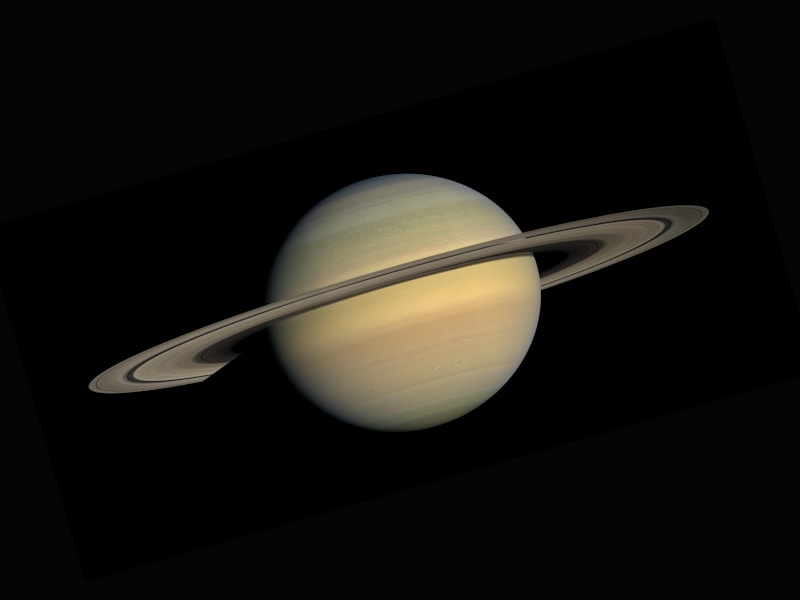
The Voyager 1 mission was conceived in the early 1970s, with the primary objective of studying the outer Solar System. The spacecraft was designed to take advantage of a rare alignment of the outer planets, allowing it to visit Jupiter and Saturn in a single mission. Voyager 1 was launched on September 5, 1977, from Cape Canaveral Air Force Station in Florida, aboard a Titan IIIE-Centaur rocket. The spacecraft flew by Jupiter on March 5, 1979, and Saturn on November 12, 1980, providing a wealth of new information about these planets and their moons.Key Information
Voyager 1 has achieved numerous milestones throughout its mission, including:* Farthest Human-Made Object: Voyager 1 has traveled farther than any human-made object, entering interstellar space in August 2012.
* Most Distant Spacecraft: Voyager 1 is the most distant spacecraft in space, with a distance of over 14 billion miles (22.5 billion kilometers) from Earth.
* Longest-Running Spacecraft: Voyager 1 has been operational for over 44 years, making it the longest-running spacecraft in history.
* Cosmic Ray Detector: Voyager 1's cosmic ray detector has provided valuable insights into the high-energy radiation in the outer Solar System and interstellar space.
* Magnetic Field Measurements: Voyager 1's magnetometer has made precise measurements of the magnetic fields in the outer Solar System, providing new insights into the dynamics of the heliosphere.
Significance
Voyager 1 has greatly expanded our understanding of the outer Solar System and interstellar space, providing a wealth of new information about the magnetic fields, plasma, and radiation in these regions. The mission has also demonstrated the power of human ingenuity and technological advancement, pushing the boundaries of what is possible in space exploration. Voyager 1's legacy will continue to inspire future generations of scientists and engineers, driving innovation and discovery in the field of space exploration.INFOBOX:
- Name: Voyager 1
- Type: Spacecraft
- Date: September 5, 1977
- Location: Interstellar space
- Known For: Farthest human-made object, longest-running spacecraft
TAGS: Voyager 1, Space Exploration, Outer Solar System, Interstellar Space, Cosmic Rays, Magnetic Fields, Plasma, Radiation, Spacecraft, NASA, JPL, RTG, Titan IIIE-Centaur, Jupiter, Saturn.