
Missions Encyclopedia Entry 1778100424: Voyager 1
SUMMARY: Voyager 1 is a historic space mission that has traveled farther than any human-made object, providing unparalleled insights into the outer reaches of our solar system and beyond.
Overview
Launched on September 5, 1977, Voyager 1 is a twin spacecraft designed to study the outer Solar System and beyond. The mission was conceived to take advantage of a rare alignment of the outer planets, allowing the spacecraft to visit Jupiter and Saturn while studying the interplanetary medium. Voyager 1 was built by NASA's Jet Propulsion Laboratory (JPL) and is one of the most successful and enduring space missions in history. The spacecraft is powered by a radioisotope thermoelectric generator (RTG), which converts the heat generated by the decay of plutonium-238 into electricity.
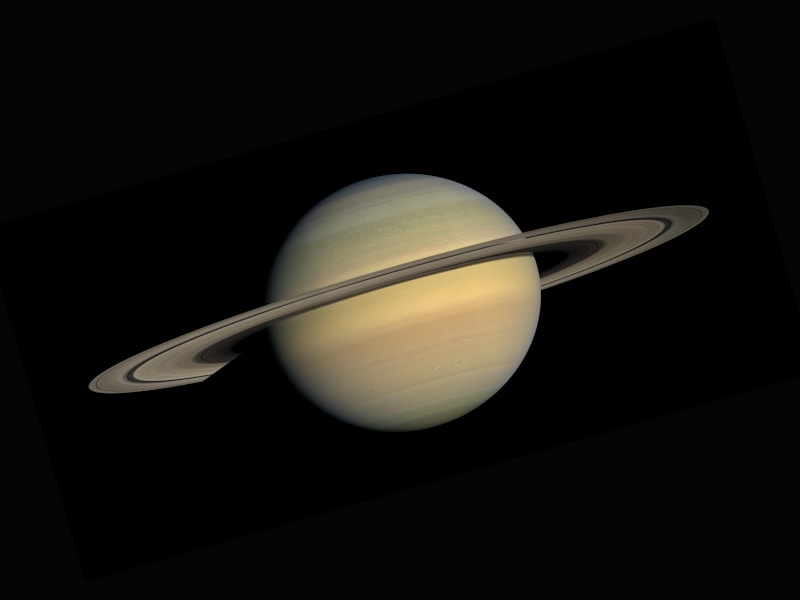
Voyager 1's primary mission was to study the outer Solar System, focusing on the gas giants Jupiter and Saturn. The spacecraft flew by Jupiter in March 1979, sending back a wealth of data on the planet's magnetic field, atmosphere, and moons. The spacecraft then continued on to Saturn, which it flew by in November 1980. Voyager 1's encounter with Saturn provided valuable insights into the planet's rings, moons, and magnetic field.
History/Background
The Voyager 1 mission was conceived in the early 1970s, when NASA was planning a series of flybys of the outer planets. The mission was designed to take advantage of a rare alignment of the outer planets, which would allow the spacecraft to visit Jupiter and Saturn while studying the interplanetary medium. Voyager 1 was launched on September 5, 1977, from Cape Canaveral Air Force Station in Florida. The spacecraft was built by NASA's Jet Propulsion Laboratory (JPL) and was powered by a radioisotope thermoelectric generator (RTG).
Voyager 1's primary mission was to study the outer Solar System, focusing on the gas giants Jupiter and Saturn. The spacecraft flew by Jupiter in March 1979, sending back a wealth of data on the planet's magnetic field, atmosphere, and moons. The spacecraft then continued on to Saturn, which it flew by in November 1980. Voyager 1's encounter with Saturn provided valuable insights into the planet's rings, moons, and magnetic field.
Key Information
Voyager 1 has traveled farther than any human-made object, with a distance of over 14 billion miles (22.5 billion kilometers) from Earth. The spacecraft is now in the interstellar medium, the region of space outside of our solar system. Voyager 1 has sent back a wealth of data on the outer Solar System, including:
* Magnetic Fields: Voyager 1 has studied the magnetic fields of Jupiter and Saturn, providing valuable insights into the planets' internal dynamics.
* Atmospheres: Voyager 1 has studied the atmospheres of Jupiter and Saturn, including their composition, temperature, and pressure.
* Moons: Voyager 1 has studied the moons of Jupiter and Saturn, including their composition, size, and orbital characteristics.
* Interplanetary Medium: Voyager 1 has studied the interplanetary medium, including the solar wind, cosmic rays, and interstellar gas.
Significance
Voyager 1's mission has provided unparalleled insights into the outer reaches of our solar system and beyond. The spacecraft has:
* Expanded Our Understanding of the Solar System: Voyager 1 has greatly expanded our understanding of the outer Solar System, including the gas giants Jupiter and Saturn.
* Provided Insights into the Interstellar Medium: Voyager 1 has provided valuable insights into the interstellar medium, including the solar wind, cosmic rays, and interstellar gas.
* Paved the Way for Future Missions: Voyager 1's mission has paved the way for future missions, including the Cassini-Huygens mission to Saturn and the New Horizons mission to Pluto.
INFOBOX:
- Name: Voyager 1
- Type: Spacecraft
- Date: September 5, 1977
- Location: Interstellar medium
- Known For: Farthest human-made object from Earth
TAGS: Voyager 1, Spacecraft, Outer Solar System, Interstellar Medium, Jupiter, Saturn, Gas Giants, Magnetic Fields, Atmospheres, Moons.