Missions Encyclopedia Entry 1778233864: Voyager 1
SUMMARY: Voyager 1 is a space mission launched by NASA in 1977 to study the outer Solar System and beyond, becoming the most distant human-made object in space.
Overview
Voyager 1 is a space probe that was launched on September 5, 1977, from Cape Canaveral, Florida, as part of NASA's Voyager program. The mission was designed to take advantage of a rare alignment of the outer planets in our Solar System, allowing the spacecraft to visit Jupiter, Saturn, and their moons. Voyager 1 is a twin mission to Voyager 2, which was launched a few weeks after Voyager 1. The two spacecraft were built to study the outer Solar System, the heliosphere, and the interstellar medium.
The Voyager spacecraft are equipped with a range of instruments designed to study the outer planets and their environments. These instruments include cameras, spectrometers, magnetometers, and plasma detectors. The spacecraft are powered by radioisotope thermoelectric generators (RTGs), which convert the heat generated by the decay of radioactive isotopes into electricity. Voyager 1 is a remarkable example of human ingenuity and technological innovation, and its discoveries have greatly expanded our understanding of the outer Solar System and the universe beyond.
History/Background
The Voyager program was conceived in the early 1970s as a follow-up to the successful Pioneer 10 and 11 missions, which had visited Jupiter and Saturn in the early 1970s. The Voyager spacecraft were designed to take advantage of a rare alignment of the outer planets, which occurred in the late 1970s. This alignment allowed the spacecraft to visit Jupiter, Saturn, and their moons in a single mission. Voyager 1 was launched on September 5, 1977, and Voyager 2 was launched on August 20, 1977.
The Voyager spacecraft were built by a team of engineers and scientists at NASA's Jet Propulsion Laboratory (JPL) in Pasadena, California. The spacecraft were designed to be as lightweight and compact as possible, while still carrying a range of instruments to study the outer planets and their environments. The Voyager spacecraft were also designed to be as durable as possible, with a lifespan of at least 5 years. However, the spacecraft have far exceeded their original design lifespan, and Voyager 1 is now over 45 years old.
Key Information
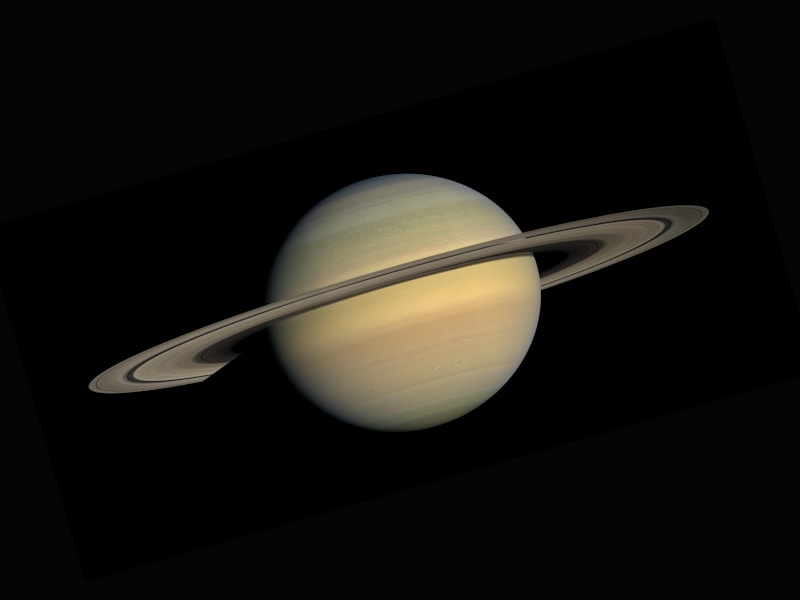
Voyager 1 has made several significant discoveries during its mission. In 1979, the spacecraft flew by Jupiter, providing the first close-up images of the planet's atmosphere and magnetic field. Voyager 1 then flew by Saturn in 1980, providing detailed images of the planet's rings and moons. The spacecraft also discovered several new moons of Saturn, including the moon of Enceladus, which has a subsurface ocean that is thought to be capable of supporting life.
In 2012, Voyager 1 crossed the heliopause, the boundary between the heliosphere and interstellar space. This marked the first time that a human-made object had entered interstellar space. Voyager 1 is now the most distant human-made object in space, with a distance of over 14 billion miles (22.5 billion kilometers) from Earth.
Significance
Voyager 1 is a significant mission that has greatly expanded our understanding of the outer Solar System and the universe beyond. The spacecraft has provided a wealth of information about the outer planets and their environments, and has helped to shed light on the origins of our Solar System. Voyager 1 has also demonstrated the power of space exploration and the importance of pushing the boundaries of human knowledge.
INFOBOX:
- Name: Voyager 1
- Type: Space Probe
- Date: September 5, 1977
- Location: Interstellar Space
- Known For: Most distant human-made object in space
TAGS: Space Exploration, Voyager Program, Outer Solar System, Interstellar Space, Space Probe, NASA, Jupiter, Saturn, Heliopause, Heliosphere, Interstellar Medium.