
Missions Encyclopedia Entry 1778433140: Voyager 1
SUMMARY: Voyager 1 is a historic space mission that has traveled farther than any human-made object, providing unparalleled insights into the outer Solar System and beyond.
Overview
Launched on September 5, 1977, Voyager 1 is a space probe designed to study the outer Solar System and beyond. The mission was conceived by NASA's Jet Propulsion Laboratory (JPL) in response to the Pioneer 10 and 11 missions, which had successfully explored the outer Solar System but were limited by their relatively small size and limited instrumentation. Voyager 1 was designed to be a more comprehensive and ambitious mission, equipped with a suite of instruments to study the outer Solar System, the heliosphere, and the interstellar medium.
Voyager 1 was built by a team of engineers and scientists led by Dr. Carl Sagan, who was instrumental in shaping the mission's scientific objectives and instruments. The spacecraft was designed to be powered by radioisotope thermoelectric generators (RTGs), which provided a reliable source of energy for the mission. Voyager 1 was also equipped with a gold-plated copper record, known as the Golden Record, which contains sounds and images of Earth, as well as messages from humanity in the form of mathematical and scientific concepts.
History/Background
The Voyager 1 mission was conceived in the early 1970s, when NASA was planning a series of missions to explore the outer Solar System. The Pioneer 10 and 11 missions had successfully explored the outer Solar System, but NASA wanted to conduct a more comprehensive and ambitious mission. The Voyager 1 mission was designed to study the outer Solar System, including the gas giants Jupiter and Saturn, as well as the heliosphere and the interstellar medium.
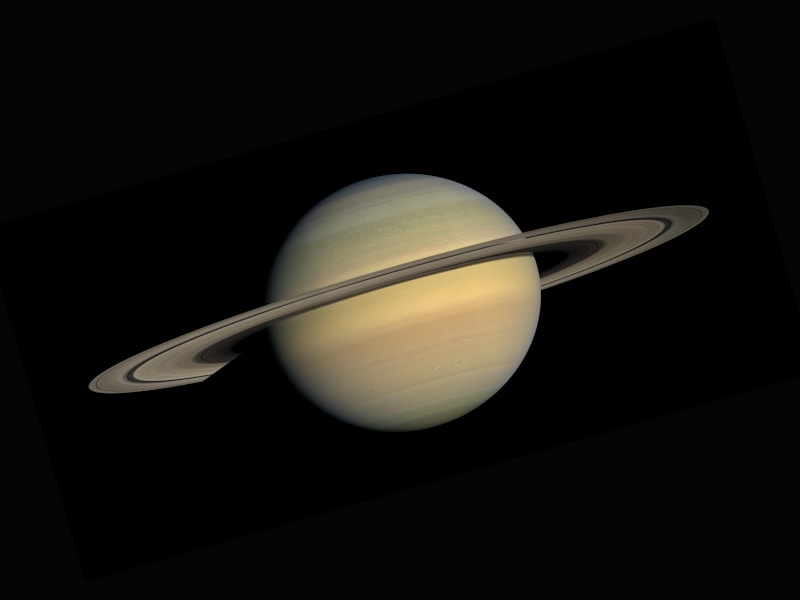
Voyager 1 was launched on September 5, 1977, from Cape Canaveral Air Force Station in Florida. The spacecraft was placed into a trajectory that would take it through the outer Solar System, using a combination of gravity assists from Jupiter and Saturn to gain speed and alter its course. Voyager 1 flew by Jupiter in March 1979, using the planet's gravity to gain speed and alter its course. The spacecraft then flew by Saturn in November 1980, using the planet's gravity to gain even more speed and alter its course.
Key Information
Voyager 1 has traveled farther than any human-made object, entering interstellar space in August 2012. The spacecraft has a speed of approximately 38,000 miles per hour (61,155 kilometers per hour), making it one of the fastest-moving objects in the Solar System. Voyager 1 has a mass of approximately 825 kilograms (1,820 pounds) and is powered by a radioisotope thermoelectric generator (RTG), which provides a reliable source of energy for the mission.
Voyager 1 is equipped with a suite of instruments to study the outer Solar System and beyond. The spacecraft has a magnetometer to study the magnetic fields of the planets and the heliosphere, as well as a plasma analyzer to study the composition of the interstellar medium. Voyager 1 also has a cosmic ray detector to study the high-energy particles that bombard the spacecraft from the outside.
Significance
Voyager 1 has provided unparalleled insights into the outer Solar System and beyond. The spacecraft has studied the magnetic fields of the planets and the heliosphere, as well as the composition of the interstellar medium. Voyager 1 has also detected the presence of cosmic rays, which are high-energy particles that bombard the spacecraft from the outside.
The Voyager 1 mission has also had a significant impact on our understanding of the Solar System and the universe. The spacecraft has provided evidence for the existence of a heliosphere, which is the region of space influenced by the Sun. Voyager 1 has also provided evidence for the existence of a cosmic ray flux, which is a stream of high-energy particles that bombard the spacecraft from the outside.
INFOBOX:
- Name: Voyager 1
- Type: Space Probe
- Date: September 5, 1977
- Location: Interstellar Space
- Known For: Farthest-traveled human-made object
TAGS: Space Exploration, Voyager 1, Outer Solar System, Heliosphere, Interstellar Medium, Cosmic Rays, Space Probe, NASA, JPL, Carl Sagan, Golden Record.