Missions Encyclopedia Entry 1778602386: Voyager 1
SUMMARY: Voyager 1 is a historic space mission that has traveled farther than any human-made object, providing unparalleled insights into the outer Solar System and interstellar space.
Overview
Launched on September 5, 1977, Voyager 1 is a space probe designed to study the outer Solar System and beyond. Conceived by NASA's Jet Propulsion Laboratory (JPL), the mission was initially intended to explore Jupiter and Saturn, but its trajectory has taken it much farther, making it one of the most successful and enduring space missions in history. Voyager 1 is a twin spacecraft, with its companion, Voyager 2, launched on August 20, 1977. The two probes were designed to study the outer planets, their magnetic fields, and the interplanetary medium.
History/Background
The Voyager 1 mission was born out of the success of the Pioneer 10 and 11 missions, which had explored the outer Solar System in the early 1970s. NASA's JPL, led by Dr. Carl Sagan, proposed a new mission that would take advantage of the favorable alignment of the outer planets in the late 1970s. The mission was approved in 1975, and the spacecraft were built by NASA's Marshall Space Flight Center in Huntsville, Alabama. Voyager 1 was launched on a Titan IIIE rocket from Cape Canaveral, Florida, on September 5, 1977. The spacecraft was equipped with a range of instruments, including a magnetometer, a plasma analyzer, and a cosmic ray detector.
Key Information
Voyager 1 has traveled an astonishing 14.5 billion miles (23.3 billion kilometers) from Earth, making it the most distant human-made object in space. The spacecraft has encountered several notable milestones, including:
* Jupiter Flyby: On March 5, 1979, Voyager 1 flew within 217,000 miles (349,000 kilometers) of Jupiter's cloud tops, providing the first close-up images of the planet's magnetic field and atmosphere.
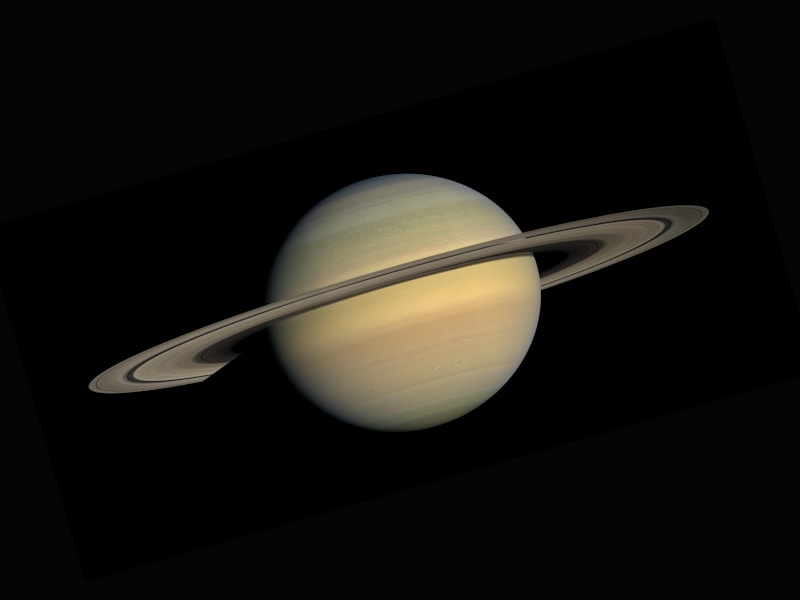
* Saturn Flyby: On November 12, 1980, Voyager 1 flew within 77,000 miles (124,000 kilometers) of Saturn's cloud tops, capturing stunning images of the planet's rings and moons.
* Interstellar Space: On August 25, 2012, Voyager 1 crossed the heliopause, the boundary between the Solar System and interstellar space, becoming the first human-made object to enter interstellar space.
Significance
Voyager 1's journey has provided a wealth of scientific knowledge about the outer Solar System and beyond. The spacecraft has:
* Expanded our understanding of the Solar System: Voyager 1 has revealed the complex magnetic fields and atmospheres of Jupiter and Saturn, and has provided insights into the formation and evolution of the outer planets.
* Pioneered the study of interstellar space: Voyager 1's entry into interstellar space has opened up new avenues of research into the properties of the interstellar medium and the potential for life beyond our Solar System.
* Demonstrated the power of space exploration: Voyager 1's success has shown that even the most ambitious space missions can be achieved with careful planning, innovative engineering, and a commitment to scientific discovery.
INFOBOX:
- Name: Voyager 1
- Type: Space Probe
- Date: September 5, 1977
- Location: Interstellar space
- Known For: First human-made object to enter interstellar space
TAGS: Space Exploration, Voyager 1, Outer Solar System, Interstellar Space, NASA, Jet Propulsion Laboratory, Carl Sagan, Space Probe, Jupiter, Saturn, Heliopause, Interstellar Medium.