Missions Encyclopedia Entry 1778615825: Voyager 1
SUMMARY: Voyager 1 is a historic space mission that has traveled farther than any human-made object, providing unparalleled insights into the outer Solar System and interstellar space.
Overview
Launched on September 5, 1977, Voyager 1 is a space probe designed to study the outer Solar System and beyond. The mission was conceived by NASA's Jet Propulsion Laboratory (JPL) in response to the discovery of Jupiter's magnetic field by Pioneer 10. Voyager 1 was built to take advantage of a rare alignment of the outer planets, allowing it to visit Jupiter and Saturn while studying their magnetic fields, atmospheres, and moons. The spacecraft was designed to be a "golden record" of humanity, containing sounds and images of Earth to serve as a message to any extraterrestrial life form that might encounter it.
Voyager 1 is a remarkable example of human ingenuity and technological advancement. Weighing approximately 825 kilograms (1,820 pounds), the spacecraft is powered by a radioisotope thermoelectric generator (RTG), which converts the heat generated by the decay of plutonium-238 into electricity. This innovative power source has allowed Voyager 1 to operate continuously for over 45 years, making it one of the longest-operating spacecraft in history.
History/Background
The development of Voyager 1 began in 1972, with a team of scientists and engineers led by Dr. Carl Sagan, a renowned astrophysicist and science communicator. The mission was initially designed to study the outer Solar System, but it was later expanded to include a flyby of Jupiter and Saturn. Voyager 1 was launched on September 5, 1977, from Cape Canaveral Air Force Station in Florida, aboard a Titan IIIE-Centaur rocket. The spacecraft's trajectory was carefully planned to take advantage of the gravitational pull of Jupiter and Saturn, allowing it to visit these planets while studying their magnetic fields and atmospheres.
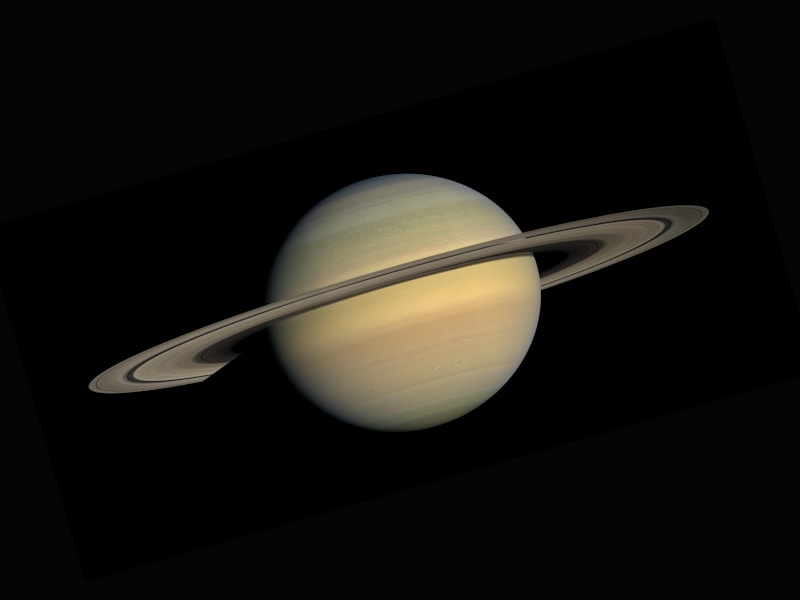
Voyager 1's journey to Jupiter was a groundbreaking achievement, with the spacecraft encountering the planet on March 5, 1979. The flyby provided scientists with a wealth of new information about Jupiter's magnetic field, atmosphere, and moons. Voyager 1 continued on its trajectory, entering the Saturn system on November 12, 1980. The spacecraft's flyby of Saturn provided scientists with valuable insights into the planet's rings, magnetic field, and moons.
Key Information
Voyager 1 has traveled an astonishing 14.5 billion miles (23.3 billion kilometers) from Earth, making it the most distant human-made object in space. The spacecraft's speed has increased to approximately 38,000 miles per hour (61,155 kilometers per hour), allowing it to leave the Solar System and enter interstellar space. Voyager 1 has sent back a wealth of data about the outer Solar System, including images of Jupiter's Great Red Spot, Saturn's rings, and the magnetic fields of both planets.
In addition to its scientific discoveries, Voyager 1 has also become a cultural icon, representing humanity's quest for knowledge and exploration. The spacecraft's "golden record" contains sounds and images of Earth, including natural sounds, musical compositions, and greetings in 55 different languages. The record is a message to any extraterrestrial life form that might encounter Voyager 1, providing a snapshot of human culture and civilization.
Significance
Voyager 1's significance extends far beyond its scientific discoveries and cultural impact. The spacecraft has provided scientists with a unique perspective on the outer Solar System and the interstellar medium, allowing us to better understand the formation and evolution of our cosmos. Voyager 1's journey has also raised important questions about the search for extraterrestrial life and the potential for human exploration of the outer Solar System.
INFOBOX:
- Name: Voyager 1
- Type: Space Probe
- Date: September 5, 1977
- Location: Interstellar Space
- Known For: Longest-operating spacecraft, most distant human-made object, and the first spacecraft to enter interstellar space.
TAGS: Space Exploration, Voyager 1, Outer Solar System, Interstellar Space, Space Probe, NASA, Golden Record, Carl Sagan, Jupiter, Saturn, Magnetic Fields, Atmospheres, Moons, Spacecraft, RTG, Plutonium-238.