
Missions Encyclopedia Entry 1778617806: Voyager 1
SUMMARY: Voyager 1 is a historic space mission that has traveled farther than any human-made object, providing unparalleled insights into the outer Solar System and beyond.
Overview
Voyager 1 is a space mission launched by NASA on September 5, 1977, with the primary objective of studying the outer Solar System and beyond. The mission was designed to take advantage of a rare alignment of the outer planets, which occurred in the late 1970s. The Voyager 1 spacecraft is a twin mission to Voyager 2, with both spacecraft carrying identical instruments and scientific objectives. Voyager 1 has become one of the most iconic and enduring space missions in history, with a legacy that continues to inspire scientists and the public alike.
The Voyager 1 spacecraft is a remarkable example of engineering and scientific ingenuity. Weighing approximately 825 kilograms (1,820 pounds), the spacecraft is powered by a radioisotope thermoelectric generator (RTG), which converts the heat generated by the decay of radioactive isotopes into electricity. The spacecraft's instruments include a magnetometer, plasma detector, and ultraviolet spectrometer, which have allowed scientists to study the outer Solar System's magnetic fields, plasma environments, and interstellar medium.
History/Background
The Voyager 1 mission was conceived in the early 1970s, with the primary objective of studying the outer Solar System's magnetic fields, plasma environments, and the interstellar medium. The mission was designed to take advantage of a rare alignment of the outer planets, which occurred in the late 1970s. The Voyager 1 spacecraft was launched on September 5, 1977, from Cape Canaveral Air Force Station in Florida, aboard a Titan IIIE-Centaur rocket. The spacecraft's trajectory was carefully planned to ensure that it would fly by Jupiter and Saturn, and then continue into the interstellar medium.
Key Information
Voyager 1 has achieved numerous milestones throughout its journey, including:
* Closest approach to Jupiter: Voyager 1 flew within 349,000 kilometers (217,000 miles) of Jupiter's cloud tops on March 5, 1979.
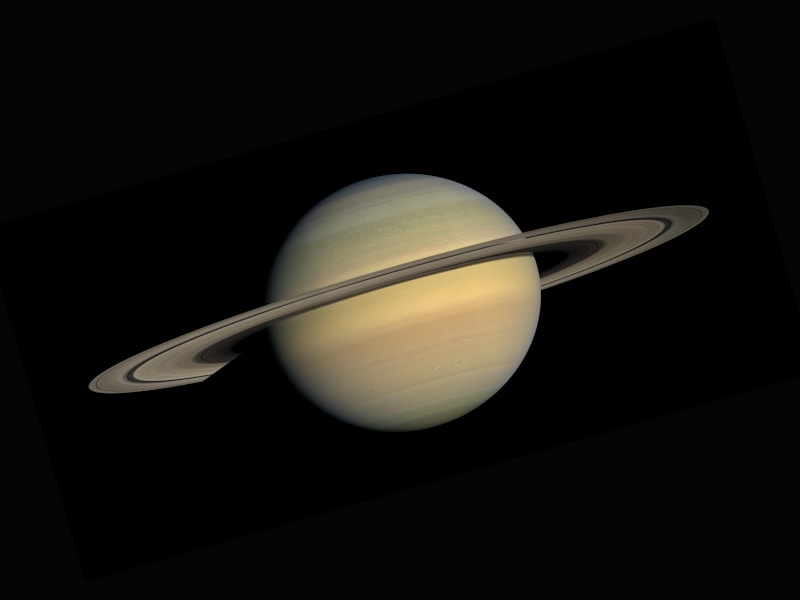
* Closest approach to Saturn: Voyager 1 flew within 124,000 kilometers (77,000 miles) of Saturn's cloud tops on November 12, 1980.
* First human-made object in interstellar space: Voyager 1 crossed the heliopause, the boundary between the Solar System and interstellar space, on August 25, 2012.
* Farthest human-made object: Voyager 1 is currently approximately 14.2 billion miles (22.8 billion kilometers) from Earth, making it the farthest human-made object in space.
Significance
Voyager 1 has made significant contributions to our understanding of the outer Solar System and beyond. The mission has provided unparalleled insights into the magnetic fields, plasma environments, and interstellar medium of the outer Solar System. The spacecraft's instruments have also detected the presence of cosmic rays, high-energy particles that originate from outside the Solar System. The Voyager 1 mission has also raised important questions about the origins of the Solar System and the possibility of life beyond Earth.
INFOBOX:
- Name: Voyager 1
- Type: Spacecraft
- Date: September 5, 1977
- Location: Interstellar space
- Known For: First human-made object in interstellar space
TAGS: Voyager 1, Space Exploration, Outer Solar System, Interstellar Space, Cosmic Rays, Magnetic Fields, Plasma Environments, Spacecraft, NASA