
Missions Encyclopedia Entry 1778671505: Voyager 1
SUMMARY: Voyager 1 is a historic space mission that has traveled farther than any human-made object, providing unparalleled insights into the outer Solar System and interstellar space.
Overview
Launched on September 5, 1977, Voyager 1 is a space probe designed to study the outer Solar System and beyond. Conceived by NASA's Jet Propulsion Laboratory (JPL), the mission was part of the Voyager program, a series of twin spacecraft (Voyager 1 and Voyager 2) designed to explore the outer planets and their moons. The primary objective of Voyager 1 was to study Jupiter and Saturn, their magnetic fields, and the properties of the outer Solar System. However, the mission has far exceeded its initial goals, becoming the most distant human-made object in space.
Voyager 1 is a remarkable example of human ingenuity and technological advancement. The spacecraft is powered by a radioisotope thermoelectric generator (RTG), which converts the heat generated by radioactive decay into electricity. This innovative power source has allowed Voyager 1 to operate for over 45 years, making it one of the longest-operating spacecraft in history. The spacecraft's design and construction were a testament to the engineering prowess of the time, with a mass of approximately 825 kilograms (1,820 pounds) and a launch mass of 1,600 kilograms (3,527 pounds).
History/Background
The Voyager program was conceived in the early 1970s, with the primary goal of studying the outer Solar System. The twin spacecraft were designed to take advantage of a rare alignment of the outer planets, allowing for a single launch window in 1977. Voyager 1 was launched on September 5, 1977, from Cape Canaveral Air Force Station in Florida, while Voyager 2 was launched on August 20, 1977. The spacecraft were built by NASA's Jet Propulsion Laboratory, with contributions from various universities and research institutions.
The Voyager program was a groundbreaking achievement in space exploration, marking the first time that humans had sent spacecraft to explore the outer Solar System. The mission was also notable for its innovative use of the Grand Tour trajectory, which allowed the spacecraft to visit multiple planets while minimizing the amount of propellant required. This approach enabled the spacecraft to travel farther than any previous mission, with Voyager 1 becoming the most distant human-made object in space.
Key Information
Voyager 1 has achieved numerous milestones throughout its mission, including:
* First spacecraft to visit Jupiter: Voyager 1 flew by Jupiter on March 5, 1979, providing the first close-up images of the planet's magnetic field and atmosphere.
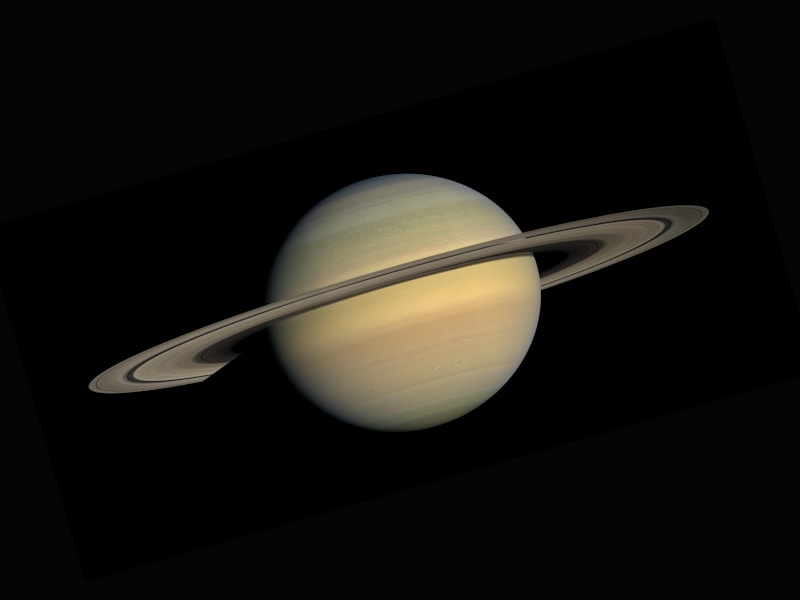
* First spacecraft to visit Saturn: Voyager 1 flew by Saturn on November 12, 1980, revealing the planet's rings and moons in unprecedented detail.
* Farthest human-made object: Voyager 1 has traveled over 14 billion miles (22.5 billion kilometers) from Earth, making it the most distant human-made object in space.
* Interstellar space: Voyager 1 entered interstellar space on August 25, 2012, becoming the first spacecraft to travel beyond the heliopause, the boundary between the Solar System and interstellar space.
Significance
Voyager 1 has had a profound impact on our understanding of the outer Solar System and interstellar space. The mission has provided unparalleled insights into the magnetic fields, atmospheres, and moons of the outer planets, as well as the properties of the interstellar medium. The spacecraft's journey has also raised fundamental questions about the nature of the universe, including the existence of life beyond Earth and the possibility of extraterrestrial civilizations.
INFOBOX:
- Name: Voyager 1
- Type: Space Probe
- Date: September 5, 1977
- Location: Interstellar space
- Known For: First spacecraft to visit Jupiter and Saturn, farthest human-made object in space
TAGS: Space Exploration, Voyager Program, Jupiter, Saturn, Outer Solar System, Interstellar Space, Space Probe, NASA, JPL, Grand Tour Trajectory