
Missions Encyclopedia Entry 1778674384
SUMMARY: The Voyager Interstellar Mission, also known as Voyager 1 and Voyager 2, is a historic space exploration mission that has traveled farther than any human-made object, entering interstellar space and providing unparalleled insights into the outer reaches of our solar system.
Overview
The Voyager Interstellar Mission is a twin-spacecraft project launched by NASA in the late 1970s with the primary objective of studying the outer Solar System and beyond. The mission's scope was to explore the outer planets, their moons, and the heliosphere, the region of space influenced by the Sun. The Voyager spacecraft are equipped with a range of scientific instruments designed to study the magnetic fields, atmospheres, and geology of the planets, as well as the interplanetary medium. The mission has been operational for over four decades, with Voyager 1 and Voyager 2 continuing to transmit data back to Earth.
The Voyager spacecraft are powered by radioisotope thermoelectric generators (RTGs), which convert the heat generated by the decay of radioactive isotopes into electricity. This innovative power source has allowed the spacecraft to operate for an extended period, far beyond their initial design lifespan. The Voyager spacecraft are also equipped with a gold-plated copper record, known as the Golden Record, which contains sounds and images of Earth, intended as a message to any extraterrestrial life form that might encounter the spacecraft.
History/Background
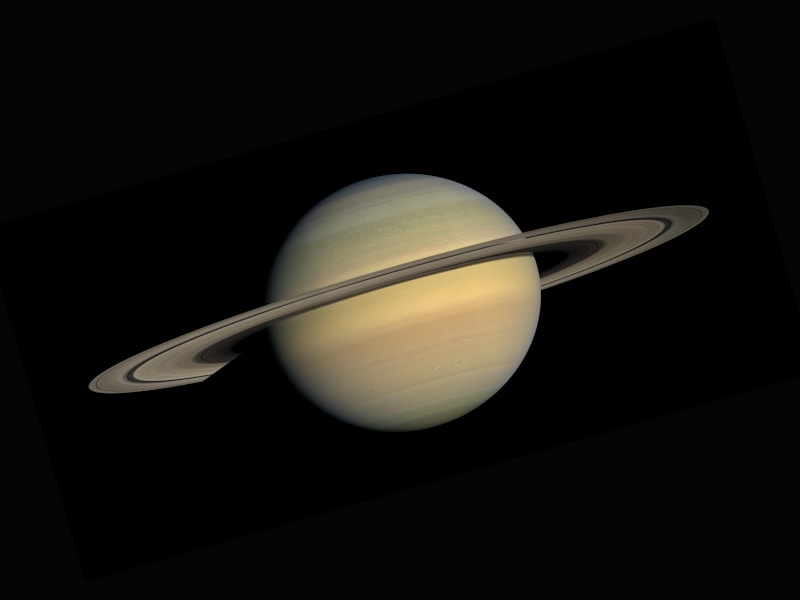
The Voyager Interstellar Mission was conceived in the early 1970s, with the first launch taking place on September 5, 1977, when Voyager 1 was launched from Cape Canaveral Air Force Station in Florida. Voyager 2 followed on August 20, 1977. The spacecraft were designed to take advantage of a rare alignment of the outer planets, which occurred in the late 1970s and early 1980s. The Voyager spacecraft flew by Jupiter in 1979, Saturn in 1980 and 1981, respectively, and Uranus and Neptune in 1986 and 1989. The spacecraft continued on a trajectory that would take them into interstellar space.
Key Information
- Launch Date: Voyager 1: September 5, 1977; Voyager 2: August 20, 1977
- Spacecraft Design: Voyager 1 and Voyager 2 are identical spacecraft, each weighing approximately 825 kg (1,820 lb)
- Scientific Instruments: The spacecraft are equipped with a range of instruments, including magnetometers, plasma detectors, and ultraviolet spectrometers
- Distance Traveled: As of 2023, Voyager 1 has traveled over 14.5 billion miles (23.3 billion kilometers) and is the most distant human-made object in space
- Interstellar Space: Voyager 1 entered interstellar space on August 25, 2012, becoming the first human-made object to do so
Significance
The Voyager Interstellar Mission has greatly expanded our understanding of the outer Solar System and the heliosphere. The mission has provided valuable insights into the magnetic fields, atmospheres, and geology of the planets, as well as the interplanetary medium. The Voyager spacecraft have also served as a testbed for advanced space exploration technologies, including RTGs and advanced communication systems. The mission's legacy extends beyond its scientific contributions, as it has inspired generations of scientists, engineers, and explorers.
INFOBOX:
- Name: Voyager Interstellar Mission
- Type: Space Exploration Mission
- Date: 1977 (launch)
- Location: Outer Solar System and interstellar space
- Known For: First human-made objects to enter interstellar space
TAGS: Space Exploration, Voyager Mission, Interstellar Space, Solar System, NASA, Spacecraft, Astronomy, Astrophysics, Planetary Science, Space Technology