Missions Encyclopedia Entry 1778747105
Summary: The Voyager 1 spacecraft is a historic interstellar probe that has traveled farther than any human-made object in history, providing unparalleled insights into the outer reaches of our solar system and beyond.
Overview
Launched on September 5, 1977, Voyager 1 is a twin spacecraft designed to study the outer Solar System and beyond. The mission was conceived by NASA's Jupiter Icy Moons Explorer (JIMO) program, with the primary goal of exploring the Jupiter system and its moons. However, the spacecraft's trajectory was altered to take advantage of a rare alignment of the outer planets, allowing it to continue on a path towards interstellar space.
The Voyager 1 spacecraft is a remarkable example of human ingenuity and technological advancement. Weighing approximately 825 kilograms (1,820 pounds), the spacecraft is powered by a radioisotope thermoelectric generator (RTG) that converts the heat generated by the decay of plutonium-238 into electricity. This innovative power source has allowed the spacecraft to continue operating for over 45 years, making it one of the longest-operating spacecraft in history.
History/Background
The development of Voyager 1 began in the early 1970s, with the selection of the spacecraft's design and instruments in 1975. The spacecraft was built by NASA's Jet Propulsion Laboratory (JPL) in Pasadena, California, with contributions from various other organizations and institutions. The launch of Voyager 1 was a major milestone in the mission, with the spacecraft successfully escaping Earth's gravitational pull and entering a heliocentric orbit.
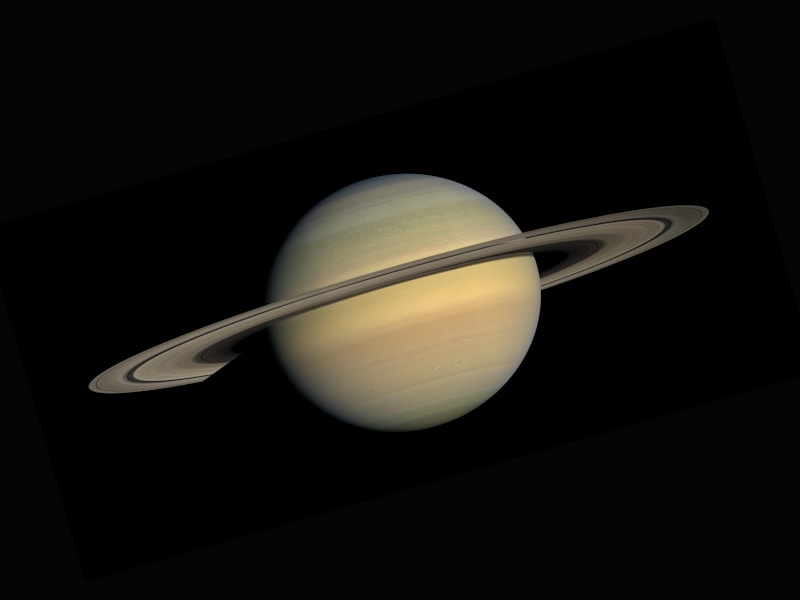
On August 20, 1979, Voyager 1 flew by Jupiter, providing the first close-up images and data about the planet's magnetic field, atmosphere, and moons. The spacecraft's instruments also detected the presence of a strong magnetic field and intense radiation belts around Jupiter. After its Jupiter flyby, Voyager 1 continued on a trajectory towards Saturn, where it flew by on November 12, 1980. The spacecraft's instruments provided valuable insights into Saturn's rings, atmosphere, and moons, including the discovery of geysers on Enceladus.
Key Information
Voyager 1 has achieved numerous milestones and set several records in its journey. Some of the key facts and achievements include:
* Farthest Human-Made Object: Voyager 1 has traveled farther than any human-made object in history, with a distance of over 14.2 billion miles (22.8 billion kilometers) from Earth.
* Interstellar Space: On August 25, 2012, Voyager 1 crossed the heliopause, the boundary between the heliosphere and interstellar space.
* Magnetic Field: Voyager 1 has detected the presence of a strong magnetic field in interstellar space, which is thought to be generated by the Sun.
* Cosmic Rays: The spacecraft has measured the intensity of cosmic rays in interstellar space, providing valuable insights into the origins of these high-energy particles.
* Golden Record: Voyager 1 carries a Golden Record, a gold-plated copper record containing sounds and images of Earth, which is intended to serve as a message to any extraterrestrial life form that may encounter the spacecraft.
Significance
Voyager 1 has had a profound impact on our understanding of the outer Solar System and beyond. The spacecraft's discoveries have expanded our knowledge of the universe, providing insights into the formation and evolution of our Solar System. The mission has also inspired new generations of scientists, engineers, and explorers, highlighting the importance of space exploration and the potential for human discovery.
INFOBOX:
- Name: Voyager 1
- Type: Interstellar Probe
- Date: September 5, 1977 (launch)
- Location: Interstellar space
- Known For: Farthest human-made object, interstellar space exploration, Golden Record
TAGS: Voyager 1, Interstellar Space, Space Exploration, NASA, Jupiter, Saturn, Golden Record, Cosmic Rays, Magnetic Field