
Missions Encyclopedia Entry 1779028865: Voyager 1
SUMMARY: Voyager 1 is a historic space mission that has traveled farther than any human-made object, entering interstellar space and providing unparalleled insights into the outer reaches of our solar system.
Overview
Launched on September 5, 1977, Voyager 1 is a space probe designed to study the outer Solar System and beyond. The mission was conceived by NASA's Jet Propulsion Laboratory (JPL) in Pasadena, California, with the primary objective of exploring the Jupiter and Saturn systems. However, Voyager 1's remarkable journey has far exceeded its initial scope, making it one of the most successful and enduring space missions in history.
Voyager 1 is a twin spacecraft, accompanied by Voyager 2, which was launched on August 20, 1977. Both probes were designed to take advantage of a rare alignment of the outer planets, allowing them to visit Jupiter and Saturn in a single mission. The Voyager spacecraft are powered by radioisotope thermoelectric generators (RTGs), which convert the heat generated by radioactive decay into electricity. This innovative power source has enabled the probes to continue operating for decades, far beyond their initial design lifespan.
History/Background
The Voyager program was born out of the success of the Mariner 10 mission, which flew by Venus and Mercury in the early 1970s. NASA's JPL team, led by Dr. Carl Sagan, recognized the opportunity to send a spacecraft to the outer planets, leveraging the rare alignment of Jupiter and Saturn. The Voyager spacecraft were designed to be as lightweight and efficient as possible, with a focus on scientific instruments rather than elaborate communication systems. This approach allowed the probes to carry a range of instruments, including a plasma science instrument, a low-energy charged particle instrument, and a cosmic ray system.
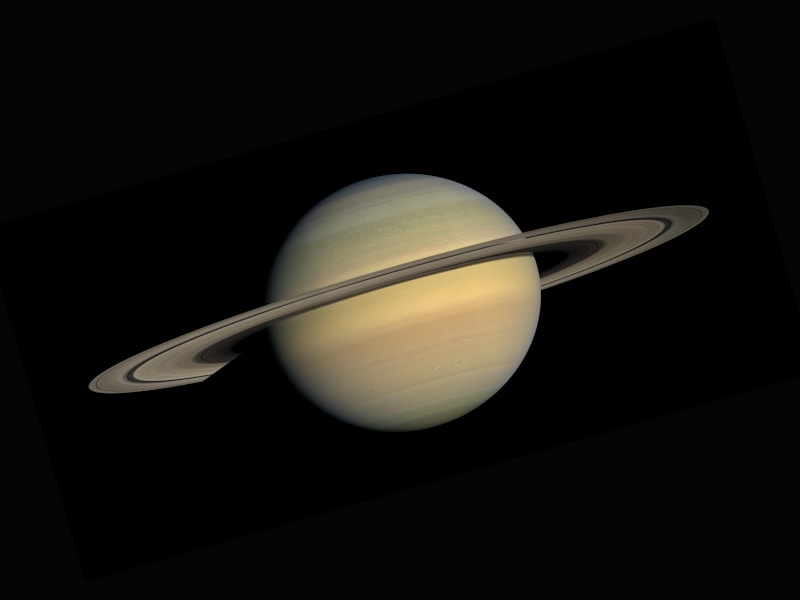
The Voyager spacecraft were launched in 1977, with Voyager 1 departing Earth on September 5. The probe flew by Jupiter on March 5, 1979, and Saturn on November 12, 1980. During these encounters, Voyager 1 collected a wealth of data on the magnetic fields, atmospheres, and moons of these planets. The spacecraft's instruments also detected the presence of complex organic molecules in the atmospheres of Jupiter and Saturn, providing insights into the formation and evolution of our solar system.
Key Information
Voyager 1's most significant achievement is its entry into interstellar space, which occurred on August 25, 2012. This milestone marked the first time a human-made object had traveled beyond the heliosphere, the region of space influenced by the Sun. Voyager 1 is now the most distant human-made object in space, with a distance of over 14 billion miles (22.5 billion kilometers) from Earth.
The spacecraft's instruments continue to operate, providing valuable data on the outer reaches of our solar system. Voyager 1's cosmic ray system has detected high-energy particles from outside the solar system, while its plasma science instrument has measured the magnetic fields and charged particles in the interstellar medium. The probe's Golden Record, a gold-plated copper record containing sounds and images of Earth, was included as a message to any extraterrestrial life form that might encounter the spacecraft.
Significance
Voyager 1's journey has far exceeded its initial scope, providing unparalleled insights into the outer reaches of our solar system. The mission has demonstrated the power of human ingenuity and the importance of exploring the unknown. Voyager 1's entry into interstellar space marks a new era in space exploration, highlighting the potential for future missions to explore the galaxy and beyond.
INFOBOX:
- Name: Voyager 1
- Type: Space Probe
- Date: September 5, 1977
- Location: Interstellar space
- Known For: First human-made object to enter interstellar space
TAGS: Voyager, Space Probe, Interstellar Space, Jupiter, Saturn, Cosmic Rays, Plasma Science, Golden Record, Space Exploration