Missions Encyclopedia Entry 1779108022: Voyager 1
SUMMARY: Voyager 1 is a space mission that has traveled farther than any human-made object in history, providing groundbreaking insights into the outer reaches of our solar system and beyond.
Overview
Launched on September 5, 1977, Voyager 1 is a space probe designed to study the outer Solar System and beyond. The mission was conceived by a team of scientists led by Dr. Carl Sagan, who envisioned a spacecraft that would explore the outer reaches of the Solar System and provide a glimpse into the unknown. Voyager 1 is one of two identical spacecraft, the other being Voyager 2, which was launched on August 20, 1977. The twin spacecraft were designed to take advantage of a rare alignment of the outer planets, allowing them to visit Jupiter, Saturn, Uranus, and Neptune in a single mission.
Voyager 1 is a remarkable example of human ingenuity and technological advancement. Weighing approximately 825 kilograms (1,820 pounds), the spacecraft is powered by a radioisotope thermoelectric generator (RTG), which converts the heat generated by the decay of radioactive isotopes into electricity. This innovative power source has allowed Voyager 1 to operate for over 45 years, making it one of the longest-operating spacecraft in history.
History/Background
The Voyager 1 mission was conceived in the early 1970s, when scientists began to realize the importance of studying the outer Solar System. The twin spacecraft were designed to take advantage of a rare alignment of the outer planets, which occurs only once every 176 years. The mission was initially designed to study the outer planets, but it was later expanded to include a flyby of Jupiter and Saturn, as well as a study of the outer heliosphere and the interstellar medium.
Voyager 1 was launched on September 5, 1977, from Cape Canaveral Air Force Station in Florida. The spacecraft was inserted into a heliocentric orbit, which allowed it to travel through the outer Solar System and beyond. The spacecraft's trajectory was carefully planned to take advantage of the gravitational pull of the outer planets, allowing it to visit Jupiter and Saturn in a single mission.
Key Information
Voyager 1 has achieved numerous milestones throughout its mission, including:
* Closest approach to Jupiter: Voyager 1 flew within 3.5 million kilometers (2.2 million miles) of Jupiter's cloud tops on March 5, 1979.
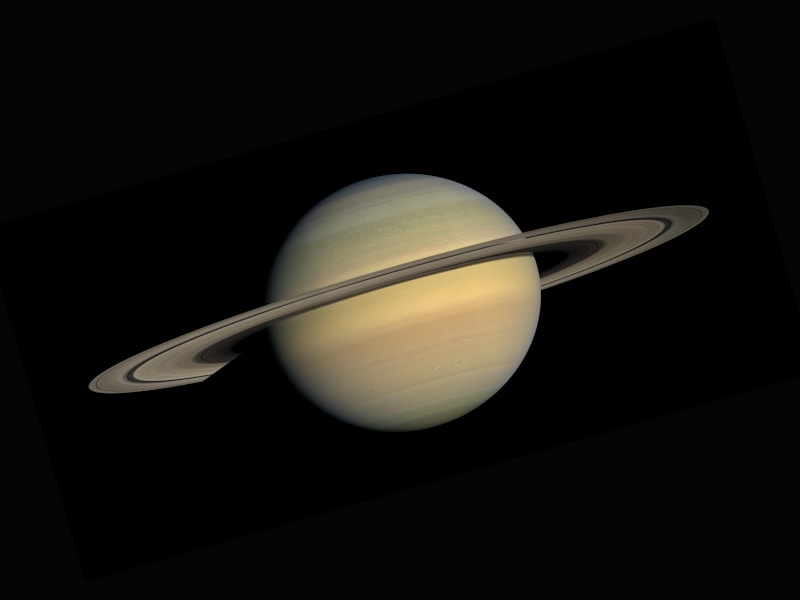
* Closest approach to Saturn: Voyager 1 flew within 124,000 kilometers (77,000 miles) of Saturn's cloud tops on November 12, 1980.
* Exit from the Solar System: Voyager 1 crossed the heliopause, the boundary between the Solar System and interstellar space, on August 25, 2012.
* Most distant human-made object: Voyager 1 is now the most distant human-made object in space, with a distance of over 14 billion miles (22.5 billion kilometers) from Earth.
Significance
Voyager 1 has made significant contributions to our understanding of the outer Solar System and beyond. The spacecraft's instruments have provided valuable data on the magnetic fields, atmospheres, and moons of the outer planets, as well as the composition and structure of the outer heliosphere and interstellar medium.
The Voyager 1 mission has also had a profound impact on our understanding of the universe. The spacecraft's journey has provided a unique perspective on the nature of space and time, and has raised fundamental questions about the origins and fate of the universe.
INFOBOX:
- Name: Voyager 1
- Type: Space Probe
- Date: September 5, 1977
- Location: Outer Solar System and beyond
- Known For: Most distant human-made object in space
TAGS: Voyager 1, Space Probe, Outer Solar System, Interstellar Space, Heliopause, Radioisotope Thermoelectric Generator, Carl Sagan, Space Exploration, Astronomy.